![Best Work From Home Internet Providers [2026]](/_next/image/?url=%2Fimages%2Fcontent%2Fblog%2Fbest-internet-work-from-home.webp&w=1920&q=75&dpl=dpl_AGFYAWVuCu62TXjHmonxrN4KpbBw)
Quick Answer: Best Internet for Working From Home in 2026
For reliable remote work, you need at least 50 Mbps download and 10 Mbps upload. Upload speed is the overlooked metric that matters most for video calls, file sharing, and VPN connections. Fiber internet from AT&T Fiber or Verizon Fios is ideal because of symmetric upload/download speeds. If fiber isn't available, Xfinity or Spectrum cable plans with 10+ Mbps upload will handle most remote work needs.
Why Your Home Internet is Now Mission-Critical
Working from home has shifted from a temporary pandemic arrangement to a permanent fixture of the American workforce. By 2026, over 40 million Americans work remotely at least part of the time, and for these workers, home internet is no longer a utility for entertainment; it's the infrastructure that their livelihood depends on. A dropped video call during a client presentation, a VPN that disconnects during a critical file transfer, or a sluggish connection during collaborative editing can all have real professional consequences.
Despite this shift, most remote workers are still using internet plans originally chosen for streaming Netflix and browsing social media. The requirements for professional use are fundamentally different, and understanding those differences is the first step toward building a reliable home office network.
Speed Requirements for Remote Work Tasks
Different work activities place different demands on your internet connection. Here's a detailed breakdown of what each common remote work task actually requires:
Video Conferencing (Zoom, Teams, Google Meet)
| Quality Level | Download | Upload | Notes |
|---|---|---|---|
| Audio only | 1 Mbps | 1 Mbps | Minimal bandwidth needed |
| Standard video (720p) | 5 Mbps | 5 Mbps | Adequate for most meetings |
| HD video (1080p) | 10 Mbps | 10 Mbps | Professional quality for client calls |
| Gallery view (25+ participants) | 15-25 Mbps | 10 Mbps | All-hands meetings need more download |
| Screen sharing + HD video | 15 Mbps | 15 Mbps | Presentations require upload headroom |
The key insight: video calls are upload-intensive. While your camera feed uploads at 5-15 Mbps continuously, you're also receiving multiple video feeds from colleagues. Most cable internet plans have asymmetric speeds with upload speeds of only 5-35 Mbps, which can become a bottleneck during video-heavy meetings, especially if other household members are also online.
File Transfers and Cloud Storage
Uploading large files to cloud storage, sending email attachments, or syncing project folders all depend heavily on upload speed. Here's how upload speed affects common file transfer scenarios:
- 10 MB email attachment: 8 seconds at 10 Mbps upload, 1.6 seconds at 50 Mbps
- 100 MB presentation deck: 80 seconds at 10 Mbps, 16 seconds at 50 Mbps
- 1 GB video file: 13 minutes at 10 Mbps, 2.6 minutes at 50 Mbps
- 10 GB design project: Over 2 hours at 10 Mbps, 26 minutes at 50 Mbps
If your work involves regular uploads of large files (video production, graphic design, software development, architectural plans), symmetric fiber internet isn't a luxury, it's a productivity requirement.
VPN Connections
Many companies require remote employees to connect through a Virtual Private Network (VPN) for security. VPN connections add encryption overhead that typically reduces your effective speed by 10-30%. This means if your base speed is 50 Mbps, your effective speed through VPN might be 35-45 Mbps. Plan accordingly and test your VPN speed to understand the actual bandwidth available for work tasks.
Cloud-Based Applications
Modern workplaces rely heavily on cloud applications like Google Workspace, Microsoft 365, Salesforce, and industry-specific SaaS platforms. These applications are generally light on bandwidth (5-15 Mbps) but sensitive to latency and jitter. High latency makes cloud applications feel sluggish and unresponsive, leading to frustration and reduced productivity. Fiber connections with their consistently low latency are ideal for cloud-heavy workflows.
Upload Speed: The Most Overlooked WFH Metric
Upload speed deserves its own section because it's the single most important factor for remote work quality, yet it's the metric most people ignore when shopping for internet. Here's why upload matters so much and why symmetric fiber is the gold standard for WFH:
Cable internet's dirty secret: Cable providers advertise headline download speeds of 300-1,000+ Mbps, but their upload speeds are typically just 10-35 Mbps. This asymmetry exists because cable networks were designed for content consumption (downloading), not creation (uploading). For remote workers who spend their day on video calls and uploading files, that 10-20 Mbps upload ceiling becomes the bottleneck that determines their experience.
Fiber's advantage: Fiber-optic internet delivers symmetric speeds, meaning your upload speed matches your download speed. A 300 Mbps fiber plan gives you 300 Mbps in both directions. This symmetry eliminates the upload bottleneck that plagues cable users and ensures smooth video calls, fast file uploads, and responsive cloud applications regardless of what else is happening on your network.
For context, here's how upload speeds compare across connection types:
- Fiber (AT&T, Verizon Fios, Google Fiber): 300-5,000 Mbps upload (symmetric)
- Cable (Xfinity, Spectrum, Cox): 10-35 Mbps upload (asymmetric)
- 5G Home Internet (T-Mobile, Verizon): 10-50 Mbps upload (variable)
- DSL: 1-10 Mbps upload
- Satellite (Starlink): 5-20 Mbps upload
If you can get fiber at your address, it should be your first choice for remote work. Check availability using our availability tool. For a deeper look at fiber options, see our fiber internet guide and best fiber providers ranking.
Reliability: Why Uptime Matters More Than Speed
For remote workers, internet reliability might matter even more than raw speed. A connection that delivers 50 Mbps consistently is far more valuable than one that promises 500 Mbps but drops out for 10 minutes several times a day. Even brief outages during important meetings or collaborative work sessions can damage your professional reputation and productivity.
Residential vs Business Internet Plans
If your income depends entirely on your home internet connection, consider whether a business-class plan is worth the premium:
| Feature | Residential | Business |
|---|---|---|
| Uptime SLA | None (best effort) | 99.9% typical |
| Priority repair | 24-72 hour response | 4-8 hour response |
| Static IP | Usually not available | Included or available |
| Upload speed | Standard | Often higher |
| Data caps | Common (cable) | Usually none |
| Price premium | Base rate | 20-50% more |
| Contract | Often month-to-month | 1-3 year typical |
For most remote workers, a residential fiber plan provides sufficient reliability without the business plan premium. Business plans become worthwhile if you need a guaranteed SLA for client-facing work, require a static IP address for VPN or server access, or if your cable connection is your only option and you need the reliability upgrade.
Backup Internet: Your Safety Net
No internet connection is 100% reliable, and when your livelihood depends on being online, having a backup plan is essential. Here are the most practical backup options ranked by effectiveness:
Option 1: Mobile Hotspot (Best Quick Backup)
Your smartphone's mobile hotspot is the fastest fallback. Most modern phones can deliver 20-100 Mbps on 5G networks, sufficient for video calls and basic work tasks. Keep your phone charged and know how to enable the hotspot before you need it. Most unlimited phone plans include 15-50 GB of hotspot data monthly. T-Mobile offers some of the most generous hotspot allocations.
Option 2: Secondary ISP (Best Reliable Backup)
If your work is truly mission-critical, maintaining a secondary internet connection from a different provider and technology type provides the most robust backup. For example, if your primary is cable, add a 5G home internet plan as backup. Since they use completely different infrastructure, it's extremely unlikely both will fail simultaneously. T-Mobile 5G Home Internet at $50/month makes an affordable dedicated backup line.
Option 3: Portable Hotspot Device
A dedicated mobile hotspot device like the Netgear Nighthawk M6 Pro provides a more reliable backup than your phone's hotspot because it has better antennas, doesn't drain your phone battery, and can be positioned for optimal signal. Monthly plans run $30-$60 with 50-100 GB of data.
Option 4: Nearby Coworking Space or Library
As a last resort, know the location of your nearest coworking space, library, or coffee shop with reliable WiFi. Having this fallback plan means even a complete home internet outage won't prevent you from meeting your work obligations. Many coworking spaces offer day passes for $15-$30.
Home Office Network Equipment
Your home network equipment is just as important as your internet plan. A $1,000/month fiber connection will perform poorly if it's bottlenecked by a $30 router from 2018. Here are our equipment recommendations for remote workers:
Mesh Router Systems (Recommended for Most Homes)
- Eero Pro 6E (3-pack): WiFi 6E with excellent coverage, easy setup, and built-in security features. Ideal for homes 2,000-5,000 sq ft. ($350-$500)
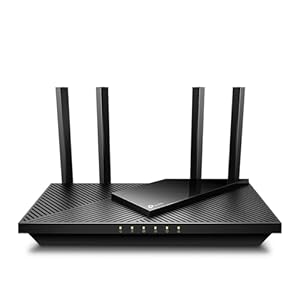
- TP-Link Deco XE75 (3-pack): WiFi 6E mesh with dedicated backhaul band. Excellent value for large homes. ($300-$400)
- Google Nest WiFi Pro (3-pack): WiFi 6E with simple Google Home integration. Good for non-technical users. ($280-$400)
Traditional Routers (For Smaller Homes/Apartments)
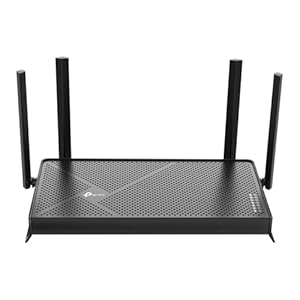
- ASUS RT-AXE7800: WiFi 6E with excellent range for a single-unit router. AiMesh compatible for future expansion. ($200-$280)
- TP-Link Archer AXE75: WiFi 6E with strong QoS features for prioritizing work traffic. ($180-$250)
Ethernet for Your Office (Non-Negotiable)
Regardless of your WiFi setup, your primary work computer should be connected via Ethernet cable. This single change eliminates WiFi variability and provides the most consistent connection possible. If running a cable isn't feasible, consider MoCA adapters that turn your home's coaxial cable into an Ethernet connection, delivering near-wired performance without new cables.
Dedicated Office Network
For households where work and personal internet use compete for bandwidth, consider creating a dedicated VLAN or SSID for work devices with QoS priority. Most modern routers support this feature, allowing you to guarantee bandwidth for your work computer during business hours while other household devices share the remaining capacity.
Tax Deductions for Home Internet
If you're self-employed or own a business, a portion of your home internet bill may be tax-deductible. Here are the key points for 2026:
- Self-employed workers can deduct the business-use percentage of their home internet bill. If you use your internet 60% for business, you can deduct 60% of the monthly cost.
- Home office deduction requirements: You must use a dedicated space in your home regularly and exclusively for business. The simplified method allows a $5/sq ft deduction up to 300 sq ft ($1,500 max).
- W-2 employees generally cannot deduct home internet costs under current tax law, even if their employer requires remote work. Some states (like New York) have their own rules that may allow deductions.
- Equipment purchases (routers, modems, Ethernet cables, networking equipment) may be deductible as business expenses if used primarily for work.
- Keep records: Save your monthly ISP bills and document your business use percentage. A simple log of work hours vs. total internet use hours provides defensible documentation.
Note: Tax laws change frequently. Consult a tax professional for advice specific to your situation.
Best Providers for Remote Work
Best Overall: Verizon Fios
Verizon Fios offers the ideal combination for remote work: symmetric fiber speeds (upload = download), no data caps, and exceptional reliability. Their 300 Mbps plan at $49.99/month provides plenty of bandwidth for video calls and file uploads, while the Gigabit plan at $89.99/month is ideal for video professionals and content creators who need maximum upload speed. Check Verizon Fios availability.
Best Upload Speeds: Google Fiber
Google Fiber's symmetric gigabit and multi-gig plans deliver the fastest upload speeds available to residential customers. For remote workers in creative fields who regularly upload large files, Google Fiber's 2 Gbps plan provides 2,000 Mbps upload, making even massive file transfers near-instantaneous. View Google Fiber plans.
Best Budget: T-Mobile 5G Home Internet
At $50/month ($25-$30 with phone bundle), T-Mobile 5G provides unlimited data with no contract and no equipment fees. Upload speeds of 10-50 Mbps are sufficient for video calls and moderate file sharing. The lack of a wired connection means more variability, but for budget-conscious remote workers, it's hard to beat the value. Read our 5G home internet guide.
Best Wide Availability: Xfinity
Available to over 110 million homes, Xfinity is the most widely available high-speed provider. Their 400 Mbps plan at $55/month provides solid speeds, though the 10-20 Mbps upload speed is a limitation for upload-heavy work. The 1.2 TB data cap is rarely an issue for work-only usage but can be a factor if the household also streams heavily. Explore Xfinity plans.
Best No-Contract: Spectrum
Spectrum's no-contract, no-data-cap approach is appealing for remote workers who value flexibility. Their 300 Mbps plan at $49.99/month with unlimited data provides a worry-free connection for most work tasks. Upload speeds of 10-20 Mbps are adequate for video calls but may feel slow for large file uploads. See Spectrum plans.
Compare all providers available at your address with our availability checker and see the fastest providers in your area.
Upgrade Your Home Office Internet
Call to find the best work-from-home internet plans available at your address:
AT&T Fiber
Symmetric fiber speeds — upload as fast as download for seamless video calls
1-855-850-5977 Check AvailabilityVerizon Fios
Fiber internet with no data caps — work all day without worrying about limits
1-855-387-1456 View PlansFrequently Asked Questions: Work From Home Internet
How much internet speed do I need to work from home?
For basic remote work (email, web browsing, occasional video calls), 25-50 Mbps download and 5 Mbps upload is sufficient. For regular video conferencing with screen sharing, aim for 50-100 Mbps download and 10-25 Mbps upload. Creative professionals who upload large files should target 100+ Mbps symmetric (fiber) connections. Always add extra bandwidth for other household members using the internet simultaneously.
Why does my video call quality drop even though I have fast internet?
Video call quality issues are almost always related to upload speed, WiFi stability, or network congestion rather than download speed. Check your upload speed specifically, as many cable plans have upload speeds of only 5-20 Mbps. Connect your work computer via Ethernet cable for the most consistent call quality. If others in your household are streaming or downloading during your calls, QoS settings can prioritize your video traffic.
Is fiber internet worth the extra cost for remote work?
For most remote workers, fiber internet is worth the investment. The symmetric upload speeds (matching your download speed) dramatically improve video call quality, file upload times, and VPN performance. Fiber is also more reliable than cable with fewer outages and more consistent speeds. If you compare the monthly price difference ($10-$30 more in most markets) against the productivity gains and professional reliability, fiber typically pays for itself.
Should I get a business internet plan for remote work?
For most remote employees, a residential fiber plan provides sufficient performance and reliability. Business plans are worth considering if you need an uptime SLA guarantee, require priority repair service (4-8 hour response vs. 24-72 hours), need a static IP address for VPN or server access, or if your income depends entirely on uninterrupted internet access and the business plan's SLA provides peace of mind.
Can I work from home on 5G home internet?
Yes, 5G home internet can support most remote work tasks. T-Mobile and Verizon 5G services typically deliver 33-300 Mbps download and 10-50 Mbps upload, which is sufficient for video calls, email, and cloud applications. The main concern is consistency; 5G performance can fluctuate more than wired connections. Having a phone hotspot as backup is recommended if you rely on 5G for work.
How do I prioritize work traffic on my home network?
Most modern routers have Quality of Service (QoS) settings that let you prioritize specific devices or traffic types. Access your router's admin panel, enable QoS, and assign your work computer the highest priority. Some routers can prioritize by application type (video conferencing, VPN) rather than just by device. Set your work devices to high priority and entertainment devices to medium or low.
What's the best backup internet for working from home?
The most practical backup is your smartphone's mobile hotspot, which most people already have. For a more robust backup, add a T-Mobile or Verizon 5G home internet plan ($25-$50/month) as a secondary connection using different infrastructure than your primary. A dedicated mobile hotspot device with a prepaid data plan is another option. The key is having a backup that uses different infrastructure than your primary connection.
Can I deduct my home internet on my taxes if I work remotely?
If you're self-employed, you can deduct the business-use percentage of your home internet cost. For example, if you use your internet 50% for business, you can deduct 50% of the monthly bill. W-2 employees generally cannot deduct home internet expenses under current federal tax law, though some states may allow it. Equipment purchases for a home office may also be deductible. Consult a tax professional for your specific situation.
Disclosure: InternetProviders.ai may earn a commission when you sign up for an internet plan through our links. This does not influence our rankings or recommendations, which are based on independent research and analysis of provider performance metrics including speed consistency, upload throughput, reliability, and customer service quality. We are committed to helping remote workers find the most reliable, productive internet connection for their home office. Learn more about our editorial process.
Sources & Methodology
This article uses data from FCC Broadband Data Collection reports, U.S. Census Bureau demographics, and verified provider pricing and plan information. Pricing, speeds, and availability are verified against provider broadband nutrition labels and may vary by location. For a detailed explanation of our data collection and scoring process, see our methodology page.
Data Sources
- FCC Broadband Data Collection
- U.S. Census Bureau American Community Survey
- USAC Universal Service Fund
- NTIA Internet Use Survey
Last verified: March 2026. InternetProviders.ai is an independent resource. We may earn commissions from partner links — this does not affect our editorial recommendations. See our methodology for details.