Your internet bill doesn't have to keep climbing every year. Whether you're paying $80 or $150 a month, there are proven strategies to reduce your costs without downgrading your experience. This guide covers 12 actionable tips that real customers use to save hundreds of dollars annually on internet service.
Why Your Internet Bill Keeps Going Up
Internet service providers (ISPs) commonly use promotional pricing to attract new customers. After the promotional period ends — typically 12 to 24 months — your rate increases to the standard price, which can be 40% to 100% higher. Add in equipment rental fees, data overage charges, and annual price adjustments, and your bill can balloon quickly.
The good news: you have more leverage than you think. ISPs spend significant money acquiring new customers, so retaining existing ones is almost always cheaper for them. Use that to your advantage.
Tip 1: Call Your Provider and Negotiate
This is the single most effective way to lower your bill immediately. Call your ISP's retention department (not regular customer service) and ask for a better rate. Be polite but direct: mention that you've been a loyal customer and that you're considering switching to a competitor.
Before you call, research what competitors in your area are charging. Having a specific offer to reference — "Competitor X is offering 300 Mbps for $49/month" — gives you concrete leverage. Many customers report saving $20 to $40 per month with a single phone call.
Tip 2: Buy Your Own Modem and Router
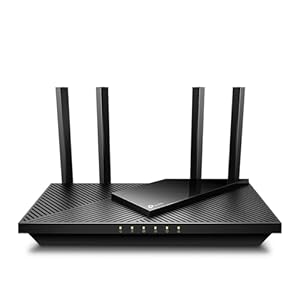
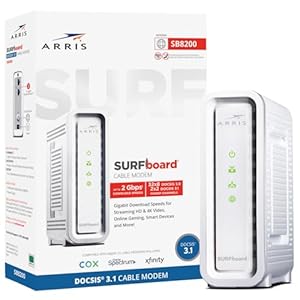
Most ISPs charge $10 to $15 per month to rent a modem/router combo. Over a year, that's $120 to $180 in rental fees. A quality modem costs $60 to $100, and a solid router runs $80 to $150. You'll break even within 6 to 12 months and save money every month after that.
Check your ISP's approved modem list before purchasing. DOCSIS 3.1 modems are recommended for cable internet plans up to 1 Gbps. For fiber connections, your provider typically includes the optical network terminal (ONT) at no extra charge.
Tip 3: Downgrade Your Speed Tier
Many households pay for more speed than they actually use. A family of four that streams video, browses the web, and does video calls can usually get by with 200 to 300 Mbps. If you're paying for a gigabit plan but never saturating that bandwidth, dropping down a tier could save $20 to $50 per month.
Run a few speed tests during peak usage hours to see what you're actually using. If your peak usage is well below your plan's speed, a downgrade makes financial sense.
Tip 4: Bundle Services Strategically
Some providers offer meaningful discounts when you bundle internet with mobile phone service. For example, several major ISPs offer $5 to $30 per line discounts on wireless service when bundled with home internet. Calculate the total cost of both services separately versus bundled to see if the math works in your favor.
However, avoid bundling with services you don't need. Adding TV service just for a bundle discount often costs more overall than internet-only pricing.
Tip 5: Drop the Data Cap Upgrade
Some ISPs charge $25 to $50 per month for unlimited data on plans that have data caps (typically 1 TB to 1.2 TB). Track your actual monthly data usage in your account dashboard. Most households use between 300 GB and 600 GB per month. If you're well under the cap, you can drop the unlimited add-on and pocket the savings.
Tip 6: Look for Low-Income and Discount Programs
Several ISPs offer discounted internet programs for qualifying households. These programs typically provide 50 to 100 Mbps service for $15 to $30 per month. Eligibility is usually based on participation in government assistance programs or household income level. Check with your provider directly or visit their website to see qualification requirements.
Tip 7: Switch to a No-Contract Provider
If you're locked into a contract with high rates, mark your calendar for the contract end date and switch to a no-contract provider. No-contract plans give you the flexibility to switch whenever a better deal appears, and they're increasingly competitive on pricing.
Tip 8: Use a Fixed Wireless or 5G Home Internet Alternative
Fixed wireless and 5G home internet services from major carriers have disrupted traditional ISP pricing. Plans typically run $25 to $50 per month with no contracts, no data caps, and no equipment fees. Speeds of 100 to 300 Mbps are common, which is sufficient for most households.
Check coverage at your address — these services are expanding rapidly but aren't available everywhere yet.
Tip 9: Remove Unnecessary Add-Ons
Review your bill line by line. Common unnecessary charges include premium tech support plans ($7 to $15/month), security suite software ($5 to $10/month), and static IP addresses ($10 to $15/month). If you're not actively using these services, remove them from your account.
Tip 10: Ask About Loyalty or Retention Offers
Beyond standard negotiation, some ISPs have dedicated loyalty programs or periodic retention offers that aren't publicly advertised. When your promotional rate expires, call and specifically ask: "Do you have any loyalty offers or retention promotions available?" These can sometimes match or beat new-customer pricing.
Tip 11: Time Your Switch for Maximum Savings
The best time to negotiate or switch is when your contract is ending, when a new competitor enters your market, or during promotional periods (back-to-school season, holidays). ISPs are most aggressive with pricing when they're trying to hit quarterly subscriber targets.
Tip 12: Compare Providers Regularly
The internet market changes frequently. New providers enter markets, existing providers adjust pricing, and new technologies become available. Compare what's available at your address at least once a year using tools like our cheapest providers comparison to make sure you're getting the best deal.
You can also check out our guide to the best cheap internet plans for current recommendations.
How Much Can You Actually Save?
By implementing just three or four of these tips, most households can reduce their internet bill by $30 to $60 per month — that's $360 to $720 per year. The biggest savings typically come from negotiating your rate, buying your own equipment, and right-sizing your speed tier.
Frequently Asked Questions
How often should I negotiate my internet bill?
Negotiate every time your promotional rate expires, which is typically every 12 to 24 months. Some customers have success negotiating annually even during a promotional period. Set a calendar reminder so you don't miss the window.
Will my ISP really lower my bill if I threaten to cancel?
In most cases, yes. ISP retention departments are specifically trained and authorized to offer discounts to prevent cancellations. The key is being polite, having competitor pricing ready, and being genuinely willing to switch if they won't budge.
Can I use any modem with my internet provider?
Cable providers maintain approved modem lists. Using a modem from that list is required for compatibility and support. For fiber and DSL service, the provider typically supplies the necessary terminal equipment. Always check your ISP's website for their approved equipment list before purchasing.
What's the cheapest internet service available?
The cheapest widely available plans start around $20 to $30 per month for speeds of 50 to 100 Mbps. Low-income programs can be even less. 5G home internet services from wireless carriers start at $25 per month in many areas. See our cheap internet guide for current options.
Is it worth switching internet providers to save money?
If switching can save you $20 or more per month and there's a comparable (or better) provider available at your address, it's usually worth the minor inconvenience. The switch process typically takes less than a week, and you can schedule installations to minimize any downtime. Check our no-contract options for flexible alternatives.
Do internet providers charge early termination fees?
Some providers charge early termination fees (ETFs) of $10 to $15 per remaining month on your contract. However, many major ISPs have moved away from contracts entirely. If you're in a contract, calculate whether the savings from switching outweigh the ETF before making your decision.
The Retention Call: A Step-by-Step Script
Calling your provider's retention department is the single most effective way to lower your internet bill. Here is exactly how to do it:
- Know your current plan and price: Before calling, log into your account and note your exact plan name, speed tier, monthly charge (including all fees), and when your current promotion expires.
- Research competitor pricing: Look up what competitors in your area charge for similar speeds. If T-Mobile offers 300 Mbps for $50/month and you are paying $80/month to Comcast for the same speed, this is your leverage. Write down specific competitor plan names and prices.
- Call and ask for the retention or loyalty department directly: Say "I am considering canceling my service and would like to speak with the retention department." Standard customer service agents have limited authority to offer discounts; retention specialists have more flexibility.
- Be polite but firm: "I have been a customer for [X years] and I am paying $[amount] for [speed]. I have seen that [competitor] is offering [speed] for $[lower price]. I would prefer to stay with you, but I need a reason to. What can you offer me?"
- Accept or counter: The first offer is rarely the best one. If they offer $10/month off, respond with "I appreciate that, but [competitor] would save me $30/month. Can you come closer to matching that?" Most retention agents have authority to offer discounts of $15-$30/month.
- Get confirmation in writing: Ask the agent to email you a confirmation of the new rate, including how long it lasts and what the price will be when it expires. This protects you from billing errors.
Downgrade Your Plan (You Probably Won't Notice)
Many households are overpaying for speeds they do not fully use. A simple downgrade can save $20-$40/month:
- Check your actual usage: Run a speed test at speedtest.net during your typical usage time. If you are paying for 500 Mbps but your speed test shows 200 Mbps (because your router or devices cannot use more), downgrading to a 200-300 Mbps plan saves money with zero impact on your experience.
- Count simultaneous heavy users: Budget 50-100 Mbps per person for comfortable simultaneous use. A 2-person household rarely needs more than 200 Mbps; a 4-person household comfortably fits within 300-500 Mbps.
- Consider your activities: Standard HD streaming uses 5 Mbps. 4K streaming uses 25 Mbps. A Zoom call uses 4-6 Mbps. Web browsing and email use less than 5 Mbps. Even a busy household with multiple streams and a video call peaks at 50-75 Mbps of actual usage.
Eliminate Equipment Rental Fees
Replacing your ISP's rented equipment with your own is one of the fastest ways to reduce your monthly bill permanently:
- Monthly savings: Most providers charge $10-$15/month for a modem/router combo. That is $120-$180 per year.
- What to buy: A DOCSIS 3.1 modem ($70-$100) like the Motorola MB8600 or ARRIS SURFboard S33, plus a Wi-Fi 6 router ($50-$100) like the TP-Link Archer AX21. Total investment: $120-$200, which pays for itself in 8-14 months.
- Compatibility check: Every provider publishes a list of approved modems. Check your provider's website before purchasing. Using an incompatible modem can cause activation issues.
- Note for fiber customers: Fiber providers typically include the ONT (optical network terminal) at no charge, and many include a Wi-Fi router. AT&T Fiber, Frontier Fiber, and Quantum Fiber all include equipment in their monthly price. The equipment rental savings strategy primarily applies to cable customers.
Switch Providers Strategically
If negotiation and downgrades are not enough, switching providers can yield the largest savings:
- New customer promotions: Most providers offer their best pricing to new customers. If you have been with the same provider for 2+ years, you are almost certainly paying more than a new customer would for the same service.
- Switching back: Some providers consider you a "new customer" after a 30-90 day gap in service. If you have a second provider option, you can alternate between providers to continually access new customer pricing. Use one provider for a year, switch to the other for a year, then switch back.
- Timing your switch: The best time to switch is at the end of your current promotional period, before the price increase takes effect. Start shopping 2-3 weeks before your promotion expires to allow time for installation scheduling.
For all available providers and current pricing at your address, use our address lookup tool.
Frequently Asked Questions
- What should I know about How to Lower Your Internet Bill: 12 Proven Tips?
- Key factors include pricing, speed requirements for your household, contract terms, and availability at your address. Our guide covers the essential considerations to help you make an informed decision.
- How do I choose the right internet plan?
- Consider your household size, usage patterns (streaming, gaming, remote work), and budget. Generally, 100 Mbps works for 2-3 users, 300 Mbps for 4-5, and gigabit for power users or large households.
- Are internet prices going up in 2026?
- Internet pricing trends vary by provider and region. Some providers have raised base prices, while competition has driven promotional rates lower in many markets. Compare current offers to find the best value.
Sources & Methodology
This article uses data from FCC Broadband Data Collection reports, U.S. Census Bureau demographics, and verified provider pricing and plan information. Pricing, speeds, and availability are verified against provider broadband nutrition labels and may vary by location. For a detailed explanation of our data collection and scoring process, see our methodology page.
Data Sources
- FCC Broadband Data Collection
- U.S. Census Bureau American Community Survey
- USAC Universal Service Fund
- NTIA Internet Use Survey
Last verified: March 2026. InternetProviders.ai is an independent resource. We may earn commissions from partner links — this does not affect our editorial recommendations. See our methodology for details.
Advanced Strategies Most People Overlook
Beyond the standard tips, there are several lesser-known strategies that can produce significant savings on your internet bill. These approaches require a bit more effort but can yield the largest cost reductions.
The Annual Cancellation Call Strategy
Most major ISPs — including Xfinity, Spectrum, AT&T, and Cox — have dedicated retention departments whose sole purpose is keeping customers from leaving. These representatives have access to discounts and promotional rates that regular customer service agents cannot offer. The strategy is straightforward:
- Research competitor offers in your area before calling (know the exact prices and speeds available from other providers)
- Call your ISP's main customer service number and request to cancel your service
- When transferred to the retention department, explain that you've found a better deal elsewhere
- Be specific: "Provider X is offering 500 Mbps for $49/month, and I'm currently paying $89/month with you for 400 Mbps"
- If the first offer is insufficient, politely decline and restate your intention to cancel
- Most retention agents can offer discounts of $15-40/month for 12-24 months
This approach works because acquiring a new customer costs ISPs $300-500 in marketing, installation, and equipment costs. Giving you a $20/month discount for 12 months ($240 total) is cheaper than losing you. Many savvy consumers repeat this process annually, saving thousands over a decade.
Bundle Auditing: The Unbundling Math
If you have a bundled package (internet + TV + phone), there is a good chance you are overpaying. Cable companies often advertise bundles as savings, but the math frequently does not work in your favor. Here is how to audit your bundle:
- Log into your account and find the itemized breakdown of your bill (not just the total)
- Price out internet-only service from your current provider
- Calculate the cost of replacing your TV package with streaming services you actually use (Netflix $15.49, Hulu $17.99, YouTube TV $72.99, etc.)
- Determine if you actually use the landline phone — most households under 50 do not
- Add up the individual costs and compare to your bundle total
In many cases, internet-only service plus 2-3 streaming services costs $40-80/month less than a full cable bundle. The average cable TV bill alone exceeds $100/month in 2026, while most households can replicate their viewing habits with $30-50/month in streaming subscriptions.
Equipment Savings: Stop Renting, Start Owning
ISP equipment rental fees are one of the most overlooked costs on your internet bill. Here is the math:
- Average modem/router rental: $12-15/month
- Annual cost: $144-180/year
- Cost over 3 years: $432-540
A quality DOCSIS 3.1 modem costs $80-120, and a good Wi-Fi 6 router costs $80-150. Total investment: $160-270, which pays for itself in 12-18 months. After that, you save $144-180 every year. For fiber connections, you typically only need a router (the ONT is usually provider-owned), reducing your upfront investment further.
Recommended models for 2026:
- Cable modem: Motorola MB8611 (DOCSIS 3.1, supports up to 2.5 Gbps, ~$120)
- Wi-Fi 6 router: TP-Link Archer AX55 (~$100) or ASUS RT-AX86U (~$180 for larger homes)
- Combo device: Motorola MG8725 (modem + Wi-Fi 6 router, ~$220)
Before purchasing, verify compatibility with your ISP. Most cable providers publish lists of approved modems. Fiber providers often require their own ONT but allow any router.
Government Programs That Reduce Your Internet Bill
Several federal and state programs provide direct financial assistance for internet service. If you qualify, these programs can reduce your bill by $30-75/month.
Affordable Connectivity Program (ACP) Status
The FCC's Affordable Connectivity Program provided $30/month discounts ($75 for tribal lands) to eligible low-income households. While original ACP funding was exhausted in mid-2024, Congress has been considering reauthorization. As of March 2026, check fcc.gov/acp for the latest status. If ACP is reauthorized, eligible households should apply immediately — the benefit is retroactive to the approval date and applies to service from any participating ISP.
Lifeline Program
The FCC's Lifeline program provides a $9.25/month discount on internet or phone service for qualifying low-income households (income at or below 135% of federal poverty guidelines, or participation in Medicaid, SNAP, SSI, or other assistance programs). While $9.25 is modest, it stacks with other discounts and is available from many major ISPs. Apply at lifelinesupport.org.
ISP Low-Income Programs
Most major ISPs offer their own low-income internet programs, separate from government subsidies:
- Xfinity Internet Essentials: $9.95/month for 50 Mbps (eligible households)
- Spectrum Internet Assist: $17.99/month for 30 Mbps (reduced eligibility)
- AT&T Access: $5-10/month for qualifying households in AT&T service areas
- T-Mobile Project 10Million: Free internet for eligible student households
- Cox Connect2Compete: $9.95/month for 100 Mbps (eligible households)
These programs typically require participation in SNAP, Medicaid, SSI, Free/Reduced School Lunch, or similar assistance programs. Speeds are limited compared to regular plans, but the cost savings are substantial for qualifying families.
Are You Paying for Speed You Do Not Need?
One of the most effective ways to lower your internet bill is to downgrade to a speed tier that actually matches your usage. Many households pay for 500 Mbps or even 1 Gbps when their actual needs never exceed 200 Mbps.
How to Determine Your Actual Speed Needs
Start by identifying the most bandwidth-intensive activities in your household and how many happen simultaneously during peak usage (typically weekday evenings):
| Activity | Bandwidth Required |
|---|---|
| Email, web browsing, social media | 1-5 Mbps per device |
| Standard definition streaming (720p) | 3-5 Mbps per stream |
| HD streaming (1080p) | 5-10 Mbps per stream |
| 4K/UHD streaming | 25 Mbps per stream |
| Video conferencing (Zoom, Teams) | 5-10 Mbps per participant |
| Online gaming | 5-25 Mbps per device (latency matters more) |
| Large file downloads/uploads | As fast as available (but intermittent) |
Example Household Calculations
Household A: 2 adults, no children. One streaming 4K while the other browses and checks email. Peak need: 25 + 5 = 30 Mbps. A 100 Mbps plan provides ample headroom.
Household B: 2 adults working from home + 2 children doing online schoolwork. Two video calls + 2 streaming sessions + browsing. Peak need: 10 + 10 + 10 + 10 + 10 = 50 Mbps. A 200 Mbps plan is more than sufficient.
Household C: 4 adults, all heavy users. Multiple 4K streams, gaming, video calls, and smart home devices. Peak need: 25 + 25 + 25 + 10 + 10 + 10 = 105 Mbps. A 300 Mbps plan covers this with comfortable headroom.
Notice that even the heaviest household in these examples needs only 300 Mbps. If you are paying for a 1 Gbps plan ($80-100/month), downgrading to a 300 Mbps plan ($50-60/month) saves $20-40/month without any noticeable impact on your daily experience. Test this by running a speed test during your peak usage time — if your actual usage rarely exceeds 200 Mbps, you are likely overpaying.
Negotiation Scripts That Work
Having a specific script prepared before calling your ISP makes the negotiation process more effective. Here are tested approaches for common scenarios:
Script 1: Post-Promotional Price Increase
"Hi, I noticed my bill increased from $49.99 to $79.99 when my promotional period ended. I've been a loyal customer for [X] years, and I'd like to continue my service, but $79.99 is above my budget. I've checked, and [Competitor] is offering [speed] for [price] in my area. Can you match that rate or offer me a loyalty discount to keep my business?"
Script 2: Requesting a Plan Downgrade
"I'd like to downgrade my plan from [current plan] to [lower plan]. Before you process that, I wanted to check if there are any current promotions that would let me keep my current speed at a lower price point. I'd prefer to stay at my current speed if the price makes sense."
This script works because the retention system flags downgrades as potential churn risks, often triggering discount offers that you would not receive by simply asking for a cheaper price.
Script 3: New Customer in a Competitive Market
"I'm setting up new service at my address. I see your standard price for [plan] is [price]. I'm also considering [Competitor 1] at [price] and [Competitor 2] at [price]. What's the best offer you can provide for a new customer? I'm ready to sign up today if the price is right."
Key Negotiation Principles
- Be polite but firm. Rudeness gets you transferred to less helpful agents. Firmness keeps the focus on your goal.
- Know your BATNA (Best Alternative To Negotiated Agreement). If you genuinely have a competitive option, you have leverage. If your ISP is the only option, leverage is limited — but loyalty discounts are still possible.
- Be prepared to actually switch. If your ISP refuses to negotiate, following through on a switch reinforces your leverage for future negotiations and often results in a "win-back" offer within 30-60 days.
- Document everything. Get the name of the representative and a confirmation number for any agreed-upon discount. Follow up in writing (email or chat) to create a paper trail.
- Set a calendar reminder. If you receive a 12-month promotional discount, set a reminder for month 11 to call back and negotiate again before the rate increases.
Building a Long-Term Internet Savings Strategy
The most effective approach to keeping your internet bill low is not a one-time negotiation — it is an ongoing strategy. Here is a framework that saves the average household $300-600 per year:
Quarterly Bill Review (5 Minutes)
Every three months, log into your ISP account and review your bill line by line. Look for: new fees that were not there before, services you did not request (premium Wi-Fi, security suites, cloud storage), and any price increases. ISPs occasionally add services or increase fees with minimal notification. Catching these changes early prevents months of overpayment.
Annual Provider Comparison (30 Minutes)
Once a year, check what competitors offer at your address. Use sites like InternetProviders.ai to compare current plans, speeds, and prices from all available providers. Even if you do not switch, this research arms you for your annual retention call.
Technology Refresh Assessment (Annually)
Internet technology evolves rapidly. Fiber may have become available at your address since you last checked. A new fixed wireless provider (T-Mobile, Verizon) may have launched in your area. Your modem or router may be outdated, limiting your speeds below what you are paying for. An annual technology check ensures you are not paying premium prices for outdated infrastructure.
By combining the strategies in this guide — from simple downgrades and equipment purchases to government programs and annual retention calls — most households can reduce their internet spending by 25-50% without sacrificing the speed and reliability they need. The key is taking action: pick the two or three strategies most relevant to your situation and implement them this week.