Quick Answer
Frontier Fiber to the Home (FTTH) delivers internet service over fiber-optic cable that runs directly from Frontier's network to your residence. Unlike older architectures that use copper for the last segment, FTTH provides a pure fiber path from end to end, enabling symmetrical speeds, lower latency, and higher reliability. The installation involves mounting an Optical Network Terminal (ONT) at your home that converts light-based fiber signals into the electrical signals your router and devices use.
Ready for FTTH installation?
What Is Fiber to the Home (FTTH)?
Fiber to the Home is a broadband network architecture where fiber-optic cable extends all the way from the internet service provider's central office or distribution hub to the individual customer's residence. This "last mile" connection is the critical differentiator between FTTH and other fiber-based architectures that substitute copper wire for the final segment. When Frontier advertises its service as "Frontier Fiber," it is specifically referring to this FTTH architecture.
Fiber-optic cable works by transmitting data as pulses of light through thin strands of glass or plastic, each roughly the diameter of a human hair. Because light travels at roughly two-thirds the speed of light in a vacuum through these glass fibers, the data transfer speeds achievable are orders of magnitude greater than what copper wire can deliver. Also, fiber-optic signals do not degrade significantly over the distances involved in last-mile connections, which means a customer five miles from the distribution hub receives essentially the same performance as a customer one block away.
This technology is the foundation of all Frontier Fiber plans, from the Fiber 500 tier through the Fiber 5 Gig tier. Understanding how FTTH works helps explain why fiber internet consistently outperforms cable and DSL connections in speed reliability, latency, and overall user experience.
FTTH vs. FTTN vs. FTTC: Understanding the Differences
Not all fiber internet is created equal. The industry uses several acronyms to describe different fiber deployment architectures, and the differences have meaningful implications for the service you receive. Here is how Frontier's FTTH approach compares to alternative architectures.
FTTH — Fiber to the Home
In an FTTH architecture, fiber-optic cable runs directly to each individual home or business. An Optical Network Terminal (ONT) at the customer's premises converts optical signals to electrical signals. This is the architecture Frontier Fiber uses, and it delivers the highest possible performance because the entire signal path from the provider to the customer uses fiber. There is no copper bottleneck anywhere in the connection.
FTTN — Fiber to the Node
Fiber to the Node brings fiber-optic cable to a neighborhood junction box (called a node or cabinet), typically located within a few thousand feet of the homes it serves. From the node, existing copper telephone lines carry the signal the remaining distance to individual homes using DSL technology such as VDSL2. This hybrid approach delivers faster speeds than traditional DSL but cannot match FTTH because the copper segment introduces distance-dependent signal degradation, slower speeds, and higher latency.
FTTC — Fiber to the Curb
Fiber to the Curb is similar to FTTN but brings fiber closer to the customer, typically within a few hundred feet. The remaining distance is covered by coaxial cable or copper phone line. While FTTC offers better performance than FTTN due to the shorter copper segment, it still falls short of the consistent performance that FTTH delivers. Some cable internet services use an FTTC-like architecture, which is why cable speeds can vary based on neighborhood congestion and distance from the local node.
The bottom line is that Frontier's commitment to FTTH means you get a true all-fiber connection without the performance limitations introduced by copper in the last mile. This distinction is worth understanding because some ISPs market "fiber" service that actually uses FTTN or FTTC architectures, delivering lower performance than what FTTH provides.
Equipment Involved in Frontier FTTH
The Optical Network Terminal (ONT)
The ONT is the most important piece of equipment in a Frontier FTTH installation. This device is typically mounted on the exterior wall of your home near where the fiber cable enters, though interior installations are also possible depending on your home's construction and the technician's assessment. The ONT serves as the demarcation point between Frontier's fiber network and your home network.
Inside the ONT, a photodetector converts incoming light pulses from the fiber into electrical signals, and a laser transmitter converts outgoing electrical signals back into light pulses for transmission over the fiber. The ONT includes an Ethernet port (and in some models, a telephone port for VoIP service) that connects to your router. On multi-gig plans, the ONT features a 10GbE port capable of supporting speeds above 1 Gbps.
The ONT requires electrical power to operate. This means that unlike traditional copper phone lines, which are powered by the telephone company's central office, a fiber connection will not function during a power outage unless you have a battery backup or uninterruptible power supply (UPS) connected to the ONT. Frontier may provide or offer a battery backup unit for the ONT, particularly if you use Frontier phone service.
The Wi-Fi Router / Gateway
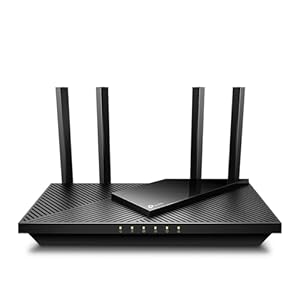
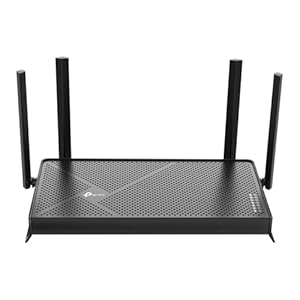
Frontier typically provides a Wi-Fi 6E capable router with fiber plans. This router connects to the ONT via Ethernet cable and broadcasts your home Wi-Fi network. The Frontier-provided router is configured to support the speed tier you subscribe to and includes features like parental controls, guest network capability, and device management through the Frontier app.
You have the option to use your own router instead of or in addition to the Frontier-provided equipment. To do so, you connect your third-party router to the ONT's Ethernet port and configure it according to the router manufacturer's instructions. Note that Frontier's technical support may have limited ability to troubleshoot issues involving third-party routers.
Whole-Home Wi-Fi Extenders
For larger homes or homes with construction that impedes Wi-Fi signal propagation (such as concrete walls, metal framing, or multi-story layouts), Frontier offers whole-home Wi-Fi mesh extender systems. These devices work in conjunction with the primary router to extend Wi-Fi coverage throughout the home, ensuring consistent wireless performance in every room. This equipment may carry an additional monthly fee.
The Frontier FTTH Installation Process
The Frontier FTTH installation is performed by a professional technician and typically takes between two and four hours, depending on the complexity of the installation. Here is what to expect during each stage of the process.
Step 1: Scheduling and Preparation
After ordering Frontier Fiber service by calling or through the Frontier website, you will schedule an installation appointment. Before the appointment, it is helpful to identify where you would like the router placed and ensure that the area near the planned ONT location is accessible.
Step 2: Fiber Cable Routing
The technician routes fiber-optic cable from the nearest fiber distribution point to your home. If your neighborhood uses aerial cable (on utility poles), the fiber drop is attached to the pole and run to your home's exterior. If your area uses underground cable, the fiber may be buried in a shallow trench or run through existing conduit from the street to your home. The technician then brings the fiber through the exterior wall to the ONT mounting location.
Step 3: ONT Mounting and Connection
The ONT is mounted in the planned location and the fiber cable is connected to it. The technician will carefully cleave and splice or connect the fiber strand to the ONT's optical port. The ONT is then connected to power, and the optical connection is tested using specialized equipment to ensure signal quality meets specifications.
Step 4: Router Setup and Configuration
An Ethernet cable is run from the ONT to the Frontier-provided router. The technician configures the router with your chosen network name (SSID) and password, and verifies that the Wi-Fi signal is broadcasting properly. If whole-home Wi-Fi extenders are included in your plan, these are set up during this step as well.
Step 5: Testing and Activation
The technician performs speed tests on both wired and wireless connections to confirm that the service is performing at or near the advertised speed for your plan tier. They verify that the connection is stable, check for any signal issues, and ensure that all equipment is functioning properly. Once testing is complete, the service is officially activated and you can begin using your Frontier Fiber connection.
Symmetrical Speeds: The FTTH Advantage
One of the most meaningful benefits of Frontier's FTTH architecture is symmetrical speed delivery. Unlike cable internet, which uses a technology called DOCSIS that allocates significantly more bandwidth to downloads than uploads, fiber-optic technology inherently supports equal bandwidth in both directions. This means that when you subscribe to a Frontier Fiber 1 Gig plan, you receive up to 1,000 Mbps for both downloads and uploads.
Symmetrical speeds matter more today than ever before. The rise of remote work has made video conferencing a daily activity for millions of people, and video calls consume substantial upload bandwidth. Cloud backup services, content creation workflows involving video or large file uploads, social media posting, and livestreaming all depend heavily on upload speeds. On a typical cable connection with 35 Mbps upload, a large video file upload that would take hours can be completed in minutes on a Frontier Fiber connection with 500 Mbps or 1 Gbps upload speed.
This symmetrical speed capability is not something that can be achieved through software or service changes on cable or DSL networks. It is an inherent physical property of the FTTH architecture, which is why Frontier's investment in true fiber-to-the-home infrastructure rather than hybrid approaches is so significant for long-term customer value.
Future-Proofing Your Home with FTTH
Fiber-optic infrastructure is often described as "future-proof" because the physical fiber cable installed in your home can support dramatically higher speeds than are currently offered, simply by upgrading the equipment at each end. The glass fiber itself can theoretically carry many terabits per second of data, far beyond what any current consumer plan offers. When Frontier or any other fiber provider wants to increase available speeds, they upgrade the ONT and network equipment rather than replacing the cable.
This contrasts sharply with copper-based technologies like DSL and cable, which face fundamental physical limitations on the speeds they can deliver. As household bandwidth demands continue to grow with 8K video, augmented reality, virtual reality, cloud gaming, and an ever-increasing number of connected IoT devices, FTTH infrastructure will be able to accommodate these demands through equipment upgrades rather than infrastructure replacement.
For homeowners, having FTTH infrastructure installed can also add value to the property. Real estate studies have indicated that fiber internet availability can positively influence home values, as buyers increasingly view high-speed internet access as a critical utility. For more details on Frontier's plans and which speed tier suits your household, visit our Frontier Fiber-Optic Plans guide.
Check Frontier AvailabilityFrequently Asked Questions About Frontier FTTH
What is an ONT and where is it installed?
An Optical Network Terminal (ONT) is a device that converts fiber-optic light signals into electrical signals your home network can use. It is typically mounted on the exterior wall of your home near where the fiber cable enters, though interior installations are possible. The ONT connects to your router via Ethernet cable.
Does Frontier Fiber work during power outages?
The ONT requires electrical power to operate, so Frontier Fiber service will not function during a power outage unless you have a battery backup unit (UPS) connected to the ONT and router. Frontier may provide or offer a battery backup, particularly for customers with phone service. This is different from traditional copper phone lines, which are powered by the telephone company's central office.
What is the difference between FTTH and FTTN?
FTTH (Fiber to the Home) runs fiber-optic cable directly to your home, providing the best possible performance. FTTN (Fiber to the Node) runs fiber only to a neighborhood junction box and uses copper wire for the final segment to your home. FTTH delivers symmetrical speeds and consistent performance regardless of distance, while FTTN performance degrades based on the length and quality of the copper segment.
Can I use my own router with Frontier FTTH?
Yes. You can connect your own router to the ONT's Ethernet port. Frontier's ONT outputs a standard Ethernet connection that works with any compatible router. However, Frontier's technical support may have limited ability to help troubleshoot issues related to third-party router hardware or configuration.
How long does Frontier FTTH installation take?
A typical Frontier FTTH installation takes between two and four hours. This includes routing the fiber cable to your home, mounting the ONT, connecting and configuring the router, and testing the connection. The exact duration depends on factors like distance from the nearest distribution point, installation method (aerial vs. underground), and your home's construction.
Is Frontier FTTH future-proof?
Yes. The physical fiber-optic cable installed in your home can support dramatically higher speeds than current plans offer. When Frontier wants to increase available speeds, they upgrade the ONT and network equipment rather than replacing the cable. This makes FTTH infrastructure a long-term investment that will accommodate growing bandwidth demands for decades.
Ready to get Frontier Fiber to the Home? to check availability and schedule your FTTH installation.
Disclosure: InternetProviders.ai may earn a commission when you sign up for a plan through our links. This does not influence our editorial content or technical descriptions. Equipment specifications, installation procedures, and technology descriptions on this page reflect general Frontier FTTH practices as of early 2026 and may vary by location. Frontier may change equipment, installation procedures, and available features at any time. Always confirm specific details with Frontier for your installation.