Quick Answer: Best Wi-Fi 7 Routers
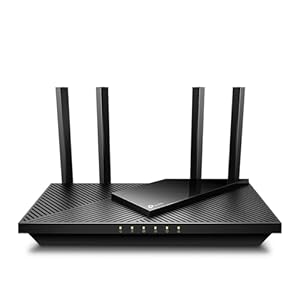
The TP-Link Archer BE800 ($300) is the best Wi-Fi 7 router for most people, delivering tri-band 19 Gbps aggregate throughput with a 10 GbE port and excellent range. Budget buyers should consider the TP-Link Archer BE550 ($150) for solid Wi-Fi 7 basics. For large homes, the Netgear Orbi 970 3-pack ($1,500) covers up to 10,000 sq ft with top-tier mesh performance.
Affiliate disclosure: We may earn a commission when you order through links on this page. Pricing, speeds, and availability vary by address and are subject to change; verify current terms with the provider before ordering.
Want help choosing? Talk to an internet specialist: 844-287-2645
Free consultation — compare plans and check availability at your address. No obligation.
Our Top Wi-Fi 7 Router Picks at a Glance
| Router | Best For | Price | Max Speed | Coverage |
|---|---|---|---|---|
| TP-Link Archer BE800 | Most people | $300 | 19 Gbps (tri-band) | 3,500 sq ft |
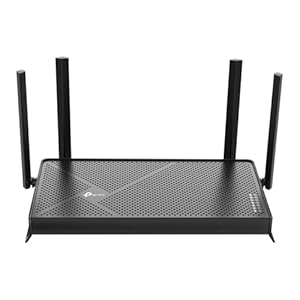
| TP-Link Archer BE550 | Budget buyers | $150 | 9.2 Gbps (dual-band) | 2,500 sq ft |
| Netgear Orbi 970 | Large homes (mesh) | $1,500 (3-pack) | 27 Gbps (quad-band) | 10,000 sq ft |
| ASUS ROG Rapture GT-BE98 | Gaming | $600 | 25 Gbps (quad-band) | 3,000 sq ft |
| eero Max 7 | Simplicity & design | $450 | 11 Gbps (tri-band) | 2,500 sq ft |
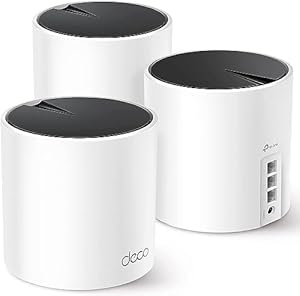
| TP-Link Deco BE65 | Budget mesh | $300 (2-pack) | 10 Gbps (tri-band) | 5,800 sq ft |
What Is Wi-Fi 7 and Why Does It Matter?
Wi-Fi 7 (802.11be) is the latest wireless standard, offering significant improvements over Wi-Fi 6E. Here are the key advances that matter for your home network:
Key Wi-Fi 7 Features
- Multi-Link Operation (MLO): Wi-Fi 7 can use multiple frequency bands simultaneously on a single connection. Instead of your device connecting to either 2.4 GHz, 5 GHz, or 6 GHz, it can bond multiple bands together for faster speeds and lower latency. This is the single biggest improvement in Wi-Fi 7.
- 320 MHz channels: Double the maximum channel width of Wi-Fi 6E (160 MHz), enabling up to 46 Gbps theoretical maximum throughput on the 6 GHz band.
- 4K QAM: More efficient data encoding that increases throughput by 20% compared to Wi-Fi 6E’s 1024-QAM.
- Reduced latency: MLO and improved scheduling reduce average latency by 50–75% in congested environments — critical for gaming, video calls, and VR applications.
Real-World Performance Expectations
Lab speeds and real-world speeds differ significantly. Here’s what you can realistically expect from a Wi-Fi 7 router in a typical home:
| Scenario | Wi-Fi 6E (Real World) | Wi-Fi 7 (Real World) | Improvement |
|---|---|---|---|
| Same room, 1 device | 800–1,200 Mbps | 1,500–2,500 Mbps | ~2x |
| 1 room away | 400–600 Mbps | 700–1,200 Mbps | ~2x |
| 2 rooms away | 150–300 Mbps | 300–600 Mbps | ~2x |
| 10+ devices streaming | 80–150 Mbps per device | 200–400 Mbps per device | 2–3x |
| Gaming latency (local) | 5–10 ms | 2–5 ms | 50% lower |
Best Overall: TP-Link Archer BE800
Price: $300 | Speed: 19 Gbps tri-band | Coverage: 3,500 sq ft | Ports: 1x 10 GbE, 4x 1 GbE
The TP-Link Archer BE800 hits the sweet spot of performance, features, and price for most households. It delivers genuine Wi-Fi 7 performance with MLO support, 320 MHz channels on 6 GHz, and a 10 GbE WAN port that future-proofs your setup for multi-gig internet plans.
What We Like
- Excellent value: At $300, it costs half as much as competing tri-band Wi-Fi 7 routers with similar specs
- 10 GbE port: Supports multi-gig internet plans from Frontier (2 Gig, 5 Gig) and AT&T Fiber (2 Gbps, 5 Gbps) without a bottleneck
- MLO enabled: Full multi-link operation across all three bands
- USB-C storage sharing: Attach an external drive for simple NAS functionality
- TP-Link HomeShield: Built-in network security and parental controls (basic tier free, advanced $5.99/mo)
What Could Be Better
- Large physical footprint (12″ tall with antenna fins) — not the most discreet router
- No built-in mesh support (requires adding Deco units separately)
- HomeShield advanced features require a subscription
Best paired with: Any internet plan up to 5 Gbps. Ideal for multi-gig internet subscribers who want full speed on wired and wireless connections. Handles 30+ simultaneous devices without slowdown.
Best Budget: TP-Link Archer BE550
Price: $150 | Speed: 9.2 Gbps dual-band | Coverage: 2,500 sq ft | Ports: 1x 2.5 GbE, 3x 1 GbE
The Archer BE550 brings Wi-Fi 7 performance to the $150 price point — half the cost of most alternatives. It’s a dual-band router (2.4 GHz + 6 GHz) with 320 MHz channel support and MLO, making it a genuine Wi-Fi 7 experience without the premium price.
What We Like
- Unbeatable price: $150 is the lowest we’ve seen for a Wi-Fi 7 router with MLO
- 2.5 GbE WAN port: Handles internet plans up to 2.5 Gbps without bottleneck
- Compact design: Smaller than most Wi-Fi 7 routers, fits on a bookshelf easily
- Simple setup: TP-Link Tether app walks through configuration in under 5 minutes
What Could Be Better
- Dual-band only (no 5 GHz) — older devices that don’t support 6 GHz fall back to 2.4 GHz
- Coverage limited to ~2,500 sq ft — larger homes need mesh
- No 10 GbE port — not ideal for 5 Gbps internet plans
Best paired with: Internet plans up to 2 Gbps. Great for apartments, small homes, and anyone on Spectrum or Xfinity gigabit plans who wants Wi-Fi 7 without overspending.
Best Mesh: Netgear Orbi 970
Price: $1,500 (3-pack) | Speed: 27 Gbps quad-band | Coverage: 10,000 sq ft | Ports: 1x 10 GbE per unit
The Orbi 970 is the definitive Wi-Fi 7 mesh system for large homes. Each unit features quad-band Wi-Fi 7 with a dedicated wireless backhaul channel, meaning your mesh network doesn’t sacrifice client bandwidth for inter-node communication.
What We Like
- Massive coverage: 10,000 sq ft with the 3-pack eliminates dead zones in even the largest homes
- Dedicated backhaul: The 4th band (6 GHz backhaul) keeps mesh communication separate from client traffic
- 10 GbE on every unit: Each satellite has a 10 GbE port for wired devices like gaming PCs, NAS units, or media servers
- Seamless roaming: Devices transition between mesh nodes without dropping connections
What Could Be Better
- Price: $1,500 is a serious investment — the 2-pack at $1,000 covers 6,600 sq ft if you don’t need the 3rd unit
- Large unit size (each node is 10″ tall)
- Netgear Armor security requires a $100/year subscription after 30-day trial
Best paired with: Multi-gig internet in homes over 3,000 sq ft. If you have Frontier 5 Gig or AT&T 5 Gbps and a large home, this is the mesh system that can actually deliver those speeds throughout every room.
Best for Gaming: ASUS ROG Rapture GT-BE98
Price: $600 | Speed: 25 Gbps quad-band | Coverage: 3,000 sq ft | Ports: 2x 10 GbE, 4x 1 GbE
The ROG Rapture GT-BE98 is built for serious gamers who demand the lowest possible latency and the most consistent connection. Its quad-band design with dual 10 GbE ports and advanced QoS features make it the router of choice for competitive gaming households.
What We Like
- Dual 10 GbE ports: One for WAN, one for a gaming PC or NAS — no adapter needed
- Triple-level game boost: Prioritizes gaming traffic at the device, network, and internet levels
- AiMesh compatible: Add ASUS mesh nodes for expanded coverage without replacing the router
- VPN Fusion: Run a VPN for some devices while maintaining a direct connection for gaming
- Built-in latency monitoring: Real-time per-device latency display in the router UI
What Could Be Better
- $600 is expensive for a single-unit router
- Massive footprint with 8 external antennas — not subtle
- ASUS’s UI is powerful but has a steeper learning curve than TP-Link or Netgear
Best paired with: Low-latency internet plans. If you’re on a fiber connection from Verizon Fios, Frontier Fiber, or AT&T Fiber, this router extracts maximum performance for competitive gaming.
Best Compact Router: eero Max 7
Price: $450 | Speed: 11 Gbps tri-band | Coverage: 2,500 sq ft | Ports: 1x 10 GbE, 1x 2.5 GbE, 2x 1 GbE
Amazon’s eero Max 7 is the router for people who want Wi-Fi 7 performance without a massive device dominating their living room. It’s the same router Frontier Fiber includes with its 2 Gig and 5 Gig plans.
What We Like
- Minimalist design: Sleek, compact form factor that blends into any room
- 10 GbE port: Supports multi-gig internet plans
- eero mesh ecosystem: Add eero units seamlessly for expanded coverage
- Built-in Zigbee/Thread smart home hub: Connect smart home devices without a separate hub
- Automatic security updates: eero pushes firmware updates automatically with no user intervention
What Could Be Better
- $450 for 11 Gbps aggregate — the Archer BE800 offers more speed for less money
- Advanced features require eero Plus subscription ($10/mo or $100/year)
- No USB port for local storage sharing
Best paired with: Frontier Fiber customers already receive this router for free. For others, it’s ideal if you value design, simplicity, and smart home integration over raw speed specifications.
Best Budget Mesh: TP-Link Deco BE65
Price: $300 (2-pack) | Speed: 10 Gbps tri-band | Coverage: 5,800 sq ft | Ports: 1x 2.5 GbE + 2x 1 GbE per unit
The Deco BE65 2-pack delivers Wi-Fi 7 mesh coverage for the same price as a single premium router. It’s one-fifth the price of the Orbi 970 while covering over half the area.
What We Like
- Outstanding value: $300 for whole-home Wi-Fi 7 mesh is unmatched
- 5,800 sq ft coverage: Covers most homes with just 2 units; add a 3rd ($150) for 8,700 sq ft
- Tri-band with dedicated backhaul: The 6 GHz band handles mesh backhaul, keeping 2.4 and 5 GHz free for devices
- Seamless roaming: 802.11k/v/r support for smooth device handoffs between nodes
What Could Be Better
- 2.5 GbE WAN port limits wired throughput to 2.5 Gbps (no 10 GbE option)
- No quad-band — backhaul shares the 6 GHz band in high-traffic situations
- Limited wired ports per unit (3 total)
Best paired with: Internet plans up to 2 Gbps in homes over 2,500 sq ft. The best option for Spectrum or Xfinity gigabit customers in large homes who want Wi-Fi 7 without spending $1,000+.
Full Wi-Fi 7 Router Comparison
| Router | Price | Bands | Max Speed | Coverage | WAN Port | MLO | Best For |
|---|---|---|---|---|---|---|---|
| TP-Link Archer BE800 | $300 | Tri | 19 Gbps | 3,500 sq ft | 10 GbE | Yes | Most people |
| TP-Link Archer BE550 | $150 | Dual | 9.2 Gbps | 2,500 sq ft | 2.5 GbE | Yes | Budget |
| Netgear Orbi 970 | $1,500 | Quad | 27 Gbps | 10,000 sq ft | 10 GbE | Yes | Large homes |
| ASUS ROG GT-BE98 | $600 | Quad | 25 Gbps | 3,000 sq ft | 10 GbE x2 | Yes | Gaming |
| eero Max 7 | $450 | Tri | 11 Gbps | 2,500 sq ft | 10 GbE | Yes | Simplicity |
| TP-Link Deco BE65 | $300 | Tri | 10 Gbps | 5,800 sq ft | 2.5 GbE | Yes | Budget mesh |
Buying Guide: How to Choose a Wi-Fi 7 Router
Selecting the right Wi-Fi 7 router depends on four factors: your internet speed, home size, number of devices, and budget.
Match Your Router to Your Internet Plan
Your router’s WAN port determines the maximum speed from your ISP. Here’s the matching guide:
- Up to 1 Gbps plans: Any router with a 1 GbE or 2.5 GbE WAN port (Archer BE550 works fine)
- 1–2.5 Gbps plans: You need a 2.5 GbE WAN port at minimum (Archer BE550, Deco BE65)
- 2.5–10 Gbps plans: You need a 10 GbE WAN port (Archer BE800, Orbi 970, eero Max 7, ROG GT-BE98)
Match Coverage to Home Size
- Under 2,000 sq ft: Any single-unit router will work. The Archer BE550 or eero Max 7 is sufficient.
- 2,000–3,500 sq ft: A single Archer BE800 or ROG GT-BE98 should cover the space. Consider mesh if you have many walls or floors.
- 3,500–6,000 sq ft: Mesh is recommended. The Deco BE65 2-pack is the value choice; the Orbi 970 2-pack for premium performance.
- Over 6,000 sq ft: The Orbi 970 3-pack or Deco BE65 3-pack is your best option.
Consider Your Device Count
Wi-Fi 7’s improved efficiency shines in homes with many devices:
- 1–10 devices: Any Wi-Fi 7 router handles this easily
- 10–30 devices: Tri-band routers (Archer BE800, eero Max 7) perform best by spreading devices across bands
- 30+ devices: Quad-band (Orbi 970, ROG GT-BE98) or mesh provides the most headroom
Wi-Fi 7 vs. Wi-Fi 6E: Is It Worth Upgrading?
If you already have a Wi-Fi 6E router, upgrading to Wi-Fi 7 makes sense in these situations:
Upgrade Now If:
- You have a multi-gig internet plan (2 Gbps+) and your current router bottlenecks WAN speed
- You have 20+ simultaneous devices and experience congestion
- You game competitively and want the lowest possible latency
- Your current router is 3+ generations behind (Wi-Fi 5 or older)
Wait If:
- Your internet plan is under 1 Gbps and you have a recent Wi-Fi 6E router
- You have fewer than 10 devices and don’t experience congestion
- None of your devices support Wi-Fi 7 yet (though the router still improves Wi-Fi 6E device performance)
Key point: Even if your devices don’t support Wi-Fi 7 yet, a Wi-Fi 7 router improves performance for all connected devices through better scheduling, wider channels, and more efficient traffic management. You’ll see 10–30% improvement on Wi-Fi 6/6E devices connected to a Wi-Fi 7 router compared to a Wi-Fi 6E router.
Wi-Fi 7 Device Compatibility (March 2026)
Wi-Fi 7 client device support has expanded rapidly. As of March 2026, these devices support Wi-Fi 7:
Smartphones
- Samsung Galaxy S25 series, Galaxy Z Fold 6, Galaxy Z Flip 6
- Google Pixel 9 series
- OnePlus 13
- iPhone 16 Pro / Pro Max (Wi-Fi 7 with MLO)
Laptops
- Intel Core Ultra-based laptops (most 2025–2026 models) with Intel BE200 Wi-Fi module
- Apple MacBook Pro M4 series, MacBook Air M4
- Qualcomm Snapdragon X-based Windows laptops
Other Devices
- Apple TV 4K (3rd generation, 2025)
- Select gaming PCs with Intel BE200 or MediaTek MT7925 adapters
- Most smart home devices still use Wi-Fi 4/5/6 — they benefit from reduced congestion on a Wi-Fi 7 router but don’t use Wi-Fi 7 features directly
Frequently Asked Questions
Is it worth buying a Wi-Fi 7 router in 2026?
Yes. Even if most of your devices are still Wi-Fi 6/6E, a Wi-Fi 7 router provides meaningful improvements through better traffic management, wider channels, and MLO. The $150 Archer BE550 makes Wi-Fi 7 accessible without a premium price. As you upgrade phones and laptops over the next 2–3 years, they’ll automatically take advantage of the full Wi-Fi 7 feature set.
Do I need Wi-Fi 7 for gigabit internet?
No, but it helps. A Wi-Fi 6E router can deliver gigabit speeds to nearby devices. Wi-Fi 7’s advantage is maintaining near-gigabit speeds at greater distances and across more simultaneous devices. If you have a multi-gig plan (2+ Gbps), Wi-Fi 7 with a 10 GbE WAN port is essential to avoid bottlenecking.
Should I replace my ISP’s router with a Wi-Fi 7 model?
In most cases, yes. ISP-provided routers (except Frontier’s included eero) are typically Wi-Fi 5 or 6, one or two generations behind. A $150–$300 Wi-Fi 7 router pays for itself in 12–24 months (compared to $10–$15/month router rental fees) and delivers better performance. Most ISPs support BYOD (bring your own device) — check compatibility before purchasing.
What’s the best Wi-Fi 7 mesh system for a large house?
For large houses (3,000+ sq ft), the Netgear Orbi 970 3-pack ($1,500) provides the best coverage and speeds with dedicated quad-band backhaul. For budget mesh, the TP-Link Deco BE65 2-pack ($300) covers up to 5,800 sq ft with Wi-Fi 7 performance at one-fifth the price.
Which Wi-Fi 7 router works best with Frontier Fiber?
Frontier includes the eero Max 7 for free with 2 Gig and 5 Gig plans. If you want an upgrade, the TP-Link Archer BE800 ($300) offers faster wireless speeds and a 10 GbE WAN port. Connect it to Frontier’s ONT via Ethernet — no configuration changes needed beyond setting DHCP on the WAN interface.
Can I mix Wi-Fi 7 routers with Wi-Fi 6 devices?
Yes. Wi-Fi 7 routers are fully backward compatible with Wi-Fi 6, 6E, 5, and even Wi-Fi 4 devices. Your older devices connect at their maximum supported speed while benefiting from the router’s improved traffic management and reduced congestion.
Prices and specifications may change. We update this guide monthly as new Wi-Fi 7 routers launch and prices shift.
Sources & Methodology
This article uses data from FCC Broadband Data Collection reports, U.S. Census Bureau demographics, and verified provider pricing and plan information. Pricing, speeds, and availability are verified against provider broadband nutrition labels and may vary by location. For a detailed explanation of our data collection and scoring process, see our methodology page.
Data Sources
- FCC Broadband Data Collection
- U.S. Census Bureau American Community Survey
- USAC Universal Service Fund
- NTIA Internet Use Survey
Last verified: March 2026. InternetProviders.ai is an independent resource. We may earn commissions from partner links — this does not affect our editorial recommendations. See our methodology for details.