Affiliate disclosure: We may earn a commission when you order through links on this page. Pricing, speeds, and availability vary by address and are subject to change; verify current terms with the provider before ordering.
Want help choosing? Talk to an internet specialist: 844-287-2645
Free consultation — compare plans and check availability at your address. No obligation.
Spectrum and Xfinity are the two largest cable internet providers in the United States, collectively covering over 150 million households. If you live in a metro area, there is a strong chance one or both are available at your address. But which one delivers better value? This head-to-head comparison breaks down plans, pricing, speeds, data policies, equipment, and customer service to help you decide.
Provider Overview
Spectrum, owned by Charter Communications, operates in 41 states and serves roughly 32 million customers. The company positions itself with straightforward pricing, no contracts, and no data caps. Xfinity, the consumer brand of Comcast, covers 40 states and reaches over 62 million homes. Xfinity offers a wider range of plan tiers, from budget options to multi-gigabit service, but comes with a 1.2 TB data cap in most markets.
Both providers rely primarily on hybrid fiber-coaxial (HFC) cable networks, though each is actively upgrading to DOCSIS 4.0 and expanding fiber-to-the-home in select areas. The technology is similar, but the packaging, pricing philosophy, and policies differ significantly.
Plans & Pricing Comparison
Here is a side-by-side look at the current internet-only plans from each provider as of early 2026:
| Feature | Spectrum | Xfinity |
|---|---|---|
| Top-tier plan | — | Gigabit — 1 Gbps — $80/mo |
| Contract required | No | No (but 1-yr agreement lowers price on some tiers) |
| Data cap | None | 1.2 TB (most markets) |
Spectrum keeps things simple with three plans. Pricing ranges from about $50 to $90 per month, with no promotional rates that jump after 12 months. Xfinity offers more granularity, starting as low as $30 per month for basic service and scaling up to $120 for their fastest residential tier. However, some Xfinity plans feature promotional pricing that increases after the first year.
For budget shoppers, Xfinity Connect at $30 per month is appealing if you only need light browsing and email. For households that want solid performance without complexity, Spectrum Internet at 300 Mbps for $50 is arguably the better value because it includes no data cap and no contract.
Speed Comparison
On paper, Xfinity offers faster maximum speeds. Their Gigabit x6 plan advertises up to 6 Gbps downstream, while Spectrum currently tops out at 1 Gbps for most residential customers. However, maximum speed only matters if you actually need it.
For the plans most people choose (300–500 Mbps), both providers deliver comparable real-world performance. Cable internet speeds can fluctuate during peak evening hours due to shared neighborhood bandwidth, and this affects both Spectrum and Xfinity equally.
One key difference: Xfinity has been rolling out symmetric upload speeds on some fiber-backed plans, while Spectrum uploads remain asymmetric, typically topping out at 20–35 Mbps on standard plans. If you work from home and rely on video conferencing or large file uploads, this is worth considering.
Neither provider guarantees minimum speeds, but both typically deliver 80–90% of advertised download speeds based on FCC broadband measurement data.
Data Caps & Throttling
This is the single biggest differentiator between these two providers. Spectrum has no data caps whatsoever. You can use as much data as you want without overage fees or throttling. This makes Spectrum a strong choice for households with multiple streamers, gamers, or remote workers.
Xfinity enforces a 1.2 TB monthly data cap in most of its service areas. If you exceed 1.2 TB, Comcast charges $10 for each additional 50 GB block, up to a maximum of $100 in overage fees per month. The Northeastern United States is currently exempt from the cap. You can add unlimited data for $30 per month, or get it included with the xFi Complete plan at $25 per month (which also includes the xFi Gateway router).
For context, 1.2 TB is enough for most households. Streaming 4K video uses roughly 7 GB per hour, so you could stream about 170 hours of 4K content per month before hitting the cap. But households with 4+ heavy users can realistically exceed this threshold. For more details, see our guide to internet data caps.
Equipment & Installation
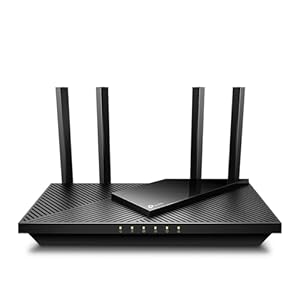
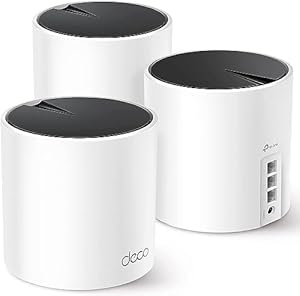
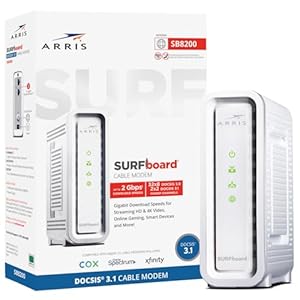
Spectrum includes a modem at no additional cost with all plans. A WiFi router is available for $5 per month, or you can use your own. Installation is typically $59.99 for professional setup, though self-install kits are available for free.
Xfinity charges $14 per month for their xFi Gateway (modem-router combo). You can bring your own modem to avoid this fee, but you will lose access to some Xfinity-specific features like the xFi app for parental controls. The xFi Complete plan ($25/mo) bundles the gateway rental with unlimited data, which is a reasonable deal if you need both.
Over a year, Spectrum equipment costs run $0–$60, while Xfinity equipment costs run $168–$300. This difference adds up and should be factored into the total cost comparison.
Bundles & Mobile Add-Ons
Both providers offer mobile phone service that can be bundled with internet for savings.
Spectrum Mobile operates on the Verizon network and offers unlimited plans starting at $29.99 per line. You must be a Spectrum Internet customer to sign up. Plans include unlimited talk, text, and data with 5G access included.
Xfinity Mobile also operates on the Verizon network with similar pricing. Unlimited plans start at $30 per line, with shared data plans available from $15 per line. Like Spectrum, you need to be an Xfinity Internet customer.
For TV bundling, Xfinity has a broader selection with its X1 platform and Peacock integration. Spectrum offers Spectrum TV Select and higher tiers. Both are increasingly pushing streaming packages over traditional cable bundles, reflecting industry trends.
Neither provider offers meaningful internet-only bundle discounts. The real savings come from mobile bundling, where having 2–4 lines on either carrier can save $40–$80 per month compared to standalone mobile plans from Verizon or AT&T directly.
Customer Service
Historically, both Spectrum and Xfinity have struggled with customer satisfaction rankings. In recent J.D. Power and ACSI surveys, cable providers as a category score below fiber providers like Verizon Fios and Google Fiber.
Spectrum has made improvements with its Spectrum stores and in-app support. Xfinity has invested in its xFi app, which handles many common tasks like restarting equipment, checking for outages, and managing connected devices without needing to call support.
Both providers offer 24/7 phone support, online chat, and in-store help. Neither stands out as significantly better than the other, though individual experiences vary by region. The better indicator is often local infrastructure quality, which depends on how recently the cable plant in your area was upgraded.
Our Verdict
Choose Spectrum if:
- You want no data caps without paying extra
- You prefer simple, consistent pricing with no promotional rate hikes
- You do not need speeds above 1 Gbps
- You want lower equipment costs
Choose Xfinity if:
- You need the cheapest possible entry-level plan ($30/mo)
- You want access to multi-gigabit speeds (2 Gbps+)
- You value the xFi app ecosystem and smart home integrations
- You live in a Northeast state where the data cap does not apply
For most households, Spectrum offers the better overall value due to no data caps, straightforward pricing, and included modem. Xfinity wins if you need ultra-fast speeds, want the cheapest entry point, or live in an area where the data cap is waived.
Already know which provider you want? Check our detailed pages for Spectrum plans and Xfinity plans, or see our full provider comparison hub and best cable providers ranking.
Frequently Asked Questions
Is Spectrum or Xfinity cheaper for basic internet?
Xfinity is cheaper at the entry level, starting at $30 per month for 75 Mbps. Spectrum starts at $49.99 per month but includes 300 Mbps speeds, no data cap, and a free modem. When factoring in equipment costs and potential overage fees, Spectrum often comes out ahead for moderate to heavy users.
Does Spectrum have data caps?
No. Spectrum does not impose any data caps on any of its residential internet plans. This is one of its strongest selling points compared to Xfinity and other cable providers that enforce usage limits.
Can I use my own modem with Spectrum or Xfinity?
Yes, both providers allow you to use your own DOCSIS 3.1 compatible modem. With Spectrum, this saves you nothing on the modem (it is already free) but lets you choose your own router. With Xfinity, using your own equipment saves $14 per month in gateway rental fees.
Which provider has better speeds for gaming?
For gaming, latency matters more than raw download speed. Both Spectrum and Xfinity deliver similar latency on their cable networks, typically 10–30 ms. Xfinity may have a slight edge if you are on a fiber-backed plan with symmetric speeds, which helps with game hosting and streaming simultaneously. Either provider is adequate for online gaming on standard plans.
Do Spectrum or Xfinity require contracts?
Neither provider requires contracts for internet-only plans. Xfinity does offer optional 1-year or 2-year agreements on some tiers that can lower the monthly price, but these come with early termination fees. Spectrum has no contracts and no early termination fees on any plan.
How do I check if Spectrum or Xfinity is available at my address?
Both providers have availability checkers on their websites. You can also use our provider comparison tool to see which services are available at your address and compare them side by side.
Pros and Cons
Spectrum
Pros
- No data caps on any plan
- No annual contracts required
- Fiber technology available with symmetric speeds
- Wide availability across 41 states
Cons
- Upload speeds vary by plan and technology
Xfinity
Pros
- No annual contracts required
- Fiber technology available with symmetric speeds
- Speeds up to 2 Gbps
- Wide availability across 40 states
- Low entry price starting at $30/mo
Cons
- Data caps may result in overage fees or throttling
- Upload speeds vary by plan and technology
How Much Speed Do You Actually Need?
Before comparing Spectrum and Xfinity plans, determine the speed tier your household actually requires. Overpaying for speed you cannot use wastes money; underpaying leads to buffering and frustration.
| Household Activity | Minimum Speed | Recommended |
|---|---|---|
| Email and web browsing (1-2 people) | 25 Mbps | 50-100 Mbps |
| HD streaming on 2-3 devices | 50 Mbps | 100-200 Mbps |
| 4K streaming + gaming (family of 4) | 100 Mbps | 300-500 Mbps |
| Remote work (video calls + cloud sync) | 50 Mbps down / 10 Mbps up | 200+ Mbps symmetric |
| Content creation (video upload, streaming) | 100 Mbps down / 50 Mbps up | 500+ Mbps symmetric |
| Smart home (20+ IoT devices) | 100 Mbps | 300+ Mbps |
| Large household (6+ people, heavy use) | 300 Mbps | 500 Mbps - 1 Gbps |
Most U.S. households use between 200-500 Mbps effectively. Gigabit plans provide headroom for future devices and simultaneous heavy use but are not necessary for typical streaming and browsing. Match your plan choice to your actual usage to get the best value from either Spectrum or Xfinity.
Switching Checklist: Spectrum to Xfinity (or Vice Versa)
If you are changing providers, follow this checklist to ensure a smooth transition with no internet downtime.
- Verify availability: Confirm Spectrum or Xfinity serves your exact address. Coverage varies by street and building.
- Check your current contract: Spectrum has no contracts — cancel anytime. Xfinity has no contracts — cancel anytime.
- Schedule installation overlap: Keep your current service active until the new provider is installed and working. A few days of overlap prevents an internet gap.
- Return equipment: Return your current provider's modem, router, or gateway to avoid unreturned equipment charges (typically $100-$300). Both providers offer prepaid return shipping or in-store drop-off.
- Update WiFi settings: If you want to keep the same WiFi network name and password, configure the new router to match your old settings. This prevents having to reconnect every device in your home.
- Test the new connection: Run speed tests at different times of day for the first week. If speeds are consistently below what you are paying for, contact the new provider's technical support.
- Cancel old service: Call your previous provider to cancel only after confirming the new service works. Request written confirmation of the cancellation and final bill date.
Sources & Methodology
This article uses data from FCC Broadband Data Collection reports, U.S. Census Bureau demographics, and verified provider pricing and plan information. Pricing, speeds, and availability are verified against provider broadband nutrition labels and may vary by location. For a detailed explanation of our data collection and scoring process, see our methodology page.
Data Sources
- FCC Broadband Data Collection
- U.S. Census Bureau American Community Survey
- USAC Universal Service Fund
- NTIA Internet Use Survey
Last verified: March 2026. InternetProviders.ai is an independent resource. We may earn commissions from partner links — this does not affect our editorial recommendations. See our methodology for details.