Sources
This content references data from FCC Broadband Map, U.S. Census Bureau, CenturyLink, Sparklight. Pricing and availability are subject to change.
Market Context
The broadband market concentration in the United States served by providers like CenturyLink and Sparklight varies based on population density and infrastructure investment. According to FCC broadband deployment data, median household income and population density are key factors in service availability and pricing. The BEAD (Broadband Equity, Access, and Deployment) program may expand options in underserved areas of the United States.
CenturyLink vs Sparklight: Side-by-Side Comparison
| Feature | CenturyLink | Sparklight |
|---|---|---|
| Technology | DSL + Fiber (Quantum Fiber) | Cable |
| Max Download Speed | 940 Mbps (fiber) | 1 Gbps |
| Starting Price | $30/mo (fiber) / $50/mo (DSL) | $55/mo |
| Data Caps | None on fiber | 300GB–1.5TB (varies by plan) |
| Contracts | No contracts | No contracts |
| Coverage | 36 states | 21 states (rural/suburban focus) |
| Upload Speeds | Up to 940 Mbps (fiber, symmetric) | Up to 50 Mbps |
| Equipment Fee | $15/mo router rental (free on some fiber plans) | $12/mo modem rental |
Our Verdict: CenturyLink vs Sparklight
CenturyLink is the stronger pick for most households. Here are the three biggest reasons:
- No data caps on fiber: Sparklight's data caps (as low as 300GB on its entry plan) can be a deal-breaker for families who stream, game, or work from home. CenturyLink's Quantum Fiber plans come with unlimited data at no extra charge.
- Lower entry price: CenturyLink fiber starts at $30/mo — $25 less than Sparklight's cheapest plan. Even CenturyLink's DSL at $50/mo matches Sparklight's baseline pricing while covering far more geography.
- Symmetric upload speeds: CenturyLink's fiber delivers symmetric speeds (upload equals download), which matters for video calls, cloud backups, and content creation. Sparklight's cable upload tops out around 50 Mbps regardless of plan tier.
When Sparklight wins: If you live in a rural or suburban area where CenturyLink only offers DSL (not fiber), Sparklight's cable service may deliver faster real-world download speeds. Sparklight's gig plan also edges out CenturyLink's 940 Mbps ceiling, though the difference is negligible in everyday use.
CenturyLink Plans and Pricing (2026)
CenturyLink operates under two brands in 2026. In markets where fiber is available, the service is marketed as Quantum Fiber; legacy DSL areas retain the CenturyLink name. Brightspeed has taken over CenturyLink's copper network in parts of 20 states, so availability depends on your exact address.
DSL plans range from $50/mo for speeds between 20 Mbps and 100 Mbps. DSL performance varies significantly by distance from the central office — customers within a mile typically see near-advertised speeds, while those further out may experience degraded throughput.
Fiber plans start at $30/mo for 200 Mbps and scale to $70/mo for 940 Mbps symmetric service. All fiber plans include unlimited data, no annual contracts, and price-lock guarantees that keep your rate fixed for the duration of service. Installation is typically free for new fiber customers, though a $15/mo router rental applies unless you supply your own equipment.
CenturyLink's fiber footprint has expanded steadily through the Quantum Fiber brand, now covering portions of metro areas in states like Arizona, Colorado, Minnesota, Oregon, and Washington. The company has committed billions to continued fiber buildout through 2027.
Sparklight Plans and Pricing (2026)
Sparklight (formerly Cable ONE) positions itself as a no-contract cable provider serving primarily rural and suburban communities across 21 states. The company focuses on areas where competition is limited, which means pricing tends to be higher than urban alternatives.
Plans start at $55/mo for 100 Mbps with a 300GB data cap and scale to $80/mo for 1 Gbps with a 1.5TB cap. The data caps are Sparklight's most notable limitation — exceeding your monthly allotment triggers either automatic upgrades to a higher tier or overage charges, depending on your account history.
Sparklight offers an unlimited data add-on for $50/mo, which effectively raises the all-in cost of its gig plan to $130/mo. This makes Sparklight significantly more expensive than CenturyLink fiber for heavy-usage households. Equipment rental adds $12/mo for a modem, though customers can purchase their own DOCSIS 3.1 modem to avoid the recurring fee.
On the positive side, Sparklight requires no long-term contracts and offers straightforward pricing without hidden promotional-to-standard rate jumps. What you see on the plan page is what you pay month over month, which provides budget predictability even if the base prices run higher than fiber competitors.
Frequently Asked Questions
Is CenturyLink or Sparklight better for streaming?
CenturyLink fiber is the better option for streaming households. Its unlimited data means you never have to worry about hitting a cap mid-month, while Sparklight's 300GB entry-level cap can be exhausted by a family streaming 3–4 hours of 4K content daily. If CenturyLink fiber is not available at your address, Sparklight's higher-tier plans with 1.5TB caps should accommodate moderate streaming.
Does Sparklight have data caps?
Yes. Sparklight enforces data caps on all plans, ranging from 300GB on the 100 Mbps plan to 1.5TB on the 1 Gbps plan. An unlimited data add-on is available for $50/mo. CenturyLink's fiber plans have no data caps at all.
Can I get CenturyLink fiber at my address?
CenturyLink fiber (Quantum Fiber) is available in select metro areas across 36 states but is not universally available. Enter your address on the CenturyLink or Quantum Fiber website to check availability. If only DSL is offered, speeds will max out at 100 Mbps and may come with a 1TB soft data cap.
Which provider has better customer service?
Neither provider is known for industry-leading customer service. CenturyLink scores in the low-to-mid range on J.D. Power satisfaction surveys, while Sparklight's smaller footprint means fewer data points but similar middling reviews. Both providers offer online chat, phone support, and self-service troubleshooting portals.
Is Sparklight the same as Cable ONE?
Yes. Cable ONE rebranded to Sparklight in 2019. The service, network infrastructure, and parent company (Cable One, Inc., traded as CABO on NYSE) remain the same. If you previously had Cable ONE service, your account transitioned automatically to the Sparklight brand.
Speed Comparison: Fiber vs Cable Realities
CenturyLink delivers its highest speeds through the Quantum Fiber brand, which uses gigabit passive optical network (GPON) technology to push up to 940 Mbps symmetric service to the home. Symmetric means upload matches download, which is critical for cloud backups, large file transfers, 4K video calls, twitch streaming, and remote work workflows that push a lot of data upstream. On DSL, CenturyLink tops out between 20 Mbps and 100 Mbps depending on line length and copper quality, with real-world performance often 10–20% below advertised rates for customers more than a mile from the central office.
Sparklight runs on a hybrid fiber-coaxial (HFC) cable network, with most markets still using DOCSIS 3.1. Downstream speeds scale cleanly from 100 Mbps up to 1 Gbps, but upstream speeds are asymmetric and top out around 50 Mbps even on the gig plan. For households that only consume content (streaming, web browsing, social media), this is generally fine. For creators, remote workers, and anyone video-conferencing multiple times a day, Sparklight's upstream ceiling becomes a bottleneck fast. On a busy evening in a congested node, cable speeds can also drop under load — a physical limitation of the shared-medium architecture that fiber does not share.
Where CenturyLink fiber is available, its price-per-Mbps advantage over Sparklight is decisive: $30/mo for 200 Mbps works out to roughly $0.15 per Mbps, while Sparklight's $55/mo 100 Mbps entry plan is $0.55 per Mbps — nearly 4x more expensive on a unit-speed basis. On the gig tier, CenturyLink's 940 Mbps for $70/mo ($0.074/Mbps) still undercuts Sparklight's 1 Gbps at $80/mo ($0.08/Mbps), and that is before factoring in Sparklight's $50/mo unlimited-data add-on that most heavy users will need.
Installation and Equipment Comparison
CenturyLink installation is typically free for new Quantum Fiber customers, with a technician running optical fiber from the street-side distribution point to an optical network terminal (ONT) mounted inside the home. Most fiber installs take 2–4 hours and include an initial speed test. For DSL, activation is usually self-install using a DSL modem/router gateway shipped to the customer; no technician visit is required unless the phone line needs repair. CenturyLink charges a $15/mo router rental on most plans, but customers can supply their own compatible router to avoid the fee on DSL. On Quantum Fiber, a router-ONT combination is typically required and included at no charge on select premium tiers.
Sparklight installation runs $75–$100 as a one-time fee, with a technician required for first-time cable drops. Self-install kits are available in some markets for an existing serviceable address. Equipment is a DOCSIS 3.1 cable modem (and optional Wi-Fi gateway) rented at $12/mo. Customers who buy their own modem ($80–$150 one-time) can break even in under a year. Sparklight does not always support all retail modems — check the approved modem list before purchasing to avoid compatibility issues.
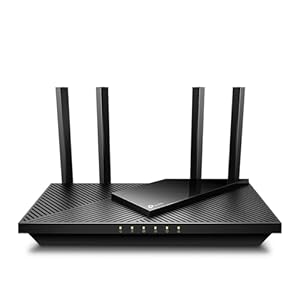
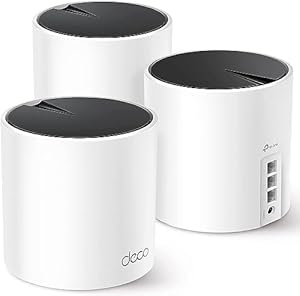
For both providers, we recommend buying your own router for better Wi-Fi performance and long-term savings. Entry-level Wi-Fi 6 mesh systems like the TP-Link Deco X20 or Eero 6 start around $150 and outperform most provider-supplied gateways.
Customer Service, Reliability, and Outages
Neither CenturyLink nor Sparklight is an industry leader in customer satisfaction, but their reputations diverge in a few notable ways. CenturyLink, owned by Lumen Technologies, has historically scored in the low-to-mid range on J.D. Power's U.S. Residential Internet Service Provider satisfaction studies, with the fiber/Quantum Fiber brand typically outperforming the legacy DSL product by a meaningful margin. The American Customer Satisfaction Index (ACSI) broadband scores tend to place CenturyLink below cable leaders like Spectrum and Xfinity, but ahead of DSL peers.
Sparklight's smaller footprint (about 1.1 million subscribers vs CenturyLink's 3+ million broadband connections) means it is excluded from several major industry rankings, but independent customer forums highlight two recurring themes: restrictive data caps and inconsistent technical support availability in some markets. On the positive side, Sparklight's network reliability in its service footprint is generally considered good, with fewer reports of sustained outages than larger cable operators.
Reliability: Both providers offer 99.9% advertised uptime on paper. In practice, fiber networks are less susceptible to weather-related outages than cable HFC systems, though both can fail during extended power outages since most local network equipment requires grid power. For households that depend on internet for medical devices, security systems, or remote work, consider pairing either provider with a battery backup (UPS) for your router and ONT/modem, plus a cellular failover option.
Use-Case Recommendations
Best for Rural Households
In rural markets, both providers often compete for the same customers — CenturyLink through DSL (and occasionally fixed wireless) and Sparklight through cable to small towns. Where CenturyLink only has sub-25 Mbps DSL, Sparklight's 100 Mbps cable entry plan will generally deliver better real-world performance despite the higher sticker price. Where CenturyLink has Quantum Fiber, however, fiber is almost always the superior rural choice.
Best for Streaming Households
A family streaming Netflix, Disney+, and YouTube in 4K can easily burn 300–600 GB per month. CenturyLink fiber's unlimited data makes it the clear pick for cord-cutters. Sparklight's 300GB entry cap is a non-starter for streaming households — you would need to upgrade to its $80/mo gig plan (1.5TB) or pay the $50/mo unlimited-data add-on to match CenturyLink's out-of-the-box experience.
Best for Gamers
CenturyLink fiber wins decisively for gaming thanks to 5–15 ms latency and symmetric upload. Cloud gaming services like GeForce Now, Xbox Cloud Gaming, and PlayStation Plus Cloud Streaming work significantly better on fiber than on congested cable connections. Sparklight's cable service is workable for casual and competitive gaming with 20–40 ms latency, but the asymmetric upload can hurt streaming to Twitch or YouTube from the same connection.
Best for Remote Work
Work-from-home professionals on Zoom, Google Meet, or Microsoft Teams benefit from CenturyLink fiber's symmetric speeds. If you regularly upload video, host webinars, or sync large files to cloud drives like Google Drive, Dropbox, or OneDrive, the 940 Mbps upstream on CenturyLink fiber is a game-changer compared to Sparklight's 50 Mbps upload ceiling.
Best Budget Pick
CenturyLink fiber at $30/mo for 200 Mbps is the lowest entry price in this comparison by a wide margin — roughly $300/year cheaper than Sparklight's entry 100 Mbps plan. Even budget-conscious households that do not need gig speeds will come out ahead with CenturyLink if fiber is available.
Contracts, Data Caps, and Hidden Fees
Both providers advertise no-contract service, which is genuine — neither will hit you with an early termination fee for leaving. However, hidden fees differ. CenturyLink applies a $15/mo router rental on most fiber and DSL plans unless you bring your own equipment. There are no installation fees on fiber for most new customers, no promotional-to-standard rate jumps on fiber, and no data overage charges on fiber plans. On DSL, a 1TB soft cap exists in some regions but enforcement has been inconsistent.
Sparklight applies a $12/mo modem rental, a $75–$100 one-time installation fee, and strict data caps on all standard plans (300 GB, 600 GB, 1 TB, or 1.5 TB by plan tier). Exceeding the cap triggers either an auto-upgrade to a higher tier (billed pro-rata) or overage charges at $10 per 100 GB, depending on account history. The $50/mo unlimited-data add-on eliminates cap concerns but effectively doubles the cost of the gig plan to $130/mo.
Bundles: Neither provider aggressively bundles TV or phone the way Xfinity or Spectrum do. CenturyLink offers optional DIRECTV add-ons through a partnership, and Sparklight offers a streaming TV add-on in some markets. Neither bundle is a significant cost saver over standalone streaming services.
Does CenturyLink or Sparklight offer symmetric upload speeds?
Only CenturyLink fiber (Quantum Fiber) delivers true symmetric speeds, meaning upload rates match download rates up to 940 Mbps. Sparklight's DOCSIS 3.1 cable network is asymmetric — while download speeds scale to 1 Gbps, upload is capped around 50 Mbps across all plan tiers. This is the single biggest technical advantage CenturyLink fiber has for cloud backups, video conferencing, and content creation workflows.
Can I bring my own router to CenturyLink or Sparklight?
Yes. Both providers allow customer-owned equipment to avoid the recurring rental fee. CenturyLink DSL accepts any compatible DSL modem/router combo; Quantum Fiber supplies an ONT (optical network terminal) required by the fiber connection, and you can connect your own router to it via Ethernet. Sparklight accepts retail DOCSIS 3.1 cable modems on its approved list — check the Sparklight website before purchasing to confirm compatibility with your specific market.
Is Sparklight available in my state?
Sparklight operates in approximately 21 states, concentrated in the Southwest, Mid-South, and Mountain West regions — including Arizona, Arkansas, Idaho, Iowa, Louisiana, Mississippi, Missouri, Oklahoma, Tennessee, Texas, and others. It focuses on smaller cities and towns rather than major metros. To confirm availability at a specific address, use the Sparklight service checker or contact customer service directly. CenturyLink's 36-state footprint is broader and covers most major US metro areas.
Lumen Technologies and Cable One: Understanding the Parent Companies
Lumen Technologies (formerly CenturyLink, Inc.) is the parent company behind both the CenturyLink consumer brand and Quantum Fiber. Based in Monroe, Louisiana, Lumen is publicly traded on NYSE as LUMN and operates one of the largest fiber networks in North America, with more than 450,000 route miles of intercity fiber. The consumer broadband business has shifted aggressively toward fiber under the Quantum Fiber brand, while older copper DSL footprints in 20 states have been divested to Brightspeed, a private equity-backed carrier focused on rural fiber upgrades. If you see "Brightspeed" as an option at your address, it likely sits on former CenturyLink infrastructure.
Cable One, Inc. is the parent company of Sparklight, headquartered in Phoenix, Arizona and publicly traded on NYSE as CABO. Cable One rebranded its consumer broadband business from "Cable ONE" to "Sparklight" in 2019 to signal a shift toward faster gigabit service and a modernized customer experience. Cable One also owns and operates other regional broadband brands acquired in recent years, including Fidelity Communications, Hargray, and CableAmerica. If you live in an area served by one of these smaller brands, it is functionally part of the same Cable One network that powers Sparklight.
Which Should You Choose in 2026?
For most households where both providers are available, CenturyLink fiber (Quantum Fiber) is the clear winner — it beats Sparklight on price, speed-per-dollar, data caps, upload symmetry, and typically customer service scores. Sparklight only wins in two narrow cases: (1) when CenturyLink offers only slow DSL at your address and Sparklight delivers 100+ Mbps cable, or (2) when you specifically need the Sparklight gig plan and are willing to pay extra for unlimited data. In every other scenario, CenturyLink fiber should be your first , with Sparklight as a solid backup if fiber is not deployed at your address yet.
Sources and Methodology
Data sourced from FCC Broadband Data Collection (December 2024) and provider-published Broadband Consumer Labels. Pricing reflects standard (post-promotional) rates unless noted. Speed ranges represent advertised maximums; actual performance depends on network conditions, equipment, and distance from infrastructure. Full methodology.