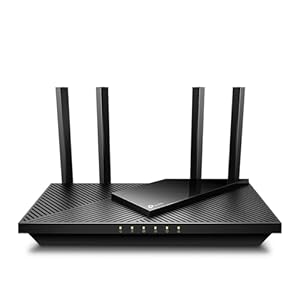
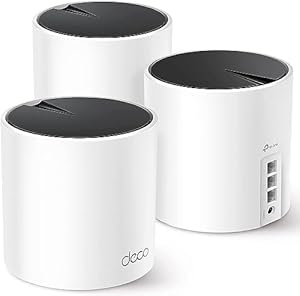
T-Mobile Home Internet and Xfinity represent two fundamentally different connection types: fixed wireless 5G versus cable. Deciding between them comes down to availability, pricing stability, and whether you value no-contract flexibility or raw download speeds. This comparison walks through every factor that matters.
Quick Answer
Choosing between T Mobile and Xfinity depends on your location, budget, and speed requirements. This comparison breaks down the key differences in plans, pricing, download and upload speeds, contract terms, and data caps so you can make an informed decision. We analyze real-world performance data and coverage availability to help you pick the right provider.
If you're deciding between T-Mobile and Xfinity, the core tradeoff is clear. T-Mobile pushes speeds up to 245 Mbps via 5G fixed wireless, while Xfinity offers up to 6 Gbps through cable and fiber. T-Mobile's edge lies in no-contract 5G home internet at a flat $50/mo nationwide. While Xfinity appeals to customers seeking widest cable coverage nationwide with xFi gateway ecosystem.
Choose Xfinity if you want Cable/Fiber service with speeds reaching 2 Gbps at $25/mo. This provider delivers contract-free service. Best for customers prioritizing symmetrical fiber speeds.
Quick Comparison: T-Mobile 5G Home Internet vs Xfinity
| Feature | T-Mobile 5G Home Internet | Xfinity |
|---|---|---|
| Max Speed | 245 Mbps | 2 Gbps |
| Starting Price | $50/mo | $25/mo |
| Technology | 5G/Fixed Wireless | Cable/Fiber |
| Data Cap | None | 1.2 TB |
| Contract Required | No | No |
| Phone | N/A |
T-Mobile 5G Home Internet Overview
T-Mobile 5G Home Internet, founded in 1994 and headquartered in Bellevue, WA, has established itself as a 5G home internet pioneer. Operating with 5G/Fixed Wireless technology infrastructure, the company delivers internet services with maximum speeds reaching 245 Mbps, positioning it competitively in today's high-bandwidth marketplace.
With a starting price point of $50/mo, T-Mobile 5G Home Internet targets customers seeking performance and reliability. Their contract-free service model combined with unlimited data allowances reflects a commitment to transparency and customer flexibility. The provider's network architecture supports modern household demands including remote work, distance learning, smart home devices, and entertainment streaming across multiple devices simultaneously.
Key Strengths
- No contracts
- No data caps
- Easy self-install
- Great for rural areas
Potential Drawbacks
- Speeds vary by location
- Lower max speeds than cable/fiber
- Dependent on tower proximity
Xfinity Overview
Xfinity, founded in 1963 from Philadelphia, PA, positions itself as a America's largest cable provider. Using Cable/Fiber technology infrastructure, the company provides internet access with speeds up to 2 Gbps, serving customers across its service footprint with consistent performance metrics.
At a starting price point of $25/mo, Xfinity appeals to budget-conscious households without sacrificing essential connectivity features. Their month-to-month flexibility combined with 1.2 TB data allowances makes them a consideration for families with predictable internet usage patterns. The service supports everyday online activities including video conferencing, social media engagement, email communication, web browsing, and both standard and high-definition streaming content.
Key Strengths
- Widest coverage nationwide
- Low starting price
- Fast speeds
- Free modem in some areas
Potential Drawbacks
- 1.2 TB data cap
- Price increases after promo
- Equipment rental fees
- Customer service issues
Xfinity:
Speed & Performance Comparison
When comparing maximum speeds, T-Mobile 5G Home Internet delivers up to 245 Mbps using 5G/Fixed Wireless technology, while Xfinity reaches 2 Gbps through Cable/Fiber infrastructure. The technology difference significantly impacts real-world performance, particularly during peak usage hours between 7 PM. 11 PM when neighborhood bandwidth demand peaks across most residential areas.
For T-Mobile 5G Home Internet, the 5G/Fixed Wireless deployment means performance depends on signal strength, tower proximity. Network congestion, with speeds fluctuating throughout the day based on how many users are accessing the nearest cell tower. During peak evening hours, speeds may drop 30-50% from advertised maximums, though off-peak performance often exceeds expectations.
In contrast, Xfinity with Cable/Fiber typically offers fiber-optic consistency with identical upload. Download speeds, making it perfect for cloud-based workflows, large file transfers, and professional video conferencing. Businesses and remote workers particularly benefit from symmetrical speeds that treat uploads as importantly as downloads, enabling seamless cloud synchronization and real-time collaboration.
For households with multiple connected devices, smart home systems, security cameras, or heavy 4K streaming usage, the speed difference becomes more pronounced. T-Mobile 5G Home Internet's 245 Mbps works well for 2-5 device households with moderate to heavy streaming needs. Regular video conferencing, supporting multiple HD streams and general web browsing across family members without significant slowdowns.
Meanwhile, Xfinity's 2 Gbps provides enterprise-grade performance for the most demanding residential users, easily supporting 8K streaming, professional video production workflows, large-scale cloud backups. Smart home ecosystems with dozens of connected devices.
Speed consistency matters as much as maximum capacity for daily user experience, with network reliability during evening peak hours often determining practical satisfaction levels more than advertised speeds. Real-world performance testing shows that fiber connections maintain advertised speeds 24/7 with minimal variation.
Technology Deep Dive: Understanding Infrastructure Differences
Understanding the underlying technology explains performance characteristics beyond raw speed numbers and marketing claims. T-Mobile 5G Home Internet's 5G/Fixed Wireless infrastructure leverages cellular tower networks to deliver internet wirelessly to homes, eliminating the need for physical cable installation while depending on signal strength.
Tower capacity. 5G technology uses higher frequency radio waves that carry more data but travel shorter distances and penetrate buildings less effectively than older cellular technologies. Your location relative to the nearest tower, physical obstructions like hills or buildings, and even foliage can significantly impact performance.
Xfinity's Cable/Fiber technology offers the gold standard for internet connectivity, with dedicated fiber lines to each premises ensuring no sharing of bandwidth with neighbors. Unlike cable networks where your speeds depend partly on neighborhood usage, fiber delivers consistent performance regardless of how many neighbors are online. The technology naturally provides symmetrical speeds perfect for modern cloud-based computing, video conferencing. Content creation workflows that increasingly demand fast upload capabilities matching download speeds.
Latency measurements reveal practical performance differences that raw speed numbers cannot capture. T-Mobile 5G Home Internet typically achieves 20-40ms latency suitable for most online activities including casual gaming, streaming, and video calls. Cable latency rarely creates noticeable issues for typical household internet usage, though competitive gamers may notice slight delays compared to fiber connections. These latency differences matter most for video gaming, VoIP calls, video conferencing, and other interactive applications where real-time responsiveness determines user experience quality.
Pricing & Value Analysis
Starting prices reveal important differences in value positioning, but total cost of ownership tells the complete financial story. T-Mobile 5G Home Internet begins at $50/mo, Xfinity counters with $25/mo. Understanding true costs requires examining installation fees, equipment charges, contract requirements, promotional pricing structures, and potential price increases after initial terms expire.
Equipment fees add to monthly costs for many providers, turning attractive advertised rates into higher actual bills. T-Mobile 5G Home Internet includes the gateway device at no extra charge, with customers receiving professional-grade equipment as part of the monthly service fee. This all-inclusive approach simplifies billing and eliminates surprise charges, though the base price may be slightly higher to account for included equipment. Xfinity provides all equipment at no additional cost, with the gateway included in the monthly rate and no surprise rental fees.
Installation represents another significant cost variable that promotional materials often downplay or omit entirely. T-Mobile 5G Home Internet offers self-installation equipment with simple plug-and-play setup, avoiding $50-100 professional installation fees entirely. Most customers have service active within hours of equipment delivery by following straightforward instructions, though phone support assists anyone encountering difficulties. For budget-conscious customers, these upfront costs matter significantly, potentially adding $100-200 to first-month expenses.
Long-term pricing stability depends on contract terms and promotional periods that many customers overlook during initial signup. T-Mobile 5G Home Internet maintains consistent month-to-month pricing with no promotional rate increases, providing predictable budgeting without surprise bills arriving 12 months after signup. This price transparency may mean slightly higher initial rates but eliminates promotional pricing games. Over a 24-month period, promotional pricing that increases by $20-30 after year one can amount to $240-360 in additional costs, making transparent pricing valuable even if not the absolute lowest advertised rate.
Coverage & Availability
Geographic availability represents perhaps the most critical decision factor, as the best internet plan means absolutely nothing if unavailable at your specific address. T-Mobile 5G Home Internet covers all 50 states with service available anywhere within tower range, making it particularly valuable for rural and underserved areas where cable. Fiber infrastructure does not economically reach. 5G home internet availability depends on tower proximity and signal strength, with coverage maps showing general service areas though actual availability requires address-specific verification.
Address-specific availability checking remains absolutely essential before making provider decisions or getting excited about advertised speeds and prices. Both T-Mobile 5G Home Internet and Xfinity require address verification to confirm service availability, as coverage maps show general service areas. May not reflect address-level infrastructure deployment.
Check T-Mobile 5G Home Internet availability through their online address checker and Xfinity at for address-specific availability confirmation. Service maps provide general guidance but only address-level checks guarantee accurate availability information.
Contract Terms & Flexibility
Contract requirements fundamentally affect customer flexibility and long-term financial commitments. T-Mobile 5G Home Internet operates on a no-contract, month-to-month basis, allowing customers to cancel anytime without early termination fees. This flexibility particularly benefits renters, seasonal residents, military personnel subject to relocation orders, and anyone uncertain about long-term housing plans.
Data cap policies represent another form of service constraint that significantly impacts heavy internet users. T-Mobile 5G Home Internet imposes no data caps, allowing unlimited usage without overage fees or throttling regardless of how much data you consume. Unlimited data eliminates monitoring usage, worrying about overages, or constraining your internet activities. Households averaging 400+ GB monthly should prioritize unlimited data, while light users under 200 GB monthly can typically ignore data caps entirely.
Local Insights & Customer Considerations
Real-world performance varies significantly by location even with identical providers and plans. T-Mobile 5G Home Internet customers in urban areas typically experience advertised speeds consistently, while performance in suburban. Rural locations depends heavily on tower proximity, signal strength, physical obstructions, and local network capacity.
Customer service quality, installation timeframes, technician availability, and billing accuracy all impact satisfaction beyond raw speed and pricing metrics. Online reviews specific to your city or region provide valuable insights into provider performance that national statistics cannot capture. Installation wait times range from same-day service to 2-3 weeks depending on market demand, season, and technician availability. Both providers serve different niches effectively, making the "best" choice highly dependent on individual circumstances.
Check Availability in Your Area
Availability varies by address. Use our tools to find which providers serve your location:
5G Fixed Wireless vs Cable: Understanding the Technology Gap
The comparison between T-Mobile 5G Home Internet and Xfinity represents a broader battle between two fundamentally different approaches to delivering broadband internet. T-Mobile uses its existing cellular network infrastructure, specifically its 5G mid-band and millimeter-wave spectrum, to beam internet to a dedicated home gateway device. Xfinity uses a traditional wired network of fiber and coaxial cables to deliver internet through a physical connection to your home. Each approach has distinct advantages and limitations that affect everyday performance.
T-Mobile's fixed wireless approach offers remarkable simplicity. There is no installation appointment needed, no drilling holes for cable connections, and no waiting for a technician. You receive a gateway device by mail, plug it in near a window facing a T-Mobile tower, and you are online within minutes.
The $50 per month flat rate includes everything: the equipment, unlimited data with no caps, taxes, and fees. This all-inclusive pricing and zero-installation experience gives T-Mobile a significant convenience advantage over Xfinity, which charges $14 per month for equipment rental, has installation fees for new addresses, and imposes a 1.2 TB monthly data cap.
However, convenience comes at the cost of consistency. T-Mobile's speeds depend on your distance from the nearest 5G tower, the number of simultaneous users on that tower, the specific 5G frequency band reaching your home, and even the weather to a lesser degree. Users report speeds ranging from 33 Mbps on the low end to over 245 Mbps in optimal conditions, with most seeing somewhere between 70 and 150 Mbps.
This variability means you might see 200 Mbps in the morning and 60 Mbps during the evening peak. Xfinity's cable network delivers much more predictable speeds, with the 400 Mbps plan typically testing between 350 and 420 Mbps regardless of time of day.
When T-Mobile 5G Beats Xfinity on Value
Despite Xfinity's speed advantages, several common scenarios make T-Mobile the smarter choice. If you rent rather than own your home, T-Mobile's no-installation approach means no modifying the property and no equipment to return when you move. Renters who move frequently save both the hassle and the potential $100 installation fee each time they relocate.
If you use more than 1.2 TB of data per month, T-Mobile's truly unlimited plan avoids the $100 per month overage cap that Xfinity can charge heavy users. And if you already have T-Mobile mobile phone service, the home internet plan can drop to $25 per month with bundling discounts, making it the cheapest legitimate broadband option available from a major carrier.
T-Mobile also provides a better experience for customers who value transparent pricing. The $50 per month includes everything with no equipment fees, no price increases after 12 months, no data cap surcharges, and no hidden fees. Xfinity's $55 per month for the Fast 400 Mbps plan becomes $69 per month with equipment rental, and the 12-month promotional rate means that $55 becomes $80 or more in year two. Over a 24-month period, the actual cost difference between the two providers is much smaller than the advertised prices suggest, and T-Mobile may actually be cheaper when all fees are included.
When Xfinity Beats T-Mobile on Performance
For households that prioritize absolute performance consistency, Xfinity maintains clear advantages. Online gamers benefit from Xfinity's 10 to 20 millisecond latency compared to T-Mobile's 25 to 50 milliseconds. While both are playable, competitive gamers will feel the difference.
Households with multiple simultaneous 4K streams need the guaranteed bandwidth that Xfinity's cable network provides, since T-Mobile's speeds can drop during congested periods. Remote workers who depend on stable upload speeds for video conferencing will find Xfinity's wired connection more reliable, though both services typically provide sufficient upload bandwidth for HD video calls.
Xfinity also offers faster maximum speeds for households that need them. Plans scale up to 2 Gbps, while T-Mobile's service maxes out around 245 Mbps under ideal conditions with typical speeds well below that. For households with more than 10 connected devices or multiple people working from home simultaneously while others stream, Xfinity's higher speed tiers provide headroom that T-Mobile cannot match.
Additional Questions About T-Mobile vs Xfinity
Can I use T-Mobile 5G Home Internet for gaming?
Yes, casual gaming works well on T-Mobile with latency of 25 to 50 milliseconds. Competitive esports players may notice the higher latency compared to cable. Download speeds of 70 to 150 Mbps are more than sufficient for game downloads and streaming. The main limitation is latency consistency rather than raw speed.
Does T-Mobile 5G Home Internet have data caps?
No. T-Mobile 5G Home Internet has no data caps, no throttling, and no overage charges. You can use unlimited data every month. This is a significant advantage over Xfinity, which imposes a 1.2 TB monthly cap on most plans with overage charges of up to $100 per month.
What is T-Mobile 5G Home Internet speed in my area?
Speed varies significantly by location. T-Mobile estimates 33 to 245 Mbps depending on tower proximity and congestion. Most users report 70 to 150 Mbps. T-Mobile offers a 15-day trial period, so you can test actual speeds at your address before committing. Enter your ZIP code to check availability.
Frequently Asked Questions
Which is faster, T-Mobile 5G Home Internet or Xfinity?
Xfinity offers significantly higher maximum speeds at 2 Gbps. However, real-world speeds depend on plan selection, location, network conditions, and time of day. Fiber technology provides the most consistent speeds 24/7.
Which provider offers better value?
Value depends on your priorities and usage patterns. T-Mobile 5G Home Internet starts at $50/mo with no contracts and no data caps, while Xfinity begins at $25/mo. Consider total costs including equipment fees, installation charges, and potential price increases. Heavy users should factor in data cap policies.
Do either require contracts?
T-Mobile 5G Home Internet does not require contracts, offering month-to-month flexibility. Xfinity also operates contract-free. Both providers offer contract-free flexibility.
Are there data caps?
T-Mobile 5G Home Internet has no data caps, allowing unlimited usage. Xfinity implements 1.2 TB monthly data allowances. Average households use 300-500 GB monthly, while heavy streaming households can exceed 1 TB.
Which technology is more reliable?
5G/Fixed Wireless offers good reliability though performance depends on tower proximity and weather. Fiber technology offers superior reliability.
Can I get both providers at my address?
Availability varies significantly by location. Many urban and suburban areas have multiple provider options while rural locations may have limited choices. Contact both providers with your specific address to confirm availability and compare current promotional offers.
How do installation processes compare?
T-Mobile 5G Home Internet offers self-installation with shipped equipment. Installation timeframes range from same-day self-install to 2-3 weeks for professional appointments depending on market demand.
Ready to get connected? now for exclusive deals:
T-Mobile vs Xfinity: Frequently Asked Questions
Which provider has better customer service, T-Mobile or Xfinity?
Customer service quality can vary by region and changes over time. Check recent customer satisfaction surveys from J.D. Power and the American Customer Satisfaction Index for current ratings.
Online reviews for your specific area can also provide insight into local service quality. Both providers offer phone, chat, and online support channels.
Which is faster, T-Mobile or Xfinity?
Maximum speeds depend on the technology each provider uses at your address. Fiber connections from either provider can reach 1-5 Gbps, while cable typically maxes out at 1-1.2 Gbps. Compare the specific plans available at your address, as speeds vary by location. For the most accurate comparison, check what technology each provider offers at your specific address.
Do T-Mobile and Xfinity both offer no-contract plans?
Many current plans from both T-Mobile and Xfinity are available without annual contracts. However, some promotional pricing may require a commitment period. No-contract plans offer flexibility to switch or cancel anytime, though monthly rates may be slightly higher than contract plans. Verify contract terms for the specific plan you're considering.
Is T-Mobile or Xfinity cheaper?
Pricing varies significantly by plan tier and location. Entry-level plans from both T-Mobile and Xfinity typically start between $30-55/month. Compare the total cost including equipment fees, installation charges, and post-promotional pricing.
The cheapest option depends on the speed tier you need — one provider may be cheaper for basic plans. While the other offers better value at higher speeds.
Can I switch from T-Mobile to Xfinity?
Switching providers is generally straightforward. Check if you have any remaining contract obligations with your current provider that might incur early termination fees. Schedule your new installation before canceling existing service to avoid a gap in connectivity. Many providers offer to buy out your existing contract as a promotional incentive.
Which is better for gaming, T-Mobile or Xfinity?
For gaming, low latency (ping) matters more than raw download speed. Fiber connections from either provider typically deliver the lowest latency (5-15ms). Cable internet provides acceptable gaming performance (15-30ms latency).
Satellite and fixed wireless connections generally have higher latency that can affect competitive gaming. Choose the provider that offers fiber or cable at your address.
Disclosure: InternetProviders.ai may earn compensation when you click on provider links or provider numbers on this page. This compensation helps support our research and editorial work.
All prices, speeds, and availability subject to change without notice. Information accurate as of February 2026. We recommend confirming current offers directly with providers before making decisions.