Understanding the 5 Gig Tier
Frontier Fiber 5 Gig represents the absolute cutting edge of residential internet service. At 5,000 Mbps (5 Gbps) symmetrical, this plan delivers more raw bandwidth than most enterprise office connections. It is important to be straightforward about this plan: the vast majority of residential internet users do not need 5 Gbps, and most will not be able to fully utilize it with current consumer hardware.
That said, there are specific use cases where 5 Gbps makes sense, and for users who fall into those categories, the plan is priced aggressively at approximately $150 per month (pricing subject to change; verify at frontier.com or by calling ). At roughly $0.03 per Mbps, the 5 Gig plan actually offers the best cost efficiency in Frontier's entire lineup on a per-megabit basis.
Hardware Requirements: The Reality Check
Before committing to the 5 Gig plan, you need to understand the hardware requirements for actually achieving these speeds:
Networking Equipment
- 10GbE NICs: To approach 5 Gbps on a single device, you need a 10-Gigabit Ethernet (10GbE) network adapter. These are available as PCIe cards for desktops ($50-100) or Thunderbolt/USB-C adapters for laptops ($150-300). Standard gigabit Ethernet ports cap at approximately 940 Mbps.
- 10GbE switch: If multiple devices need multi-gig connectivity, you will need a network switch with 10GbE ports. Entry-level 10GbE switches start around $150-300 for 4-8 port models.
- Cabling: Cat 6a or Cat 7 cables are recommended for reliable 10GbE performance. Cat 5e and Cat 6 can support shorter 10GbE runs but may not be reliable over longer distances.
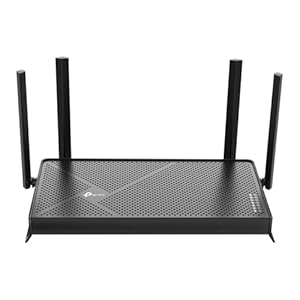
- Router: Frontier includes an eero Pro 6E with the 5 Gig plan, which has a 10GbE port to handle the full connection speed. If using your own router, it must have a 10GbE WAN port.
The Aggregate Bandwidth Perspective
Even without 10GbE equipment, the 5 Gig plan has practical value when viewed as aggregate household bandwidth. Five devices connected via standard gigabit Ethernet can each pull near-gigabit speeds simultaneously without any contention. In a household with multiple 4K streamers, a gamer, two remote workers, and an active security camera system, the 5 Gbps pipe ensures every device gets its full potential bandwidth at all times.
Who Actually Benefits from 5 Gbps?
- Home lab and self-hosting enthusiasts: Running local servers, NAS devices, virtualization clusters, or network-attached development environments benefits enormously from multi-gigabit LAN-to-WAN throughput. If you run Proxmox, Unraid, or TrueNAS at home and transfer large datasets, the 5 Gig plan eliminates the WAN as a bottleneck.
- Professional video production: Editing and uploading 8K footage, managing multi-cam production workflows, and rendering to cloud-based farms requires massive upload bandwidth. A 100 GB file uploads in approximately 2.7 minutes at 5 Gbps. Our content creator guide covers production workflow optimization.
- Large households (12+ people): Very large families, shared houses, or multi-generational households where a dozen or more people are actively using bandwidth simultaneously will appreciate the headroom.
- Future-proofing: As 4K and 8K streaming become standard, smart home devices proliferate, and cloud computing grows, having a 5 Gbps pipe ensures your connection will not be the bottleneck for years to come.
- Early adopters and technology enthusiasts: Some users simply want the fastest connection available. The 5 Gig plan delivers that bragging right along with genuine top-tier performance.
When 5 Gig Is Overkill
For the majority of households, the Fiber 1 Gig plan at approximately $70/mo or the Fiber 2 Gig plan at approximately $100/mo will be more than sufficient. Here are scenarios where the 5 Gig plan is more than you need:
- Households of six or fewer people with standard streaming, gaming, and work-from-home needs
- Users who primarily connect via Wi-Fi (Wi-Fi 6 typically caps around 1.2 Gbps per device)
- Users without 10GbE networking equipment who do not plan to invest in multi-gig hardware
- Light to moderate internet users who primarily browse, stream, and email
Frontier 5 Gig vs the Competition
- vs AT&T Fiber 5 GIG (5,000 Mbps / 5,000 Mbps): AT&T offers a matching 5 Gbps symmetrical tier in select markets. Pricing and availability vary. Both use XGS-PON technology and deliver comparable performance.
- vs Google Fiber 5 Gig (5,000 Mbps / 5,000 Mbps): Google Fiber's 5 Gig plan is available in very limited markets. Where both are available, pricing and terms are competitive. Google Fiber's footprint is much smaller than Frontier's.
- vs Verizon Fios 2 Gig (2,300 Mbps / 2,300 Mbps): Verizon's current top tier caps at approximately 2.3 Gbps. Frontier's 5 Gig plan offers more than double the speed for users who need the maximum bandwidth available.
Plan Comparison: All Frontier Fiber Tiers
| Feature | Fiber 500 | Fiber 1 Gig | Fiber 2 Gig | Fiber 5 Gig |
|---|---|---|---|---|
| Speed (Symmetrical) | 500 Mbps | 1,000 Mbps | 2,000 Mbps | 5,000 Mbps |
| Approximate Price | ~$50/mo | ~$70/mo | ~$100/mo | ~$150/mo |
| Price Per Mbps | ~$0.10 | ~$0.07 | ~$0.05 | ~$0.03 |
| Router Included | eero | eero | eero Pro | eero Pro 6E |
| Required Hardware | Standard | Standard | 2.5GbE recommended | 10GbE required |
Get the Fastest Internet Available
Frontier Fiber 5 Gig at approximately $150/mo. 5,000 Mbps symmetrical, no caps, no contracts.
Check AvailabilityCall:
Frontier Fiber 5 Gig FAQ
Can any device actually use 5 Gbps?
A single device needs a 10GbE network adapter to approach 5 Gbps speeds. Most consumer devices have gigabit Ethernet (1 Gbps max). However, the 5 Gig plan's value comes from aggregate household bandwidth: five gigabit-connected devices can each run at full speed simultaneously without contention.
Is the 5 Gig plan available in all Frontier fiber markets?
No. The 5 Gig plan requires XGS-PON infrastructure and is only available in markets where Frontier has deployed this technology. to check availability at your specific address.
What router comes with the 5 Gig plan?
Frontier includes an eero Pro 6E with the 5 Gig plan. This router features a 10GbE port, Wi-Fi 6E support with 6 GHz band access, and mesh expansion capability. It is specifically designed to handle multi-gigabit throughput. Learn more in the equipment guide.
Is 5 Gbps over Wi-Fi possible?
Current Wi-Fi 6E devices can achieve up to approximately 2.4 Gbps in ideal conditions. Wi-Fi 7 devices, which are beginning to appear on the market, can theoretically reach 5+ Gbps wirelessly. For full 5 Gbps speeds today, a wired 10GbE connection is required.
Should I choose 5 Gig or 2 Gig?
For most power users, the Fiber 2 Gig plan at approximately $100/mo offers excellent performance at a lower price. Choose the 5 Gig plan if you run a home lab, do professional video production, have 10+ simultaneous heavy users, or want the absolute maximum bandwidth available for future-proofing.
Making the Most of Your Internet Connection
Regardless of your provider or plan, several practices help maximize your internet experience. Position your router centrally in your home, elevated and away from walls and large appliances. Update your router firmware regularly, as manufacturers release performance and security improvements frequently.
For the best speeds, connect high-bandwidth devices directly to your router using ethernet cables. Wi-Fi is convenient but introduces latency and speed loss, particularly through walls and over longer distances. Modern mesh Wi-Fi systems can improve wireless coverage for larger homes.
Monitor your monthly data usage if your plan includes a data cap. Most providers offer usage tracking through their app or account portal. Setting up usage alerts at 75% and 90% thresholds prevents surprise overage charges or throttling.
Fiber 5 Gig Value Analysis
Evaluating Fiber 5 Gig's value requires looking beyond the monthly rate to understand the total cost of service. Equipment fees, installation charges, data overage costs, and price increases after promotional periods all factor into the real cost.
Monthly cost components: Your bill includes the plan rate plus any equipment rental fees ($10-15/month for modem and router). Some plans include equipment, while others charge separately. Taxes and regulatory fees typically add another $5-10/month depending on your location.
Promotional vs. regular pricing: Most Fiber 5 Gig promotional rates last 12-24 months before reverting to regular pricing. The increase can be significant — sometimes $20-40/month more. Factor the regular rate into your decision, especially if you plan to stay with the service long-term.
Hidden costs to watch for: Early termination fees on contract plans, professional installation charges, and data overage fees can add unexpected costs. Ask about all potential charges before committing to a plan.
Disclosure: InternetProviders.ai may earn compensation through affiliate links and phone referrals on this page. This does not influence our editorial recommendations. All pricing is approximate and subject to change. Hardware costs for 10GbE equipment are separate from the Frontier monthly service charge. Verify current rates and terms directly with Frontier Communications at frontier.com.