
Verizon 5G Home Internet in California
Compare Verizon 5G Home 5G plans, speeds, and pricing available in California.
Quick Answer
Verizon 5G Home is the #11 internet provider in California by coverage, serving 100+ cities. Fixed Wireless is the primary connection type available.
Key Findings
- Verizon 5G Home serves 100+ cities in California
- Available technologies: 5G
Verizon 5G Home Coverage in California
Verizon 5G Home is available in 100+ cities across California. Select a city to see detailed coverage and provider comparisons.
Verizon 5G Home Internet Service in California
Verizon 5G Home serves 100+ cities across California, offering 5G service to residential and business customers. Plan availability varies by address, so residents should check coverage at their location. Whether you need reliable internet for working from home, streaming 4K video, or keeping the whole family connected, Verizon 5G Home offers competitive speeds throughout the California service area.
Major cities in the Verizon 5G Home California coverage area include Acampo, Acton, Adelanto, Agoura Hills, Aguanga and 95 more. To see detailed availability and pricing for your area, enter your ZIP code or select a city above. You can also compare Verizon 5G Home with other providers available at your address to find the best value.
Internet Market in California
California is a major metropolitan area with a population of 38,965,193. Markets of this size attract the full spectrum of internet providers, including multiple fiber operators, major cable companies, and emerging fixed wireless carriers. Residents typically enjoy the most competitive pricing in the country, with ISPs aggressively competing through promotional rates, speed upgrades, and bundle discounts. Infrastructure investment in cities this size is ongoing, meaning fiber availability continues to expand block by block each year. At a median household income of $67,410, value-oriented broadband plans are popular among California households. Mid-range plans offering 200-500 Mbps at $40-$70/month represent the sweet spot for most families in this income tier, balancing speed needs with monthly budget. The high concentration of multi-unit housing in California influences broadband options — apartment complexes may have exclusive agreements with certain ISPs, though FCC rules increasingly limit such arrangements. Multi-dwelling unit (MDU) buildings often have fiber installed directly to each unit, giving apartment residents some of the fastest connection options available.
California has a highly concentrated broadband market (HHI: 51,600) where HughesNet dominates with 100% coverage reach — 0 percentage points ahead of the next-largest provider, Viasat at 100%. In highly concentrated markets, consumers typically see fewer promotional offers and less pressure on the leading provider to invest in network upgrades. The remaining 11 providers in California cover a fraction of addresses, limiting their competitive impact. Research from the FCC shows that markets with one dominant provider average higher monthly costs compared to markets with two or more meaningfully overlapping competitors.
Fiber-optic internet availability in California stands at 79% — 22 percentage points above the national average of 57%. This exceptional fiber penetration places California among the top-tier U.S. markets for FTTH (fiber-to-the-home) deployment. Residents here benefit from the fastest, most reliable internet technology available, with symmetrical upload and download speeds that support remote work, 4K streaming, and large household bandwidth demands without compromise. Fixed wireless internet — including 5G home internet from T-Mobile and Verizon — covers 67% of addresses, 35 points above the national fixed wireless average of 32%. Higher-than-average wireless availability gives residents an additional competitive alternative that can keep wired ISP pricing in check.
Fiber internet is available from 6 providers (Xfinity, AT&T Internet, Cox Internet), with 78.67% fiber coverage — significantly above the national average of 57%. Fiber delivers symmetrical upload and download speeds — a key advantage for households with multiple remote workers, video conference participants, or content creators who upload large files. Nationally, fiber represents the fastest-growing broadband technology segment, expanding at roughly 8 percentage points of coverage per year. Xfinity provides the primary cable broadband alternative with 78.67% coverage — above-average cable coverage of 72%. Cable internet uses DOCSIS 3.1 technology to deliver download speeds of 100 Mbps to 1.2 Gbps, though upload speeds (typically 10-35 Mbps) lag behind fiber's symmetrical performance. For households that do not require heavy upstream bandwidth, cable plans often offer competitive pricing to fiber. Fixed wireless internet — including 5G home internet services — is available from AT&T Internet and T-Mobile, reaching 67.39% of addresses (well above the national fixed wireless average of 32%). Fixed wireless offers a no-installation alternative that is increasingly competitive with cable for everyday internet use, with speeds typically ranging from 50-300 Mbps download. Unlike satellite, fixed wireless delivers lower latency (20-40 ms), making it viable for video conferencing and gaming. Satellite internet (HughesNet, Viasat, Starlink) reaches addresses that wired broadband can't. Starlink's low-Earth-orbit (LEO) technology delivers 20-60 ms latency — a major improvement over geostationary services at 600+ ms — making it a practical choice for rural households without fixed-line options.
California received $1.9 billion in federal BEAD funding. The California Public Utilities Commission is currently in the challenge phase, which means providers and communities can dispute the FCC broadband maps that determine which locations qualify for funding — a critical step before deployment grants are awarded. The Affordable Connectivity Program (ACP) previously provided up to $30/month subsidies for eligible households, though federal funding expired in 2024. Some providers continue offering voluntary low-income discounts.
How Verizon 5G Home Compares in California
Verizon 5G Home
HughesNet
Ready to Save? Switch Providers Today
Call now for exclusive deals and free expert consultation in your area.
Free consultation • No obligation • Exclusive phone-only deals
Verizon 5G Home in California: Frequently Asked Questions
Is Verizon 5G Home available in California?
How much does Verizon 5G Home internet cost in California?
What internet speeds does Verizon 5G Home offer in California?
Does Verizon 5G Home require a contract in California?
What is the fastest Verizon 5G Home plan available in California?
Is Verizon 5G Home the cheapest internet provider in California?
What internet technology does Verizon 5G Home use in California?
How many cities does Verizon 5G Home serve in California?
Recommended Equipment for Verizon 5G Home
Shop all on Amazon →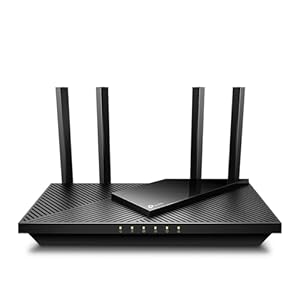 #1 Best Seller
The Archer AX21 delivers WiFi 6 speeds up to 1.8 Gbps with dual-band connectivity. OFDMA and MU-MIMO handle multiple devices without slowdown. Easy Tether app setup in under 5 minutes.
Budget pick for homes under 1,500 sq ft
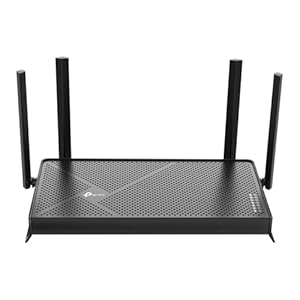
The latest Wi-Fi 7 standard delivers 2x faster speeds than WiFi 6. MLO (Multi-Link Operation) reduces latency for gaming and video calls. 320 MHz channels for maximum throughput.
Future-proof WiFi 7 for power users
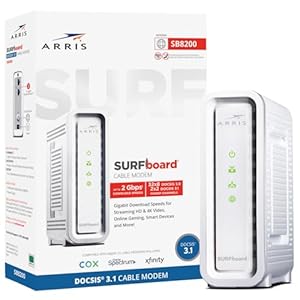 Best Seller
DOCSIS 3.1 cable modem with 2 Gigabit Ethernet ports. Compatible with Xfinity, Cox, Spectrum, and most major cable providers. Eliminates the $14/month rental fee.
Stop renting — pays for itself in 10 months
As an Amazon Associate, InternetProviders.ai earns from qualifying purchases. Prices and availability are subject to change.
Compare Verizon 5G Home
More Verizon 5G Home Resources
Sources & Methodology
Data for Verizon 5G Home coverage and plans in California is compiled from FCC Broadband Data Collection filings, provider-published broadband labels, and U.S. Census Bureau demographic data. Population and median household income figures are from the American Community Survey. Pricing, speeds, and availability are verified against provider broadband nutrition labels and may vary by location. For a detailed explanation of our data collection and scoring process, see our methodology page.
Data Sources
Last verified: April 2026. InternetProviders.ai is an independent resource. We may earn commissions from partner links — this does not affect our editorial recommendations. See our methodology for details.