Bottom line: AT&T Fiber is the better choice if available at your address. AT&T offers faster speeds (up to 5 Gbps symmetric), no data caps on fiber, and higher customer satisfaction ratings (ACSI 73 out of 100). Sparklight (formerly Cable One) is a solid option in smaller cities and rural markets where it is the primary cable provider, with no-contract plans starting at $55 per month. The deciding factor is usually availability: AT&T Fiber serves 21 states with 27 million-plus locations, while Sparklight focuses on smaller communities across 21 states that larger providers often ignore.
Key Findings: AT&T vs Sparklight
- AT&T Fiber reaches 5 Gbps symmetric; Sparklight cable tops at 1 Gbps download
- AT&T Fiber starts at $55 per month (300 Mbps); Sparklight starts at $55 per month (100 Mbps)
- AT&T Fiber has no data caps; Sparklight has soft data caps starting at 300 GB per month with overage charges
- AT&T serves 21 states with 27 million-plus fiber locations; Sparklight operates in 21 states (mostly smaller cities and rural markets)
- AT&T ACSI score: 73 out of 100; Sparklight: not rated (insufficient sample size for national surveys)
- AT&T offers symmetric upload speeds on fiber; Sparklight upload speeds max at 20 Mbps on cable plans
Plans and Pricing Comparison
AT&T Internet Plans (2026)
| Plan | Download Speed | Upload Speed | Price | Technology | Data Cap |
|---|---|---|---|---|---|
| AT&T Fiber 300 | 300 Mbps | 300 Mbps | $55 per month | Fiber | None |
| AT&T Fiber 500 | 500 Mbps | 500 Mbps | $65 per month | Fiber | None |
| AT&T Fiber 1 Gig | 1 Gbps | 1 Gbps | $80 per month | Fiber | None |
| AT&T Fiber 2 Gig | 2 Gbps | 2 Gbps | $150 per month | Fiber | None |
| AT&T Fiber 5 Gig | 5 Gbps | 5 Gbps | $180 per month | Fiber | None |
Sparklight Internet Plans (2026)
| Plan | Download Speed | Upload Speed | Price | Technology | Data Allowance |
|---|---|---|---|---|---|
| SurferPak 100 | 100 Mbps | 5 Mbps | $55 per month | Cable | 300 GB |
| SurferPak 200 | 200 Mbps | 10 Mbps | $65 per month | Cable | 500 GB |
| SurferPak 600 | 600 Mbps | 20 Mbps | $85 per month | Cable | 800 GB |
| GigaONE | 1 Gbps | 20 Mbps | $105 per month | Cable | 1.5 TB |
AT&T Fiber offers significantly better value at every comparable speed tier. For the same $55 per month, AT&T delivers 300 Mbps symmetric (both upload and download) with no data cap, while Sparklight delivers 100 Mbps download with only 5 Mbps upload and a 300 GB data cap. At the one-gigabit tier, AT&T is $25 per month cheaper ($80 versus $105) and includes symmetric speeds and unlimited data.
Cost Per Mbps Analysis
To determine true value, we calculated the cost per megabit per second of download speed for each provider's plans:
| Plan | Price | Download Speed | Cost per Mbps |
|---|---|---|---|
| AT&T Fiber 300 | $55 | 300 Mbps | $0.183 |
| Sparklight SurferPak 100 | $55 | 100 Mbps | $0.550 |
| AT&T Fiber 500 | $65 | 500 Mbps | $0.130 |
| Sparklight SurferPak 200 | $65 | 200 Mbps | $0.325 |
| AT&T Fiber 1 Gig | $80 | 1,000 Mbps | $0.080 |
| Sparklight GigaONE | $105 | 1,000 Mbps | $0.105 |
AT&T Fiber delivers two to three times more value per dollar at every comparable price point. The gap is widest at the entry level, where AT&T provides three times the speed for the same price. This analysis does not even account for AT&T's symmetric upload speeds and unlimited data, which further widen the value gap.
Speed and Technology
AT&T Fiber Technology
AT&T Fiber uses fiber-to-the-home (FTTH) technology, delivering symmetric upload and download speeds. This means a 1 Gbps plan provides 1 Gbps both downloading and uploading. AT&T is deploying XGS-PON technology in newer markets, which supports speeds up to 10 Gbps and future capacity expansion. Fiber connections are not shared with neighbors in the way cable is, resulting in consistent speeds even during peak evening hours.
Sparklight Cable Technology
Sparklight operates on a hybrid fiber-coaxial (HFC) cable network using DOCSIS 3.1 technology. Cable connections are asymmetric, meaning upload speeds are a fraction of download speeds. Sparklight's fastest plan offers 1 Gbps download but only 20 Mbps upload, a 50-to-1 ratio. Cable connections share bandwidth with nearby subscribers, which can result in speed reductions during peak usage hours in congested neighborhoods.
Real-World Performance Comparison
| Metric | AT&T Fiber | Sparklight Cable |
|---|---|---|
| Peak Hour Speed Delivery | 95 percent of advertised | 85 to 90 percent of advertised |
| Latency (typical) | 3 to 12 ms | 15 to 30 ms |
| Upload Speed Ratio | 1:1 (symmetric) | 50:1 (asymmetric) |
| Jitter | 1 to 3 ms | 5 to 15 ms |
Winner: AT&T Fiber. Fiber is fundamentally superior to cable for both speed and consistency. The symmetric upload speeds alone make AT&T Fiber dramatically better for video conferencing, cloud backups, content creation, and gaming. Sparklight's cable service is adequate for most basic household needs but cannot match fiber's performance characteristics.
Data Caps and Usage Policies
This is one of the biggest differences between the two providers and deserves careful consideration.
AT&T Data Policy
AT&T Fiber plans have no data caps. You can use as much data as you want without overage charges, throttling, or penalties. This applies to all AT&T Fiber plans from 300 Mbps through 5 Gbps. Note: AT&T's legacy DSL and fixed wireless plans do have data caps, but all fiber plans are truly unlimited.
Sparklight Data Policy
Sparklight imposes soft data caps on all plans, ranging from 300 GB per month on the entry-level plan to 1.5 TB on the GigaONE plan. What happens when you exceed your allowance:
- You are charged $10 for each additional 100 GB block of data
- Overage charges are capped at $50 per month
- You can add unlimited data for an additional $40 per month
For context, a household that streams 4K content for four hours per day uses approximately 600 GB per month from streaming alone. Add gaming, video calls, cloud backups, and general browsing, and a family of four can easily exceed Sparklight's 300 GB or even 500 GB caps. Sparklight's data caps are one of the most common complaints among its subscribers.
Winner: AT&T Fiber by a wide margin. Unlimited data with no overage charges or throttling is vastly superior to Sparklight's capped plans with overage fees.
Availability and Coverage
| Metric | AT&T | Sparklight |
|---|---|---|
| States Served | 21 states | 21 states |
| Fiber Locations Passed | 27 million-plus | Limited fiber deployment |
| Market Focus | Major metros and suburbs | Smaller cities and rural communities |
| Largest Markets | TX, FL, GA, CA, NC | MS, ID, TX, OK, AZ |
AT&T and Sparklight rarely compete directly because they focus on different market segments. AT&T concentrates on major metropolitan areas and their suburbs, while Sparklight (formerly Cable One) specifically targets smaller cities and rural communities that larger providers often bypass. In many Sparklight markets, the only alternatives are DSL, satellite, or fixed wireless.
If you live in a city where both providers are available, AT&T Fiber is almost always the better choice. If you live in a smaller community where Sparklight is the only cable provider, it may be your best wired option despite its data caps and lower upload speeds.
Winner: Depends on your location. AT&T has the larger and faster network, but Sparklight serves communities that AT&T does not reach.
Contracts and Fees
| Policy | AT&T Fiber | Sparklight |
|---|---|---|
| Annual Contract | No | No |
| Early Termination Fee | None | None |
| Installation Fee | Free | Free (standard) |
| Equipment Fee | Free (All-Fi Hub included) | Free modem included; WiFi router $10.50 per month |
| Data Overage Fees | None (unlimited) | $10 per 100 GB (up to $50 per month cap) |
Winner: AT&T Fiber. Both providers are contract-free, but AT&T includes all equipment at no charge and has no data overage fees. Sparklight charges a monthly rental for its WiFi router and can add up to $50 per month in data overage fees for heavy users.
Equipment and Installation
AT&T Equipment
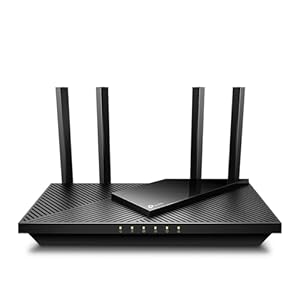
- Gateway: AT&T All-Fi Hub (WiFi 6E) included at no charge on all fiber plans
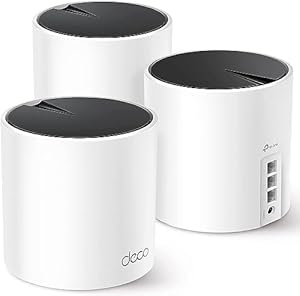
- Mesh extenders: Available for $10 per month each for whole-home coverage
- Bring your own router: Supported in IP passthrough mode, but AT&T's gateway must remain connected for authentication
- Installation: Free professional installation. Self-install available for homes with existing fiber. Takes two to four hours for new installations.
Sparklight Equipment
- Modem: Free DOCSIS 3.1 cable modem included with all plans
- WiFi router: Optional rental at $10.50 per month, or use your own
- Bring your own router: Fully supported with no restrictions
- Installation: Free standard installation. Professional install takes one to two hours. Self-install kits available where cable infrastructure exists.
Both providers offer straightforward installation processes. AT&T's advantage is including the WiFi gateway at no charge. Sparklight's advantage is allowing true bring-your-own-router without requiring their modem to remain in the loop (unlike AT&T's gateway requirement).
Customer Service and Satisfaction
| Metric | AT&T | Sparklight |
|---|---|---|
| ACSI Score (2025) | 73 out of 100 | Not rated |
| Support Channels | Phone, chat, app, 2,200-plus retail stores | Phone, chat, local office |
| Hours | Seven days a week, extended hours | Monday through Saturday |
AT&T's customer support infrastructure is far more extensive, with over 2,200 retail stores nationwide where customers can get in-person help. Sparklight operates local offices in some markets, which can provide a more personal service experience in smaller communities. Sparklight is too small to be included in national customer satisfaction surveys like ACSI, but online reviews suggest a mixed reputation with praise for local presence and criticism of data cap policies and pricing relative to speeds offered.
Winner: AT&T for support infrastructure and documented satisfaction scores.
Overall Verdict: Which Should You Choose?
Choose AT&T Fiber if:
- AT&T Fiber is available at your address (check first, as DSL and fixed wireless plans are less competitive)
- You want symmetric upload speeds for video calls, gaming, streaming, or cloud backups
- You use more than 300 GB per month and want truly unlimited data
- You value in-person support at retail stores
- You want to bundle with AT&T wireless for a loyalty discount of five to ten dollars per month
Choose Sparklight if:
- Sparklight is the only cable provider available in your area
- You have light data usage (under 300 GB per month) and the entry-level plan meets your needs
- You prefer supporting a regional provider with local offices
- AT&T Fiber is not available at your address
In markets where both providers are available, AT&T Fiber wins on every objective measure: faster speeds, symmetric uploads, unlimited data, lower prices, and higher customer satisfaction. Sparklight's value proposition is primarily about serving markets where alternatives are limited, and in those communities, it provides a reliable cable internet option that is typically better than DSL or satellite.
Not sure which providers serve your address? Check availability to see all options at your location, or to speak with an internet specialist.
Frequently Asked Questions
Is AT&T better than Sparklight for internet?
Yes, AT&T Fiber is better than Sparklight on nearly every metric: faster speeds (up to 5 Gbps symmetric versus 1 Gbps asymmetric), no data caps (Sparklight caps start at 300 GB), lower prices at comparable speeds, and higher customer satisfaction scores. The only scenario where Sparklight is the better option is when AT&T Fiber is not available at your address.
Does Sparklight have data caps?
Yes. Sparklight imposes soft data caps on all plans, ranging from 300 GB per month on the SurferPak 100 to 1.5 TB on the GigaONE plan. If you exceed your cap, you are charged $10 per additional 100 GB, up to a maximum of $50 per month in overage fees. You can add unlimited data for $40 per month. AT&T Fiber has no data caps on any plan.
Where is Sparklight available?
Sparklight (formerly Cable One) serves smaller cities and rural communities across 21 states, with the largest footprints in Mississippi, Idaho, Texas, Oklahoma, and Arizona. Unlike major providers that focus on large metropolitan areas, Sparklight specifically targets mid-size and small cities that are underserved by larger cable and fiber companies. Check your specific address for availability.
Can I switch from Sparklight to AT&T Fiber?
Yes, if AT&T Fiber is available at your address. Since neither provider requires contracts, you can switch at any time without early termination fees. Schedule your AT&T Fiber installation before canceling Sparklight to avoid a gap in service. The transition typically takes three to ten business days.
What is the cheapest plan from each provider?
Both providers start at $55 per month. AT&T Fiber 300 provides 300 Mbps symmetric with no data cap. Sparklight SurferPak 100 provides 100 Mbps download with 5 Mbps upload and a 300 GB data cap. AT&T delivers three times the speed and unlimited data for the same price, making it the significantly better value at the entry level.
Is Sparklight the same as Cable One?
Yes. Cable One rebranded to Sparklight in 2019. The company, its service areas, plans, and infrastructure remain the same. The parent company is Cable One, Inc. (traded on NYSE as CABO), and Sparklight is its consumer-facing brand name.
Sources
This comparison references data from FCC Broadband Map, AT&T, Sparklight, and the U.S. Census Bureau. Pricing and availability are subject to change.
Market Context
The broadband market concentration in areas served by both AT&T and Sparklight varies significantly. According to FCC broadband deployment data, median household income and population density are key factors in determining which provider offers better value. The BEAD (Broadband Equity, Access, and Deployment) program may expand options in underserved areas where neither provider currently has strong coverage.
Last updated: March 2026. Pricing and availability subject to change. See our methodology for how we evaluate providers.