Quick Answer: AT&T Fiber is the better choice for most households thanks to unlimited data, symmetrical upload speeds, and no annual contracts. Xfinity wins on availability (40 states vs 21) and offers a lower entry price at $30/mo for 75 Mbps. If AT&T Fiber is available at your address, it delivers more value per dollar at every speed tier.
AT&T vs Xfinity: Quick Comparison
Key aspects of at&t tv vs xfinity include at&t vs xfinity. Understanding these details helps you make a more informed decision.
| Feature | AT&T Fiber | Xfinity |
|---|---|---|
| Starting Price | $55/mo | $30/mo |
| Max Speed | 5 Gbps | 1.2 Gbps |
| Technology | Fiber | Cable / Fiber (select markets) |
| Contract Required | No | No |
| Data Caps | None on fiber plans | 1.2 TB in most markets |
| Coverage | 21 states | 40 states |
| Upload Speeds | Symmetrical (up to 5 Gbps) | 5–35 Mbps (cable) |
| Equipment Fee | Included | $14/mo for gateway |
AT&T Fiber Internet Plans
AT&T's fiber lineup covers a wide range of needs, from everyday browsing to power-user households running multiple 4K streams and smart-home devices simultaneously. Every fiber plan includes symmetrical upload speeds, which is a significant advantage for video conferencing, cloud backups, and content creation.
- Internet 300 — $55/mo: 300 Mbps download and upload. Ideal for households of 1–3 people with moderate streaming and web browsing.
- Internet 500 — $65/mo: 500 Mbps symmetrical. A solid mid-tier option for families who stream on multiple devices at once.
- Internet 1000 — $80/mo: 1 Gbps symmetrical. Handles heavy gaming, 4K streaming on five or more screens, and large file transfers with ease.
- Internet 2000 — $150/mo: 2 Gbps download. Designed for tech-heavy households and home offices requiring serious bandwidth.
- Internet 5000 — $180/mo: 5 Gbps download. AT&T's fastest residential plan, aimed at creators, developers, and large households.
AT&T does not charge equipment fees on its fiber plans — the Wi-Fi gateway is included. There are no annual contracts and no data caps, which keeps monthly costs predictable.
Xfinity Internet Plans
Xfinity by Comcast is one of the largest cable internet providers in the United States, offering a broad range of speed tiers that fit most budgets. Xfinity uses a hybrid fiber-coaxial (HFC) network for most customers, though it has begun deploying fiber-to-the-home (FTTH) in select markets.
- Connect — $30/mo: 75 Mbps download. A budget-friendly plan for light users, email, and basic web browsing.
- Connect More — $55/mo: 200 Mbps download. Suitable for small households with 2–4 connected devices.
- Fast — $70/mo: 400 Mbps download. Good for families who stream HD and 4K video on multiple devices.
- Superfast — $80/mo: 800 Mbps download. Handles gaming, streaming, and working from home simultaneously.
- Gigabit — $100/mo: 1 Gbps download. Xfinity's mainstream gigabit offering for heavy internet households.
- Gigabit Extra — $120/mo: 1.2 Gbps download. The fastest widely available Xfinity plan.
A key consideration with Xfinity is the 1.2 TB monthly data cap enforced in most markets. Exceeding this cap costs $10 per additional 50 GB block, up to $100/mo. Customers can add unlimited data for $30/mo or use their own modem to avoid the $14/mo equipment rental fee.
Speed Comparison
AT&T Fiber holds a clear speed advantage over Xfinity. AT&T's top-tier plan delivers 5 Gbps, more than four times Xfinity's maximum 1.2 Gbps.
More importantly, AT&T Fiber offers symmetrical upload and download speeds. This means that on the 1 Gbps plan, you get 1 Gbps up and 1 Gbps down. Xfinity's cable technology, by contrast, typically provides upload speeds of just 5–35 Mbps regardless of your download tier.
For everyday web browsing, streaming Netflix, and scrolling social media, both providers deliver more than enough speed. The difference becomes clear when you need strong upload performance: video calls on Zoom, uploading large files to Google Drive, streaming on Twitch, or backing up photos to iCloud. In those scenarios, AT&T Fiber's symmetrical speeds provide a noticeably smoother experience.
Latency is another area where fiber excels. AT&T Fiber typically delivers ping times of 5–15 ms, while Xfinity cable connections average 15–30 ms. For online gaming, this can be the difference between a competitive and a frustrating experience.
Pricing Comparison
Xfinity has a lower entry price — its Connect plan starts at $30/mo for 75 Mbps. AT&T Fiber's cheapest plan is $55/mo for 300 Mbps.
However, when you compare plans at the same speed tier, AT&T often delivers better value. AT&T's 1 Gbps plan costs $80/mo with no data cap and no equipment fee, while Xfinity's 1 Gbps plan is $100/mo plus a $14/mo gateway rental and a 1.2 TB data cap.
Over a 12-month period, AT&T's gigabit service costs $960 total. Xfinity's gigabit service — with the equipment rental — costs $1,368.
That is a $408 annual savings with AT&T, and you also avoid worrying about data overages. Xfinity does run frequent promotional pricing, so the advertised rates can be lower for the first 12 months, but they increase after the promotional period ends.
Neither provider requires a contract, which is a positive development across the industry. Both allow month-to-month service with no early termination fees.
Coverage and Availability
Xfinity has a significant coverage advantage. Comcast's cable network reaches customers in approximately 40 states and is particularly strong in urban and suburban areas across the Northeast, Midwest, and West Coast. AT&T Fiber, on the other hand, is available in 21 states, concentrated in the Southeast, Southwest, and select Midwestern and Californian metros.
In markets where both providers overlap — cities like Houston, Dallas, Chicago, Atlanta, and San Francisco — you have the luxury of choosing. In these overlap zones, AT&T Fiber is generally the stronger pick due to its superior technology and lack of data caps. However, many addresses in AT&T's footprint only have access to the company's older DSL service, which maxes out at 100 Mbps and is not competitive with Xfinity cable.
You can check availability for both providers by entering your address on their respective websites. Keep in mind that even within a covered city, availability can vary block by block.
Technology: Fiber vs Cable Explained
AT&T Fiber uses fiber-optic cables that transmit data as pulses of light through thin glass strands. This technology supports symmetrical speeds, is immune to electromagnetic interference, and maintains consistent performance regardless of how many neighbors share the same network segment. Fiber-to-the-home is considered the gold standard for residential broadband.
Xfinity primarily uses hybrid fiber-coaxial (HFC) cable technology, where fiber runs to neighborhood nodes and coaxial cable delivers service the "last mile" to your home. This architecture is proven and fast for downloads but inherently limits upload speeds due to the asymmetrical nature of DOCSIS cable standards. During peak usage hours, cable connections may experience slight slowdowns as bandwidth is shared among homes on the same node.
For future-proofing, fiber is the clear winner. As internet demands grow with 8K streaming, virtual reality, and expanded smart home ecosystems, fiber's capacity scales far more easily than cable. AT&T Fiber's network can support multi-gigabit speeds that cable technology cannot match without significant infrastructure upgrades.
Customer Service and Reliability
Neither AT&T nor Xfinity has a stellar reputation for customer service — both consistently rank in the lower half of the American Customer Satisfaction Index (ACSI) for internet providers. Xfinity has faced particular criticism for its data cap policies and price increases after promotional periods. AT&T has drawn complaints about long hold times and inconsistent installation experiences.
On reliability, AT&T Fiber has an edge. Fiber-optic connections are inherently more stable than cable, as they are less susceptible to electromagnetic interference, weather-related disruptions, and network congestion during peak hours. Xfinity cable customers in densely populated neighborhoods may notice slowdowns during evening prime time when many households are streaming simultaneously.
Both providers offer 24/7 support via phone, chat, and in-store visits. AT&T has retail stores in many cities, while Xfinity operates a network of Xfinity Stores for equipment exchanges and in-person troubleshooting.
Contracts, Fees, and Hidden Costs
Neither AT&T Fiber nor Xfinity requires an annual contract, which is a welcome change from the industry's historical reliance on lock-in agreements. Both providers allow you to cancel at any time without paying an early termination fee. However, the total cost of ownership differs significantly due to equipment and data policies.
AT&T Fiber includes its Wi-Fi gateway at no additional charge with every plan. Xfinity charges $14/mo for its xFi Gateway, adding $168 per year to your bill. You can avoid this by purchasing your own DOCSIS 3.1 modem and a separate Wi-Fi router, but this requires an upfront investment of $150–$250 for quality equipment.
The data cap is the most impactful hidden cost for Xfinity customers. The 1.2 TB monthly limit affects heavy streamers, gamers, and households with multiple users.
A family streaming 4K content for 4–5 hours daily across multiple devices can approach or exceed this cap. AT&T Fiber has no data cap whatsoever on its fiber plans, eliminating this concern entirely.
Installation fees vary by situation. AT&T typically charges $0 for self-installation when fiber infrastructure already reaches your address, though professional installation may carry a one-time fee.
Xfinity offers free self-installation kits for its cable service. Both providers may charge for complex installations that require new wiring.
Who Should Switch Providers?
If you are currently an Xfinity customer and AT&T Fiber has recently become available in your neighborhood, switching is likely worth the effort. The combination of lower total cost at gigabit speeds, symmetrical uploads, and no data cap represents a meaningful upgrade in both performance and value. The switch process typically takes 1–2 weeks, including scheduling installation and returning Xfinity equipment.
If you are an AT&T DSL customer, check whether AT&T Fiber has expanded to your address. The upgrade from DSL to fiber is transformative — speeds jump from 25–100 Mbps to 300–5,000 Mbps. If fiber is not yet available, Xfinity cable is a significantly better option than sticking with AT&T DSL.
Current Xfinity customers who stay under the 1.2 TB data cap and do not need strong upload speeds may find that switching is not necessary. Xfinity's cable service is reliable and widely available, and if your current plan meets your needs, there is little reason to change unless you are overpaying relative to AT&T Fiber's rates in your area.
Our Verdict: AT&T Fiber Wins for Most Users
If AT&T Fiber is available at your address, it is the better choice for most households. The combination of symmetrical speeds, no data caps, no equipment fees, and competitive pricing makes it the stronger overall value. AT&T Fiber's 1 Gbps plan at $80/mo with no hidden costs is hard to beat.
Xfinity remains a solid option if AT&T Fiber is not available in your area, or if you need an ultra-budget plan under $40/mo. Xfinity's 75 Mbps Connect plan at $30/mo is one of the cheapest broadband options in the country and is perfectly adequate for single users with light internet needs.
- Choose AT&T Fiber if: You want symmetrical upload/download speeds, unlimited data, and a fiber connection with low latency. Best for remote workers, gamers, and households with 3+ heavy internet users.
- Choose Xfinity if: AT&T Fiber is not available at your address, you want the cheapest possible entry-level plan, or you need TV bundling options through Xfinity's entertainment packages.
Is AT&T or Xfinity faster?
AT&T Fiber is faster with a maximum speed of 5 Gbps compared to Xfinity's 1.2 Gbps. AT&T also provides symmetrical upload speeds, meaning your upload speed matches your download speed. Xfinity cable upload speeds typically max out at 35 Mbps regardless of your download plan.
Which is cheaper, AT&T or Xfinity?
Xfinity has a lower starting price at $30/mo for 75 Mbps. However, AT&T Fiber often costs less at comparable speed tiers because it includes the Wi-Fi gateway and has no data caps. AT&T's 1 Gbps plan is $80/mo vs Xfinity's $100/mo plus a $14/mo equipment rental.
Does AT&T or Xfinity have better coverage?
Xfinity has broader coverage, serving approximately 40 states compared to AT&T Fiber's 21 states. Xfinity is especially widespread in the Northeast, Midwest, and West Coast. AT&T Fiber is concentrated in the Southeast, Southwest, and select metro areas in other regions.
Can I bundle TV with AT&T or Xfinity?
Xfinity offers traditional cable TV bundles through its X1 and Flex platforms. AT&T no longer offers DirecTV bundles directly but partners with DirecTV Stream for streaming TV packages. Both providers also support popular third-party streaming apps.
Which provider has better customer service?
Neither provider excels at customer service. Both rank in the lower half of ACSI satisfaction surveys for ISPs.
AT&T Fiber tends to have fewer complaints related to data caps and billing surprises. Xfinity customers frequently cite frustration with data overage charges and post-promotional price increases.
AT&T vs Xfinity: Equipment and Installation
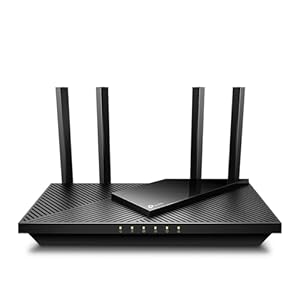
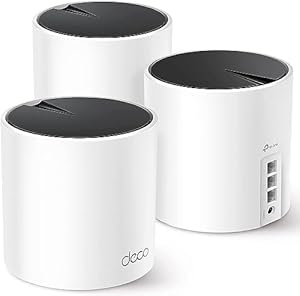
Both AT&T and Xfinity provide gateway devices, but their equipment strategies differ significantly. AT&T includes the BGW320 Wi-Fi 6 gateway at no additional charge with all fiber plans, while Xfinity charges $14/mo for its xFi Gateway (or $15/mo for the newer xFi Complete pod system).
Over a 24-month period, this equipment difference adds up to $336 in savings for AT&T customers. Both providers allow customers to use their own router, though AT&T fiber requires keeping the gateway connected as a pass-through device.
Installation Experience
AT&T Fiber installation requires a technician visit (free for online orders) and typically takes 2-3 hours. The technician runs fiber to an optical network terminal (ONT) mounted inside or outside your home. Xfinity offers free self-install for existing cable locations or $100 professional installation for new connections.
For customers switching from one provider to the other, the transition typically takes 3-5 business days to schedule. We recommend keeping your existing service active until the new installation is confirmed and tested.
AT&T vs Xfinity: Data Caps and Throttling
This is one of the most important differences between the two providers:
- AT&T Fiber: All plans include truly unlimited data with no caps, no throttling, and no overage fees. This applies to every AT&T Fiber tier from 300 Mbps through 5 Gbps.
- Xfinity: Imposes a 1.2 TB monthly data cap on all plans except those with the Unlimited Data add-on ($30/mo) or xFi Complete ($25/mo which also includes equipment rental). Overage charges are $10 per 50 GB block, capped at $100/mo maximum.
For heavy-use households (4K streaming on multiple TVs, cloud gaming, large file downloads), AT&T's unlimited data represents substantial savings. A household exceeding Xfinity's cap by 200 GB monthly would pay an additional $40/mo in overage charges, or $30/mo for the unlimited add-on.
According to Xfinity's own usage tool, the average household uses about 500 GB per month. However, households with multiple remote workers, gamers, or 4K streaming enthusiasts can easily surpass 1.2 TB. AT&T eliminates this concern entirely.
AT&T vs Xfinity: Contract and Pricing Transparency
AT&T Fiber has moved to straightforward, no-contract pricing with rates that stay the same as long as you maintain service. There are no promotional periods, no price increases after 12 months, and no early termination fees. The price you see advertised is the price you pay every month.
Xfinity uses promotional pricing that lasts 12-24 months. After the promotional period, rates typically increase by $20-35/mo. Xfinity does not require annual contracts for most plans, so you can cancel without a fee, but the price jump after the promotional period catches many customers off guard.
Here's what the total 24-month cost looks like for comparable plans:
- AT&T 500 Mbps: $65/mo x 24 = $1,560 total (includes equipment)
- Xfinity 500 Mbps: $55/mo x 12 + $85/mo x 12 = $1,680 total (plus $336 equipment rental = $2,016)
Even though Xfinity's introductory rate is $10 lower, AT&T saves $456 over two years when you factor in the post-promotional price increase and equipment fees.
AT&T vs Xfinity: Upload Speeds
Upload speed is where AT&T Fiber dominates the comparison. AT&T Fiber provides symmetrical speeds, meaning your upload speed matches your download speed. A 1 Gbps plan delivers 1 Gbps both down and up.
Xfinity's cable technology provides asymmetrical speeds with upload speeds typically capped at 10-35 Mbps on most plans, with only the Gigabit Pro tier (fiber, $300/mo) offering symmetrical speeds. For the standard Gigabit plan at $80/mo, you get approximately 35 Mbps upload.
This matters significantly for:
- Remote work: Video conferencing tools like Zoom and Teams consume 3-5 Mbps upload per participant. Multiple simultaneous video calls can saturate Xfinity's upload bandwidth.
- Cloud backup: Backing up a 1 TB drive takes approximately 2.5 days on Xfinity's 35 Mbps upload versus 2.2 hours on AT&T's 1 Gbps upload.
- Content creation: Uploading a 10 GB video to YouTube takes about 38 minutes on Xfinity versus 80 seconds on AT&T Fiber.
- Smart home devices: Security cameras uploading footage to the cloud require consistent upload bandwidth that AT&T Fiber handles with ease.
For households with multiple remote workers, AT&T Fiber's symmetrical upload speeds provide a dramatically better experience that no Xfinity cable plan can match.
AT&T vs Xfinity: Customer Service and Reliability
According to the 2025 J.D. Power U.S.
Residential Internet Service Provider Satisfaction Study, AT&T Fiber scores above the industry average in overall satisfaction, while Xfinity scores near the average. AT&T's fiber network also demonstrates higher reliability, with fewer outages reported per customer per year compared to Xfinity's cable infrastructure.
Both providers offer 24/7 customer support via phone, chat, and in-store visits. AT&T has approximately 1,800 retail stores nationwide, while Xfinity operates about 500 retail locations. Both offer mobile apps for troubleshooting, billing, and network management.
AT&T provides a 30-day satisfaction guarantee on new fiber installations. If you're not satisfied with the service within the first month, you can cancel without any fees. Xfinity offers a similar 30-day money-back guarantee for new customers.
Frequently Asked Questions
Should I switch from Xfinity to AT&T Fiber?
If AT&T Fiber is available at your address, switching is typically worthwhile. You'll get symmetrical upload speeds, unlimited data without caps, no price increases, and included equipment. The transition takes about a week, and AT&T often offers gift cards for new customers who switch from a competitor.
Is AT&T 5G home internet a good alternative to Xfinity?
AT&T's 5G home internet is a wireless option that doesn't require a wired connection. However, it provides lower speeds (100-300 Mbps typically) and higher latency compared to both AT&T Fiber and Xfinity cable. It's best suited as a backup option or for locations where neither fiber nor cable is available. See our AT&T vs T-Mobile 5G comparison for wireless alternatives.
Can I use my own modem with Xfinity?
Yes, Xfinity allows you to use your own DOCSIS 3.1 modem, which saves $14/mo. The Motorola MB8611 and ARRIS SURFboard S33 are popular choices that support Xfinity's Gigabit plan. AT&T Fiber requires keeping the provided gateway connected but allows you to use your own router behind it in IP passthrough mode.
Which provider is better for gaming?
AT&T Fiber is superior for gaming due to lower latency (typically 3-8ms vs 15-25ms for Xfinity cable) and symmetrical speeds. Fiber connections also provide more consistent performance without the congestion spikes that cable networks can experience during peak gaming hours. For competitive gaming, the difference is noticeable.
Data and methodology details are available on our research methodology page. Speeds, prices, and availability are verified against provider websites and FCC broadband data as of 2026.
Sources
This comparison references data from FCC Broadband Map, AT&T, Xfinity, and the U.S. Census Bureau. Pricing and availability are subject to change.
Market Context
The broadband market concentration in areas served by both AT&T and Xfinity varies significantly. According to FCC broadband deployment data, median household income and population density are key factors in determining which provider offers better value. The BEAD (Broadband Equity, Access, and Deployment) program may expand options in underserved areas where neither provider currently has strong coverage.