Compare Cox internet plans available in Nevada. Cox delivers cable and fiber internet across Nevada with speeds from 100 Mbps to 2 Gbps. to check availability at your Nevada address.
Cox Internet Plans in Nevada
Cox offers five internet tiers to Nevada customers. Four plans use hybrid fiber-coaxial (DOCSIS 3.1) cable technology, while the top-tier Go Beyond Fast plan uses fiber-to-the-home (FTTH) where available. All plans come with no annual contract and a 24-month promotional rate lock.
| Plan Name | Download Speed | Upload Speed | Promo Price (24 mo) | Regular Price | Data Cap |
|---|---|---|---|---|---|
| Go Fast | 100 Mbps | 10 Mbps | $50/mo | $75/mo | 1.25 TB |
| Go Faster | 250 Mbps | 25 Mbps | $70/mo | $95/mo | 1.25 TB |
| Go Even Faster | 500 Mbps | 50 Mbps | $90/mo | $115/mo | 1.25 TB |
| Go Super Fast | 1 Gbps | 100 Mbps | $110/mo | $135/mo | 1.25 TB |
| Go Beyond Fast | 2 Gbps | 2 Gbps | $150/mo | $175/mo | None |
Prices shown are promotional rates guaranteed for the first 24 months. After the promotional period, all plans increase by $25/month. Cox includes Panoramic WiFi equipment free for 24 months; after that, the equipment fee is $14/month (or you can use your own DOCSIS 3.1 modem to avoid the charge).
Which Plan Is Right for You?
Las Vegas households benefit from Cox's well-maintained cable infrastructure. The arid Nevada climate is favorable for network equipment, contributing to consistent uptime. For households in Summerlin, Henderson, and Enterprise with 1-2 users who primarily browse and stream in standard definition, the 100 Mbps Go Fast plan at $50/month provides sufficient bandwidth without overspending.
Families of 3-5 in Spring Valley, Paradise, and North Las Vegas running multiple simultaneous streams, video calls, and smart home devices should consider the 500 Mbps Go Even Faster plan. This mid-tier option gives each connected device adequate headroom during peak evening hours when neighborhood congestion is highest on shared cable infrastructure.
Power users, remote professionals managing large file transfers, and households with dedicated gaming setups in Reno and Sparks should evaluate the 1 Gbps Go Super Fast plan. The 100 Mbps upload speed supports video conferencing, cloud backups, and live streaming without buffering or quality degradation. For households that need symmetrical multi-gigabit speeds — especially content creators and home-based businesses — the 2 Gbps Go Beyond Fast fiber plan eliminates the 1.25 TB data cap entirely.
Cox Coverage Map in Nevada
Cox's Nevada footprint centers on the Las Vegas metropolitan area, which accounts for approximately 73% of the state's population. The company's cable network covers most residential neighborhoods in Clark County, including Las Vegas, Henderson, North Las Vegas, Paradise, Spring Valley, Summerlin, and Enterprise. In northern Nevada, Cox provides service in parts of Reno and Sparks, though coverage is less comprehensive than in the Las Vegas metro area.
Rural areas of Nevada — including Elko, Winnemucca, Ely, and Tonopah — fall outside Cox's service territory. These communities typically rely on fixed wireless providers like T-Mobile Home Internet, satellite options such as Starlink or HughesNet, or local cooperatives. Cox has not announced plans to expand into rural Nevada markets, focusing instead on densifying its existing urban and suburban network with DOCSIS 3.1 upgrades and targeted fiber-to-the-home deployments.
To verify whether Cox serves your specific Nevada address, enter your ZIP code and street address in our address lookup tool. Coverage can vary block by block, particularly in newer developments on the outskirts of Henderson and the northwest Las Vegas suburbs where construction outpaces infrastructure deployment.
Cox Internet Speeds and Performance in Nevada
Cox's Nevada network operates on DOCSIS 3.1 technology for its cable plans, which delivers strong download speeds but asymmetric upload speeds. The 100 Mbps, 250 Mbps, 500 Mbps, and 1 Gbps tiers all share the hybrid fiber-coaxial backbone, meaning actual speeds can fluctuate based on neighborhood congestion during peak usage periods (typically 7-11 PM).
According to FCC broadband performance data, Cox's median download speed in Nevada consistently meets or exceeds 90% of the advertised tier during off-peak hours. During peak hours, cable subscribers on the 1 Gbps plan typically see download speeds between 800-950 Mbps, while upload speeds hold closer to advertised rates since fewer users saturate the upstream channel.
The 2 Gbps Go Beyond Fast fiber plan delivers symmetrical speeds over a dedicated fiber-optic connection, eliminating the shared-bandwidth limitations of cable. Fiber subscribers experience minimal speed variation between peak and off-peak hours, with latency averaging 3-8 ms compared to 15-25 ms on cable. This makes fiber the superior choice for real-time applications like competitive gaming, video conferencing, and VoIP phone systems.
Nevada's desert climate works in Cox's favor for network reliability. The absence of ice storms, heavy snowfall, and persistent humidity that plague cable networks in other states means fewer weather-related outages. Cox reports annual uptime exceeding 99.5% across its Nevada service territory, with most planned maintenance windows scheduled between 2-6 AM to minimize subscriber impact.
Cox Data Caps and Overage Fees in Nevada
All four Cox cable plans in Nevada come with a 1.25 TB monthly data cap. This applies to the Go Fast (100 Mbps), Go Faster (250 Mbps), Go Even Faster (500 Mbps), and Go Super Fast (1 Gbps) tiers. If you exceed 1.25 TB in a billing cycle, Cox charges $10 for each additional 50 GB block, up to a maximum overage of $100 per month.
For context, 1.25 TB supports approximately 500 hours of HD streaming, 250 hours of 4K streaming, or 12,500 hours of music streaming per month. Most households with 2-3 users will stay well within this limit. However, households with 4+ heavy streamers, frequent large game downloads (modern AAA titles can exceed 100 GB each), or home security camera systems uploading to the cloud may approach or exceed the cap.
Cox offers an Unlimited Data add-on for $50/month, which removes the 1.25 TB cap entirely on any cable plan. Alternatively, upgrading to the 2 Gbps Go Beyond Fast fiber plan includes unlimited data at no additional charge. If you consistently use more than 1.75 TB per month, the fiber plan may be more cost-effective than adding the unlimited data option to a cable plan.
Cox Equipment and Installation in Nevada
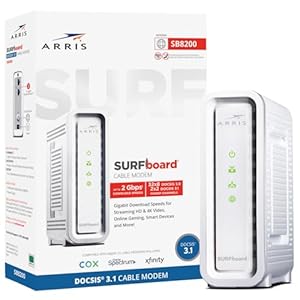
New Cox subscribers in Nevada receive the Panoramic WiFi Gateway, a combined modem-router unit that supports DOCSIS 3.1 and WiFi 6. The gateway is included free for the first 24 months of service. After the promotional period, Cox charges $14/month for the equipment rental. Subscribers who prefer to avoid this fee can purchase a compatible DOCSIS 3.1 modem (such as the Motorola MB8611 or ARRIS SB8200) and pair it with their own WiFi 6 router.
Standard professional installation in Nevada costs $100 as a one-time fee. Cox technicians will install the coaxial or fiber drop to your home, set up the gateway, and verify speeds. Self-installation kits are available at no charge for cable plans in homes with existing coaxial wiring. The self-install kit includes the Panoramic WiFi Gateway, coaxial cables, and step-by-step instructions that most subscribers complete in 15-30 minutes.
Cox's Panoramic WiFi app (available on iOS and Android) allows Nevada subscribers to manage their home network, set parental controls, create guest networks, and run speed tests. The app also supports WiFi pod extenders ($3/month each or $10/month for a 3-pack) to eliminate dead zones in larger Nevada homes, which often feature open floor plans that can interfere with signal propagation.
Cox Bundle Options in Nevada
Cox offers internet-only plans as well as bundles that combine internet with television service (Contour TV) and home phone (Cox Voice). In Nevada, the most popular bundle pairs the Go Even Faster (500 Mbps) internet plan with Contour TV Starter, offering over 75 channels plus cloud DVR for approximately $140/month on a 24-month promotional rate.
For cord-cutters, Cox's internet-only plans remain the best value. The Go Faster (250 Mbps) plan at $70/month combined with streaming services like YouTube TV ($73/month) or Hulu + Live TV ($77/month) provides a comparable channel lineup to traditional cable TV bundles, often with more flexibility and on-demand content. Cox does not penalize internet-only subscribers with higher rates for declining TV service.
Cox Customer Service and Support in Nevada
Cox operates two retail locations in the Las Vegas metro area where Nevada subscribers can return equipment, pay bills, and receive in-person technical support. Phone support is available 24/7 at , and the Cox website offers live chat during business hours.
In the most recent J.D. Power U.S. Residential Internet Service Provider Satisfaction Study, Cox ranked above the industry average in the West region for overall customer satisfaction. Common complaints from Nevada subscribers center on price increases after the 24-month promotional period and the 1.25 TB data cap, while praise typically focuses on consistent speeds and reliable service availability.
Cox's proactive network monitoring system detects and resolves many outages before subscribers notice them. Nevada customers can check real-time outage maps through the Cox app or website to determine whether a connectivity issue is network-wide or specific to their home equipment.
Cox Internet for Gamers in Nevada
Nevada's gaming community — both recreational and professional — has specific internet requirements that Cox addresses across its plan lineup. The state hosts major esports events and has a growing population of competitive gamers, particularly in the Las Vegas area. For casual gaming, the Go Fast 100 Mbps plan provides adequate bandwidth, but the 10 Mbps upload speed can cause issues during live streaming or multiplayer sessions with voice chat.
Serious gamers should consider the Go Super Fast (1 Gbps) plan for its 100 Mbps upload speed, which supports simultaneous gaming, streaming to Twitch or YouTube, and voice communication without packet loss. The cable network's typical latency of 15-25 ms is acceptable for most online games, though competitive esports players who need sub-10ms latency should investigate the Go Beyond Fast fiber plan, which averages 3-8 ms to most game servers on the West Coast.
Cox's data cap is a consideration for gamers who frequently download large game updates. A single modern game installation can consume 50-150 GB, and monthly patches across a library of 10+ games can easily add 200-300 GB to your data usage before accounting for streaming or other household activity.
Cox Internet for Remote Workers in Nevada
Nevada's growing remote workforce — driven by relocations to Las Vegas and Reno from higher-cost states like California — relies heavily on stable, fast internet. Cox's cable plans support most remote work scenarios, but the upload speed is the critical factor. Video conferencing platforms like Zoom, Microsoft Teams, and Google Meet recommend 3-4 Mbps upload for HD video, meaning even the entry-level Go Fast plan's 10 Mbps upload handles a single concurrent video comfortably.
Households with two or more remote workers on simultaneous video calls should select the Go Even Faster (500 Mbps/50 Mbps) or Go Super Fast (1 Gbps/100 Mbps) plan. The higher upload speed ensures stable video quality even when other household members are streaming, uploading files, or using cloud-based applications. Cox's Panoramic WiFi Gateway supports WiFi 6, which improves performance for multiple simultaneous connections compared to older WiFi 5 equipment.
For professionals handling large file transfers — video editors, architects using CAD software, or developers pushing code to remote repositories — the 100 Mbps upload on the Go Super Fast plan significantly reduces wait times. A 10 GB file that takes 13 minutes on 100 Mbps upload completes in just 90 seconds on the fiber plan's 2 Gbps symmetrical connection.
Cox Alternatives in Nevada
Depending on your address in Nevada, you may have alternatives to Cox:
- AT&T Fiber: Available in select Nevada cities including parts of Las Vegas, Henderson, and Reno with symmetrical speeds up to 5 Gbps. No data cap, no contract. Where available, AT&T Fiber often provides better value than Cox for comparable speeds, especially at the 1 Gbps tier where AT&T charges $80/month versus Cox's $110/month.
- T-Mobile Home Internet ($50/month): Available where T-Mobile has sufficient 5G/LTE capacity across Nevada. No data cap, no contract. Speeds of 72-245 Mbps compete with Cox's mid-tier plans at a lower price. Best suited for 1-2 person households with moderate streaming needs.
- Verizon 5G Home: Available in select urban areas of Nevada including portions of Las Vegas. No data cap, competitive pricing starting at $35/month for existing Verizon mobile customers. Speeds of 85-300 Mbps on the standard tier.
- CenturyLink (Quantum Fiber): CenturyLink's legacy DSL network serves parts of Nevada with speeds up to 100 Mbps. In areas where Quantum Fiber has been deployed, symmetrical gigabit speeds are available. Check availability carefully, as DSL and fiber coverage varies significantly by neighborhood.
- Starlink: Satellite internet available statewide in Nevada with no address restrictions. Download speeds of 50-200 Mbps with higher latency (25-60 ms). The $120/month residential plan plus $599 hardware cost makes it best suited for rural Nevada locations without cable or fiber options.
For a detailed comparison of all available providers at your Nevada address, use our address lookup tool or .
Frequently Asked Questions About Cox Internet in Nevada
Does Cox have a data cap in Nevada?
Yes. All four Cox cable internet plans in Nevada include a 1.25 TB monthly data cap. Overages are billed at $10 per 50 GB block, capped at $100/month maximum. The 2 Gbps Go Beyond Fast fiber plan has no data cap. You can also add an Unlimited Data option to any cable plan for $50/month.
What is the cheapest Cox plan in Nevada?
The most affordable Cox plan in Nevada is the Go Fast plan at $50/month (promotional price) for 100 Mbps download speed. After the 24-month promotional period, the price increases to $75/month. This plan includes a 1.25 TB data cap and 10 Mbps upload speed.
Does Cox require a contract in Nevada?
No. Cox does not require annual contracts for any of its internet plans in Nevada. All plans operate on a month-to-month basis. Promotional pricing is locked for 24 months, and canceling early does not incur an early termination fee.
Is Cox fiber available in Las Vegas?
Cox fiber (Go Beyond Fast, 2 Gbps symmetrical) is available in select Las Vegas neighborhoods. Fiber availability is expanding but currently covers a fraction of Cox's total Nevada service area. Most Cox subscribers in Las Vegas are on the cable (DOCSIS 3.1) network. Enter your address in our address lookup tool to check fiber availability at your specific location.
How does Cox compare to AT&T Fiber in Nevada?
Where both are available, AT&T Fiber typically offers better value: symmetrical speeds (equal upload and download), no data caps on any tier, and lower prices at the 1 Gbps level ($80/month vs. Cox's $110/month). Cox's advantage is broader coverage in Nevada, as AT&T Fiber is only available in select areas. Cox also offers lower entry-level pricing at $50/month for 100 Mbps versus AT&T Fiber's $55/month for 300 Mbps.
Can I use my own modem with Cox in Nevada?
Yes. Cox allows Nevada subscribers to use their own DOCSIS 3.1 compatible modem instead of renting the Panoramic WiFi Gateway. Popular compatible models include the Motorola MB8611, ARRIS SB8200, and Netgear CM1200. Using your own modem saves $14/month after the promotional period ends. You will still need your own WiFi router since standalone modems do not include wireless capability.
Cox Internet Promotions and Discounts in Nevada
Cox regularly offers promotional incentives to new Nevada subscribers beyond the standard 24-month promotional pricing. These can include waived installation fees during seasonal campaigns, gift card offers ranging from $100 to $200 for online sign-ups, and free Panoramic WiFi Gateway rental extensions beyond the standard 24-month period. Promotions vary by market and time of year, with the most aggressive offers typically appearing during back-to-school season (August-September) and holiday periods (November-December).
The Cox Affordable Connectivity Program (ACP) successor and the FCC's Lifeline program provide additional discounts for qualifying low-income Nevada households. Cox also participates in the Connect2Compete program, offering internet service at reduced rates ($9.95/month for 100 Mbps) to families with children who qualify for free or reduced-price school lunch programs. These programs are particularly impactful in Clark County, where approximately 58% of students qualify for free or reduced lunch. Nevada residents receiving SNAP benefits, Medicaid, SSI, or veteran's pension may also qualify for discounted internet service through Cox's low-income programs.
Military families stationed at Nellis Air Force Base, Creech Air Force Base, and the Nevada National Security Site can access Cox's military discount program, which waives activation fees and provides flexible pause options during deployment. Given Nevada's significant military presence — with over 12,000 active-duty service members and their families in the Las Vegas area alone — this benefit serves a substantial portion of the subscriber base. Cox's no-contract policy is particularly advantageous for military families who may receive PCS (Permanent Change of Station) orders with limited notice.
Cox vs. T-Mobile Home Internet in Nevada: Detailed Comparison
T-Mobile Home Internet has emerged as Cox's most direct competitor in the Nevada market, particularly in Las Vegas where T-Mobile's 5G network coverage is extensive. At $50/month with no data cap, no contract, and no equipment fees, T-Mobile matches Cox's entry-level pricing while eliminating the data cap that affects all Cox cable plans.
T-Mobile's speeds in Nevada typically range from 72-245 Mbps, placing it between Cox's Go Fast (100 Mbps) and Go Faster (250 Mbps) plans. However, T-Mobile's fixed wireless connection is less consistent than Cox's wired cable, with speeds varying based on tower congestion, distance from the nearest cell site, and building construction materials. Nevada homes with stucco walls or low-E glass windows may experience reduced signal strength with T-Mobile's 5G gateway.
For households prioritizing consistent speeds, low latency for gaming, or needing more than 250 Mbps download, Cox remains the stronger choice in Nevada. For budget-conscious households with 1-2 users who prioritize unlimited data and no-commitment flexibility, T-Mobile Home Internet at $50/month offers genuine value. The absence of professional installation — T-Mobile ships the gateway to your door — also appeals to Nevada renters who may not want a technician visit or permanent wiring modifications.
Sources & Methodology
Coverage data, plan details, and pricing are compiled from FCC Broadband Data Collection filings, provider-published broadband nutrition labels, and U.S. Census Bureau demographic data including population and median household income figures from the American Community Survey. Pricing, speeds, and availability are verified against provider broadband nutrition labels and may vary by location. For a detailed explanation of our data collection and scoring process, see our methodology page.
Data Sources
- FCC Broadband Data Collection
- U.S. Census Bureau American Community Survey
- USAC Universal Service Fund
- NTIA Internet Use Survey
Last verified: March 2026. InternetProviders.ai is an independent resource. We may earn commissions from partner links — this does not affect our editorial recommendations. See our methodology for details.