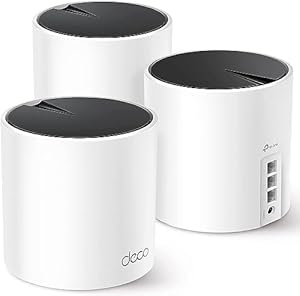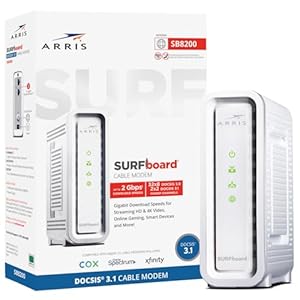
AT&T Business provides internet service to small, medium, and enterprise businesses across its 21-state fiber footprint. With symmetric fiber speeds, SLA-backed uptime guarantees, and dedicated business support, AT&T Business Fiber is one of the strongest business internet options available. This review covers all current plans, pricing, features, and how AT&T compares to other business internet providers.
AT&T Business Fiber Plans (March 2026)
| Plan | Speed (Symmetric) | Monthly Price | SLA |
|---|---|---|---|
| Business Fiber 100 | 100/100 Mbps | $40/mo | 99.9% |
| Business Fiber 300 | 300/300 Mbps | $60/mo | 99.9% |
| Business Fiber 500 | 500/500 Mbps | $70/mo | 99.9% |
| Business Fiber 1000 | 1,000/1,000 Mbps | $90/mo | 99.9% |
| Business Fiber 2000 | 2,000/2,000 Mbps | $160/mo | 99.9% |
| Business Fiber 5000 | 5,000/5,000 Mbps | $190/mo | 99.9% |
All business plans include a WiFi gateway, static IP address, AT&T ActiveArmor security, no data caps, no annual contract. For residential comparisons, see our att vs earthlink breakdown, and the same price-lock guarantee as residential plans.
Business vs. Residential AT&T Fiber
| Feature | Residential | Business |
|---|---|---|
| SLA Guarantee | None | 99.9% uptime |
| Static IP | Not available | Included (1) |
| Support Priority | Standard | Dedicated business line |
| Response Time SLA | None | 4-hour response |
| Additional IPs | N/A | Available ($15/mo each) |
| VoIP Integration | N/A | AT&T Phone for Business |
| Security | ActiveArmor | ActiveArmor + business features |
The Symmetric Speed Advantage for Business
The most significant advantage of AT&T Business Fiber over cable-based business internet is symmetric upload speed. For businesses, upload speed directly impacts:
- VoIP call quality: Each concurrent VoIP call uses 100–300 Kbps upload. With 300 Mbps symmetric, you can support 1,000+ simultaneous calls—more than any small business would need.
- Cloud application performance: SaaS tools like Salesforce, QuickBooks Online, and Google Workspace rely on fast uploads for data synchronization.
- Point-of-sale systems: POS terminals require consistent, low-latency connectivity for credit card processing. The 5–12 ms latency on fiber ensures fast transaction processing.
- Video conferencing: Hosting video meetings with clients uses 2–5 Mbps upload per participant. Symmetric fiber ensures crystal-clear video quality.
- Backup and disaster recovery: Cloud backups complete exponentially faster with symmetric speeds, reducing your recovery point objective (RPO).
Compare this to Spectrum Business, which offers only 20–50 Mbps upload on its business plans.
SLA and Reliability
The 99.9% SLA guarantees no more than 8.76 hours of unplanned downtime per year. If AT&T fails to meet this threshold, you may be eligible for service credits. For businesses where downtime equals lost revenue, this guarantee provides meaningful protection.
Fiber infrastructure is inherently more reliable than cable or DSL:
- Immune to electromagnetic interference from nearby equipment
- Not affected by electrical storms or power line issues
- Does not share bandwidth on local nodes (dedicated connection)
- Lower failure rate than copper-based technologies
AT&T Dedicated Internet
For businesses requiring guaranteed bandwidth (not best-effort), AT&T offers Dedicated Internet Access (DIA) with:
- Guaranteed symmetric bandwidth from 10 Mbps to 100 Gbps
- 99.99% SLA with financial penalties for non-compliance
- 24/7 proactive network monitoring
- Managed router option
- Custom pricing based on bandwidth and location
DIA is typically used by businesses that cannot tolerate any bandwidth variability—healthcare organizations, financial services, data centers, and large offices with 50+ employees.
Business Phone and Unified Communications
AT&T offers business phone service starting at $20/line/month that integrates seamlessly with Business Fiber:
- Unlimited local and long-distance calling
- Auto-attendant, call routing, and voicemail transcription
- Conference calling for up to 50 participants
- Microsoft Teams and Zoom integration
- Mobile app for taking business calls on your smartphone
AT&T Business vs. Competitors
| Provider | Base Speed | Upload Speed | Price | SLA |
|---|---|---|---|---|
| AT&T Business Fiber | 100/100 Mbps | Symmetric | $40/mo | 99.9% |
| Comcast Business | 200/35 Mbps | 35 Mbps | $69.99/mo | 99.9% |
| Verizon Business Fios | 300/300 Mbps | Symmetric | $69.99/mo | 99.9% |
AT&T Business Fiber offers the best value at the entry level with $40/month for 100/100 Mbps—significantly cheaper than cable-based competitors that charge $70+/month for asymmetric speeds.
Who Needs AT&T Business Fiber?
- Retail and restaurants: Reliable POS connectivity and guest WiFi
- Professional offices: Law firms, accounting, consulting with VoIP and cloud needs
- Healthcare: HIPAA-compliant connectivity for EHR systems
- Creative agencies: Symmetric speeds for file sharing and cloud collaboration
- Co-working spaces: Bandwidth for dozens of simultaneous users
- Remote-first companies: Reliable home offices with static IPs for VPN access
AT&T Business Internet Plan Tiers
AT&T offers business internet across multiple technologies and speed tiers. The right choice depends on your business size and needs:
AT&T Business Fiber
Available in AT&T's fiber footprint, business fiber plans offer the same reliable performance as residential fiber with added business features:
- Business Fiber 500 ($60-$80/month): 500 Mbps symmetrical. Ideal for small offices with 5-15 employees doing standard web-based work, email, and video calls.
- Business Fiber 1 Gig ($80-$100/month): 1 Gbps symmetrical. Supports larger offices, heavier cloud usage, and multiple simultaneous video conferences.
- Business Fiber 2-5 Gig ($120-$200/month): For businesses with demanding bandwidth needs — creative agencies, tech companies, medical offices transferring large imaging files.
All AT&T Business Fiber plans include a static IP address, business-grade support with faster response times, and no data caps.
Business vs. Residential: When to Upgrade
Many small business owners wonder if they truly need a business plan. Here is a practical decision framework:
- Stay residential if: You work from home alone, do not need a static IP, and your internet is not the lifeline of a revenue-generating business. Residential fiber at $55-$80/month saves $20-$40/month over business plans with nearly identical performance.
- Upgrade to business if: You have employees who depend on internet to work, you need a static IP for VPN/server hosting, you require an SLA with uptime guarantees, or internet downtime directly costs your business money (point-of-sale systems, client-facing operations).
- Must-have business plan: Retail stores processing credit card payments, medical offices accessing patient records, law firms with confidentiality requirements for client data, and any business running on-premises servers.
AT&T Business Internet Features
Beyond the connection itself, AT&T business plans include several features valuable to businesses:
- Static IP addresses: Essential for hosting a VPN server, running security cameras accessible remotely, or configuring a business email server. Business plans include at least one static IP, with additional IPs available.
- AT&T ActiveArmor Business Security: Network-level security that blocks known threats before they reach your devices. Includes DNS protection, anti-malware filtering, and basic DDoS mitigation.
- Priority technical support: Business accounts get faster access to technical support and priority scheduling for technician visits. Most business support calls are answered within 5 minutes versus 15-30 minutes for residential accounts.
- 99.9% uptime SLA: AT&T's business fiber plans include a service level agreement guaranteeing 99.9% uptime. If AT&T fails to meet this guarantee, you receive credits on your bill. This contractual commitment does not exist on residential plans.
For more details on AT&T's residential and business offerings, see our AT&T Internet plans and pricing page.
Frequently Asked Questions
Is AT&T Business Fiber worth it over residential?
For businesses that need a static IP, SLA-backed uptime, or priority support, yes. The dedicated business support line and uptime guarantee justify the modest price premium.
Does AT&T Business require a contract?
No. Like residential plans, AT&T Business Fiber plans are month-to-month with no annual contract. The price-lock guarantee still applies.
Can I use AT&T Business Fiber for VoIP?
Yes. The symmetric speeds and low latency make AT&T Business Fiber excellent for VoIP. Even the base 100 Mbps plan supports hundreds of simultaneous calls.
Does AT&T Business include a static IP?
Yes. One static IP address is included free with every business plan. Additional static IPs are available for $15/month each.
How does AT&T Business compare to Spectrum Business?
AT&T Business Fiber is cheaper ($40/mo vs. $69.99/mo at entry) and offers symmetric uploads (100 Mbps vs. 20 Mbps). Spectrum Business has broader geographic coverage but inferior upload speeds. See our Spectrum Business review for details.
Pricing and plans subject to change. For residential options, see our AT&T residential plans guide. Check business availability at your address. Read our methodology.
Choosing the Right AT&T Business Plan
Selecting the appropriate business tier depends on your employee count, application requirements, and growth trajectory:
| Business Type | Employees | Recommended Plan | Why |
|---|---|---|---|
| Home office | 1–2 | Business Fiber 100 ($40/mo) | Cost-effective, static IP for VPN |
| Small retail/restaurant | 3–10 | Business Fiber 300 ($60/mo) | POS reliability, guest WiFi capacity |
| Professional office | 10–25 | Business Fiber 500 ($70/mo) | Multiple VoIP lines, cloud apps, file sharing |
| Tech company/agency | 10–50 | Business Fiber 1000 ($90/mo) | Heavy cloud usage, video conferencing, large transfers |
| Multi-site business | 25–100+ | Business Fiber 2000+ or DIA | Guaranteed bandwidth, multi-site VPN, compliance |
Business Continuity and Backup Options
For businesses where internet downtime means lost revenue, AT&T offers several continuity solutions:
- Dual WAN failover: Use AT&T Business Fiber as primary and Internet Air (5G) as backup. If fiber goes down, traffic automatically routes over 5G. Cost: $55/mo for the backup connection.
- Cellular backup: AT&T offers LTE/5G backup modems that activate automatically during fiber outages, maintaining POS and critical application connectivity.
- SD-WAN: For multi-site businesses, AT&T’s SD-WAN service manages traffic across multiple connections (fiber, 5G, broadband) for maximum uptime and performance.
Security and Compliance Features
AT&T Business Fiber includes AT&T ActiveArmor security, which provides threat monitoring, anti-malware protection, and safe browsing alerts. For businesses with compliance requirements, additional features include:
- HIPAA-compliant connectivity: Healthcare businesses can build HIPAA-compliant networks on AT&T’s fiber infrastructure with appropriate encryption and access controls
- PCI DSS support: Retail businesses processing credit cards benefit from the dedicated, encrypted fiber connection for POS traffic
- Firewall options: Managed firewall services available as add-ons for businesses without in-house IT
- Static IP security: The included static IP enables secure VPN access for remote employees connecting to on-premises resources
Transitioning from Cable to AT&T Business Fiber
If you currently have cable business internet (Spectrum Business, Comcast Business) and want to switch to AT&T Business Fiber:
- Verify availability. Check att.com/business or our availability checker for your business address.
- Schedule installation during off-hours. AT&T offers business installation during evenings and weekends to minimize disruption to operations.
- Plan the IP transition. If you use the static IP for VPN, email servers, or hosted services, plan to update DNS records and firewall rules to the new AT&T IP address.
- Run both connections briefly. Overlap the old and new service for 1–2 weeks to verify everything works before canceling the cable service.
- Update your network configuration. If you use the cable modem’s IP as your gateway, you will need to reconfigure any devices pointing to the old gateway IP.
AT&T Business Fiber for Remote and Hybrid Teams
The rise of remote and hybrid work has fundamentally changed how businesses think about internet infrastructure. AT&T Business Fiber’s symmetric speeds and static IP make it particularly well-suited for distributed teams:
- VPN performance: Employees connecting to the office VPN get full-speed access thanks to symmetric uploads. On cable business internet with 20 Mbps upload, VPN throughput is limited to 20 Mbps regardless of the download speed.
- Video conferencing rooms: Conference rooms with large displays running Zoom Rooms or Microsoft Teams Rooms need dedicated bandwidth for high-quality video. AT&T’s symmetric speeds ensure crystal-clear video even when other business operations are running simultaneously.
- Cloud-first operations: Businesses running entirely on SaaS (Google Workspace, Microsoft 365, Salesforce, HubSpot) benefit from fast symmetric connectivity for both reading and writing data to cloud applications.
- Hybrid meeting equity: Remote participants in meetings with in-office colleagues need high-quality audio/video to participate effectively. The reliable, low-latency fiber connection ensures remote workers are not disadvantaged by connection quality.
AT&T Business Internet for Specific Industries
Different industries have distinct internet requirements, and AT&T Business Fiber's flexibility makes it suitable across a wide range of business types. Here is a detailed breakdown of how specific industries benefit from AT&T Business Fiber.
Healthcare and Medical Offices
Healthcare facilities need reliable, secure internet for Electronic Health Record (EHR) systems, telemedicine consultations, medical imaging transfers, and patient portal access. AT&T Business Fiber's symmetric speeds ensure large medical imaging files (DICOM images from MRI, CT, and X-ray systems can exceed 100 MB per study) upload quickly to cloud-based PACS systems. The 99.9% SLA provides the uptime assurance that medical practices require, since internet outages directly impact patient care and billing operations.
HIPAA compliance demands encrypted data transmission and strict access controls. While AT&T's fiber connection itself does not provide HIPAA compliance, the dedicated fiber line (not shared with residential customers), static IP for VPN access, and ActiveArmor security provide the network foundation that healthcare IT teams need to build a compliant infrastructure. Most healthcare practices on AT&T Business Fiber pair the connection with a HIPAA-compliant cloud provider and managed firewall for full regulatory compliance.
Restaurants and Hospitality
Modern restaurants depend on internet connectivity for point-of-sale systems, online ordering platforms, kitchen display systems, reservation management, and guest WiFi. A single POS terminal uses minimal bandwidth (under 1 Mbps), but reliability is paramount since a POS outage means cash-only operations and potential lost sales. AT&T's 99.9% SLA and the option for cellular backup ensures restaurants can continue processing credit cards even during rare fiber outages.
Guest WiFi has become an expected amenity in restaurants and hotels. AT&T Business Fiber provides enough bandwidth to run a separate guest network without impacting business-critical POS and ordering systems. The Business Fiber 300 plan ($60/mo) comfortably supports a restaurant with 10 to 15 POS terminals, kitchen displays, online ordering tablets, and a guest WiFi network serving up to 50 simultaneous connections.
Legal and Professional Services
Law firms, accounting practices, and consulting companies handle sensitive client data that requires secure, reliable connectivity. AT&T Business Fiber's static IP enables secure VPN access for attorneys working remotely, ensuring confidential client communications remain encrypted end-to-end. The symmetric upload speeds support rapid document sharing through cloud-based practice management systems like Clio, MyCase, and PracticePanther.
Video depositions and virtual court appearances have become standard practice since 2020, making reliable video conferencing a non-negotiable requirement for legal practices. AT&T's low-latency fiber connection provides crisp video quality without the freezing and audio dropouts that can occur on congested cable connections during peak business hours.
AT&T Business Fiber Availability by State
AT&T Business Fiber is available across AT&T's 21-state fiber footprint, with the densest coverage in major metropolitan areas. Business fiber availability does not always match residential availability since AT&T prioritizes commercial districts and business parks for business-grade connections.
| Region | Major Markets | Fiber Availability |
|---|---|---|
| Southeast | Atlanta, Nashville, Charlotte, Jacksonville, Miami | Extensive |
| Texas | Dallas, Houston, San Antonio, Austin | Extensive |
| Midwest | Chicago, Indianapolis, Detroit, St. Louis, Cleveland | Strong |
| West | Los Angeles, San Francisco, Sacramento | Growing |
| South Central | New Orleans, Little Rock, Oklahoma City | Moderate |
To check business fiber availability at your specific address, visit att.com/business or . AT&T's business availability checker provides address-level results including available speed tiers and current pricing for your location.
Total Cost of Ownership: AT&T Business vs Cable Business Internet
When evaluating business internet costs, looking at the monthly price alone misses important factors that affect total cost of ownership over a 24 to 36-month period. Here is a comprehensive cost comparison between AT&T Business Fiber and a typical cable business internet provider.
| Cost Factor | AT&T Business Fiber 500 | Cable Business 300/20 |
|---|---|---|
| Monthly service | $70/mo | $69.99/mo |
| Equipment rental | Included | $15/mo |
| Static IP | Included (1) | $15-25/mo |
| Installation | Free (promotion) | $199 standard |
| Annual cost (Year 1) | $840 | $1,439 |
| Annual cost (Year 2) | $840 | $1,440+ |
| 24-month total | $1,680 | $2,879+ |
The savings from AT&T's included equipment and static IP add up significantly over time. A business switching from cable to AT&T Business Fiber can expect to save approximately $1,200 over two years while getting symmetric speeds (500/500 Mbps vs. 300/20 Mbps) and better upload performance for cloud applications and video conferencing.
Setting Up AT&T Business Fiber: Step-by-Step Guide
The installation process for AT&T Business Fiber is designed to minimize disruption to your operations. Here is what to expect from order to activation.
- Order and site survey (Day 1-3): After placing your order online or by phone, AT&T confirms fiber availability at your business address and schedules a site survey if needed. For addresses already served by fiber, the survey step may be skipped.
- Installation scheduling (Day 3-7): AT&T offers flexible installation windows including evenings and weekends to minimize business disruption. Most installations are completed within 7 to 10 business days of the order date in metro areas.
- Technician visit (2-4 hours): A certified AT&T technician installs the Optical Network Terminal, runs fiber from the street to your business premises, sets up the WiFi gateway, configures your static IP, and verifies speeds. The technician tests both wired and wireless connections before departing.
- Network configuration (1-2 hours post-install): After the technician departs, your IT team or managed IT provider can configure the network for your specific needs: setting up VPN tunnels, configuring VLAN segmentation for guest and business traffic, and updating any services that reference your IP address.
- Verification and optimization (Week 1): Run speed tests throughout the first week at different times of day to confirm consistent performance. AT&T's business support team can assist with any optimization needed during this period.
AT&T Business Internet Scalability and Future-Proofing
One of the most important considerations for growing businesses is whether their internet service can scale alongside the company. AT&T Business Fiber excels in this area because upgrading between speed tiers requires no physical infrastructure changes. Moving from Business Fiber 100 to Business Fiber 1000 is a software-level change that AT&T can implement remotely, often within 24 hours of the request. This eliminates the downtime and scheduling hassle associated with physical infrastructure upgrades on cable or DSL networks.
For businesses planning to add employees, open new office locations, or adopt bandwidth-intensive technologies like video surveillance, VoIP phone systems, or virtual desktop infrastructure (VDI), AT&T's fiber backbone provides the capacity headroom to support these expansions without switching providers. The Business Fiber 5000 plan (5 Gbps symmetric) accommodates offices with 100 or more simultaneous users, multiple VoIP lines, and heavy cloud application usage, all on a single fiber connection.
AT&T also offers multi-site networking solutions for businesses with two or more locations. SD-WAN (Software-Defined Wide Area Network) technology connects branch offices over AT&T's fiber network, enabling centralized network management, automated failover between connections, and optimized traffic routing. For businesses expanding across AT&T's 21-state fiber footprint, the ability to standardize on a single provider across all locations simplifies IT management and often reduces total networking costs compared to managing contracts with multiple regional providers.
AT&T Business Customer Support Experience
AT&T Business provides a dedicated support experience separate from residential support:
- Dedicated business support line: , available 24/7 with business-trained agents
- 4-hour response SLA: For service-affecting issues, AT&T commits to a 4-hour response time from initial report
- Account manager: Business accounts with $500+/month in services are assigned a dedicated account manager for proactive communication
- Online business center: att.com/business provides account management, billing, and support ticket creation
- Business app: The myAT&T Business app provides mobile account management, speed testing, and support contact
For businesses where internet issues directly impact revenue, the dedicated support channel and faster response SLA provide meaningful protection compared to waiting in the residential support queue alongside millions of individual customers.
Sources
This content references data from FCC Broadband Map, U.S. Census Bureau. Pricing and availability are subject to change.
Market Context
The broadband market concentration in the United States varies based on population density and infrastructure investment. According to FCC broadband deployment data, median household income and population density are key factors in service availability and pricing. The BEAD (Broadband Equity, Access, and Deployment) program may expand options in underserved areas of the United States.