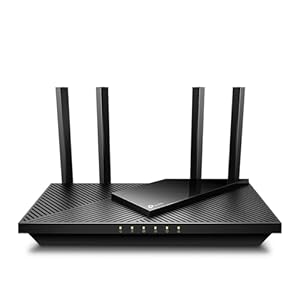
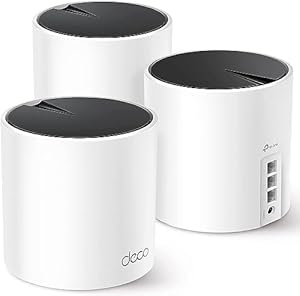
Quick Verdict: Frontier Fiber vs T-Mobile 5G Home Internet
Frontier Fiber is the better choice for most households with its consistently faster speeds, symmetrical uploads, lower latency, and unlimited data without throttling. T-Mobile 5G Home Internet wins on simplicity with no installation needed and its availability in rural and underserved areas where wired fiber has not reached. If Frontier Fiber is available at your address, it will almost always deliver a better internet experience. Frontier at to check availability and current pricing.
Frontier Fiber vs T-Mobile 5G Home Internet: Full 2026 Comparison
This comparison highlights the growing competition between wired fiber-optic internet and fixed wireless 5G service. Frontier Fiber connects your home via physical fiber-optic cables buried underground, while T-Mobile 5G Home Internet uses cellular tower signals to deliver broadband wirelessly. These fundamentally different technologies create distinct advantages and tradeoffs that matter for different types of households. Pricing is current as of early 2026 and subject to change. Frontier at to verify availability.
| Feature | Frontier Fiber | T-Mobile 5G Home Internet |
|---|---|---|
| Plans/Tiers | 3 fiber tiers (500, 1 Gig, 2 Gig) | 1-2 tiers (varies by location) |
| Starting Price | $49.99/mo | $50/mo ($25-30 with eligible wireless plan) |
| Max Download Speed | 2,000 Mbps | 245 Mbps (typical); 100+ Mbps advertised |
| Upload Speeds | Symmetrical (up to 2,000 Mbps) | 10-25 Mbps typical |
| Annual Contracts | None | None |
| Data Caps | None | Technically unlimited (deprioritized during congestion) |
| Equipment Fee | Router included free | Gateway device included free |
| Technology | Fiber-optic (GPON/XGS-PON) | Fixed wireless 5G/4G LTE |
| Customer Satisfaction | ACSI: 73/100 | ACSI: 72/100 |
When Frontier Fiber Wins
Frontier Fiber is the significantly better choice in these common scenarios:
Mobile 5G Speeds
- You need consistent, reliable speeds. Frontier Fiber delivers consistent performance because the physical fiber connection to your home is dedicated and unaffected by wireless conditions. T-Mobile 5G speeds fluctuate significantly based on tower congestion, distance from the tower, building materials, weather, and time of day. While T-Mobile advertises speeds of 100+ Mbps, real-world performance ranges from 30 Mbps to 300 Mbps depending on conditions. Frontier's fiber speeds remain stable around your plan tier 24/7.
- You work from home or rely on video conferencing. Frontier's symmetrical upload speeds (up to 2,000 Mbps) and low latency (5-15ms) provide a flawless remote work experience. T-Mobile's upload speeds typically range from 10-25 Mbps with higher latency (30-60ms), which can cause video quality issues, especially when multiple household members are online simultaneously. For professionals whose livelihood depends on reliable internet, fiber is the only responsible choice.
- You are a gamer or need low latency. Frontier Fiber's latency of 5-15ms is dramatically lower than T-Mobile 5G's typical 30-60ms. For competitive online gaming, real-time applications, and video streaming with minimal buffering, fiber's low latency provides a noticeably better experience. Jitter (variation in latency) is also much lower on fiber, meaning more consistent gameplay and fewer disconnections.
- You have a large household with heavy internet usage. A household with 5+ people streaming 4K video, gaming, video calling, and downloading simultaneously needs the bandwidth headroom that fiber provides. Frontier's 1 Gig or 2 Gig plans handle massive concurrent usage without breaking a sweat. T-Mobile's shared wireless bandwidth is more likely to create bottlenecks during heavy household usage.
- You want guaranteed speeds and no deprioritization. While T-Mobile's data is technically unlimited, it is subject to network management. During periods of congestion, home internet traffic may be deprioritized relative to mobile users on the same tower. Frontier Fiber does not throttle or deprioritize traffic under any circumstances. to sign up.
When T-Mobile 5G Home Internet Wins
T-Mobile 5G Home Internet is the better option in these situations:
- Frontier Fiber is not available at your address. T-Mobile 5G Home Internet serves millions of addresses that wired fiber has not reached, including rural areas, small towns, and underserved suburban neighborhoods. If your only alternative to T-Mobile is slow DSL or satellite, T-Mobile's fixed wireless service is a dramatically better option that provides broadband-level speeds.
- You move frequently and want zero installation hassle. T-Mobile ships a gateway device to your door that you simply plug in and connect. There is no technician visit, no drilling, no buried cables, and no installation fee. If you are a renter, military family, or frequent mover, T-Mobile's portability and zero-commitment setup is enormously convenient compared to scheduling a fiber installation appointment.
- You are a T-Mobile wireless customer seeking bundle savings. T-Mobile offers significant discounts on home internet when bundled with qualifying wireless plans. The price can drop to $25-30/month with AutoPay and an eligible mobile plan, making it one of the cheapest broadband options available. At that price, the speed and latency tradeoffs become much more acceptable.
- You are a light internet user with basic needs. If your household primarily browses the web, streams standard or HD video on one or two screens, and handles email and social media, T-Mobile 5G provides sufficient performance. Not everyone needs gigabit fiber, and T-Mobile's 100-300 Mbps typical speeds exceed what basic usage requires.
- You want a month-to-month backup connection. T-Mobile's no-contract, equipment-included approach makes it an excellent secondary internet connection. Some households use it as a backup for their primary fiber or cable service, ensuring connectivity during outages without committing to a long-term second provider.
Plan-by-Plan Matchup
Entry Level: Frontier 500 vs T-Mobile Home Internet
Frontier's 500/500 Mbps at $49.99/month versus T-Mobile at approximately $50/month for 100-300 Mbps (variable). At similar pricing, Frontier delivers significantly more consistent speeds with vastly superior upload capability (500 Mbps vs 10-25 Mbps). The performance gap is substantial, making Frontier the clear winner when both are available at the same address.
Budget Comparison: T-Mobile with Wireless Bundle
With qualifying T-Mobile wireless plans, home internet can drop to $25-30/month. At that price, T-Mobile becomes roughly half the cost of Frontier's cheapest plan. For budget-conscious households already on T-Mobile wireless, this creates a legitimate value proposition despite the performance gap. You trade speed consistency and upload performance for monthly savings.
Key Differences That Matter Most
Wired vs Wireless: The Fundamental Tradeoff
The core difference between Frontier Fiber and T-Mobile 5G is wired versus wireless delivery. Frontier's fiber cable provides a dedicated, consistent connection unaffected by weather, distance, or other users. T-Mobile's wireless signal passes through air, walls, and competes with other cellular users on the same tower. This means fiber offers predictable performance while wireless speeds vary throughout the day. During peak evening hours, T-Mobile speeds commonly drop 30-50% from their best-case performance.
Latency and Real-Time Performance
Fiber's 5-15ms latency versus T-Mobile's 30-60ms latency creates noticeable differences in real-time applications. Video calls are smoother, web pages load faster, and interactive applications feel more responsive on fiber. For competitive gaming, the difference between 10ms and 50ms can determine outcomes in fast-paced games. If your household uses real-time applications regularly, fiber's latency advantage is meaningful.
Installation and Setup
T-Mobile requires zero installation: plug in the gateway, download the app, and connect. Frontier Fiber requires a technician visit to install or verify the fiber connection to your home, which typically takes 2-4 hours. For new construction or areas with existing fiber infrastructure, Frontier installation is straightforward. For renters or people who dislike scheduling appointments, T-Mobile's self-setup is a significant convenience advantage.
Coverage Comparison
T-Mobile 5G Home Internet is available to over 50 million homes across the United States, with coverage expanding as T-Mobile builds out its 5G mid-band and high-band network. Frontier Fiber serves parts of 25 states with active expansion. The two providers overlap in many suburban and urban markets. T-Mobile often reaches addresses in rural and semi-rural areas where Frontier has not yet deployed fiber. Frontier at to see if fiber is available at your address before settling for wireless.
Check Frontier Fiber AvailabilityThe Bottom Line
Frontier Fiber is the objectively better internet service in terms of speed, reliability, latency, and upload performance. T-Mobile 5G Home Internet is a valuable option for households where fiber is unavailable, for budget-conscious T-Mobile wireless customers. For people who prioritize installation simplicity. If Frontier Fiber is available at your address, it should be your first choice. If not, T-Mobile 5G is a solid wireless alternative that delivers real broadband performance without the installation complexity of wired service.
Check Frontier Fiber AvailabilityFrequently Asked Questions
Is T-Mobile 5G Home Internet as fast as Frontier Fiber?
No. While T-Mobile can deliver impressive peak speeds (200-300+ Mbps in ideal conditions), its typical speeds of 100-200 Mbps are lower than Frontier's 500 Mbps entry-level plan. More importantly, T-Mobile speeds fluctuate significantly based on tower congestion and conditions, while Frontier Fiber delivers consistent speeds 24/7. Upload speeds are also dramatically different: 500-2,000 Mbps for Frontier versus 10-25 Mbps for T-Mobile.
Does T-Mobile 5G Home Internet have data caps?
T-Mobile advertises unlimited data, but their terms of service allow for network management and deprioritization during congestion. Heavy users may experience slower speeds during peak times compared to higher-priority mobile traffic. Frontier Fiber has truly unlimited data with no deprioritization of any kind under any conditions.
Can I game on T-Mobile 5G Home Internet?
Casual gaming works fine on T-Mobile 5G. However, competitive gamers will notice the higher latency (30-60ms vs fiber's 5-15ms) and occasional jitter spikes. Games that require fast reflexes (first-person shooters, fighting games) perform noticeably better on fiber. Turn-based or casual games are perfectly playable on T-Mobile.
Do I need a technician for T-Mobile 5G Home Internet?
No. T-Mobile ships the 5G Gateway directly to your home. You simply plug it in, connect it to power, download the T-Mobile Home Internet app, and follow the setup instructions. The entire process takes about 15 minutes. Frontier Fiber typically requires a professional installation visit.
Can I take T-Mobile 5G Home Internet with me if I move?
Not automatically. T-Mobile Home Internet availability is address-specific because it depends on local tower capacity. You must verify that your new address is eligible before moving the service. That said, there are no contracts or early termination fees, so switching or canceling is simple.
Is Frontier Fiber worth the extra cost over T-Mobile?
For most households, yes. The performance gap between fiber and fixed wireless is significant, especially for upload speeds, latency, and consistency. If you work from home, game online, or have a large household with heavy internet usage, Frontier Fiber's superior performance justifies the additional $20-25/month versus T-Mobile's bundled price. For light users in T-Mobile's wireless ecosystem, the savings may justify the tradeoff.
Explore Frontier's fiber plans at our Frontier Fiber provider hub or view Frontier Fiber plan details and pricing.
Speed and Performance: A Deeper Look
The speed difference between Frontier Fiber and T-Mobile 5G Home Internet extends beyond raw download numbers. Understanding how each technology performs under real-world conditions reveals why fiber consistently delivers a superior experience for most household activities.
Latency and Responsiveness: Frontier Fiber typically delivers latency between 3-10 milliseconds, making it excellent for real-time applications like video calls, online gaming, and remote desktop connections. T-Mobile 5G Home Internet averages 25-50 milliseconds of latency, with occasional spikes to 80-100ms during peak congestion. For casual browsing and streaming, this difference is imperceptible. For competitive online gaming (Fortnite, of Duty, Valorant) or high-frequency stock trading, the latency gap is significant.
Upload Speed Comparison: This is where Frontier Fiber most dramatically outperforms T-Mobile. Frontier's symmetrical fiber delivers upload speeds matching your download tier: 500 Mbps up on the 500 plan, 1 Gbps up on the Gig plan, and 2 Gbps up on the 2 Gig plan. T-Mobile 5G Home Internet typically delivers 10-25 Mbps upload, regardless of download speed. For households with one or more remote workers who use cloud-based tools, upload large presentations, participate in high-definition video conferences, or back up data to cloud storage, Frontier's symmetrical uploads are transformative.
Consistency and Reliability: Fiber-optic connections are inherently more stable than wireless connections. Frontier Fiber maintains consistent speeds regardless of weather conditions, time of day, or the number of neighbors using the internet simultaneously. T-Mobile 5G performance can vary with network congestion (especially 7-11 PM), weather events, and even seasonal changes in foliage that affect signal propagation. Heavy rain, snow, or storms rarely affect fiber service but can temporarily reduce 5G signal quality.
Multi-Device Performance: Modern households average 15-25 connected devices. Frontier Fiber's dedicated physical connection maintains full speed regardless of how many devices are active. T-Mobile's shared wireless bandwidth means that a household with 20+ devices may experience slower individual device speeds during heavy usage. Frontier's 2 Gig plan can comfortably support 30+ simultaneous high-bandwidth activities, while T-Mobile's connection may struggle with more than 8-10 simultaneous streams or downloads.
Best Provider by Use Case
Different household activities favor different connection types. Here is a detailed breakdown of which provider performs better for specific use cases that matter to American households in 2026:
4K and 8K Streaming: Both providers handle 4K streaming comfortably. A single 4K stream requires approximately 25 Mbps, well within both providers' capabilities. For households streaming on multiple TVs simultaneously while other family members browse, game, or video , Frontier Fiber provides more headroom. T-Mobile can handle 4-5 concurrent 4K streams; Frontier Fiber can handle dozens without breaking a sweat.
Remote Work and Video Conferencing: Frontier Fiber wins decisively for remote work. Zoom, Microsoft Teams, and Google Meet recommend 3.8 Mbps upload for HD video. While T-Mobile meets this minimum, Frontier's symmetrical fiber provides a 50-100x surplus, meaning your video quality remains pristine even when others in the household are simultaneously uploading, streaming, or downloading. Cloud-based applications like Google Workspace, Dropbox, and OneDrive also perform significantly better with higher upload speeds.
Online Gaming: For competitive gaming, Frontier Fiber's low latency (3-10ms) provides a measurable advantage over T-Mobile's 25-50ms. In first-person shooters and real-time strategy games, even 20ms of additional latency can mean the difference between winning and losing a critical encounter. For casual gaming (Minecraft, Stardew Valley, turn-based games), T-Mobile's performance is perfectly adequate. Game downloads also complete much faster on fiber: a 100 GB game downloads in approximately 13 minutes on Frontier's Gig plan versus 55+ minutes on T-Mobile at typical speeds.
Smart Home Devices: Both providers support smart home ecosystems effectively. Security cameras that upload continuous video benefit from Frontier's higher upload speeds, particularly if you run multiple cameras. Smart thermostats, lights, and voice assistants require minimal bandwidth and work equally well on either connection.
Content Creation: YouTubers, TikTok creators, podcasters, and anyone who regularly uploads large files should choose Frontier Fiber without hesitation. Uploading a 10 GB video file takes approximately 80 seconds on Frontier's Gig plan versus 53+ minutes on T-Mobile at typical upload speeds. This difference fundamentally changes the workflow for content creators.
How to Switch Between Frontier Fiber and T-Mobile
If you are currently on one provider and considering switching to the other, here is what the transition process looks like for each direction:
Switching to Frontier Fiber: Check availability at your address on the Frontier website or by calling . If fiber is available, schedule an installation appointment. A Frontier technician will install the fiber line to your home and set up the router, which typically takes 2-4 hours. Keep your T-Mobile service active until Frontier is installed and working. Once your Frontier connection is confirmed, return the T-Mobile gateway to avoid any equipment charges.
Switching to T-Mobile: Order T-Mobile Home Internet online or by calling T-Mobile. The 5G Gateway will ship to your address within 2-5 business days. Once it arrives, plug it in and test speeds for several days at different times before canceling your Frontier service. T-Mobile offers a 15-day trial period, so you can return the equipment for a full refund if performance is unsatisfactory. If satisfied, Frontier to cancel service and return any Frontier equipment.
Important consideration: If you have a Frontier Fiber plan with a promotional rate, check whether canceling and returning later would result in losing that rate. T-Mobile Home Internet has no promotional pricing, so the price you see is the price you pay long-term. Frontier's pricing can vary based on market and promotion availability.
Future Outlook: Frontier Fiber vs T-Mobile 5G (2026-2028)
Both Frontier and T-Mobile are investing billions in network expansion, which will affect availability and performance in the coming years. Understanding each provider's roadmap helps you make a forward-looking decision.
Frontier Fiber expansion: Frontier has committed to converting its entire DSL footprint to fiber by 2030, with a target of reaching 10 million fiber locations. Throughout 2026 and 2027, Frontier is expanding fiber to previously DSL-only neighborhoods in its service territories. If Frontier Fiber is not yet available at your address, it may become available within the next 12-24 months if you live in a Frontier service area.
T-Mobile 5G evolution: T-Mobile continues deploying mid-band 5G spectrum and upgrading existing towers to support higher home internet speeds. The company has stated a goal of reaching 8-9 million home internet customers by 2028. As T-Mobile adds dedicated home internet capacity to its towers, peak-hour congestion issues should improve. Future 5G Advanced technologies promise speeds exceeding 1 Gbps, though widespread availability of those speeds is likely 2028 or later.
Pricing trends: Both providers have maintained stable pricing through 2025-2026. As fiber competition intensifies in many markets, Frontier may lower prices or increase speeds at existing price points. T-Mobile's wireless-first approach keeps infrastructure costs lower, which may allow it to maintain aggressive pricing even as it adds capacity.
Disclosure: Some of the links and phone numbers on this page are from our advertising partners who compensate us when you click or . This does not influence our editorial assessments or recommendations. Comparisons are based on publicly available plan data, independent surveys, and our editorial team's research. Pricing is current as of early 2026 and subject to change. Always verify pricing, speeds, and availability directly with the provider.
Data and methodology details are available on our research methodology page. Speeds, prices, and availability are verified against provider websites and FCC broadband data as of 2026.
Sources
This comparison references data from FCC Broadband Map, Frontier Fiber, T-Mobile, and the U.S. Census Bureau. Pricing and availability are subject to change.
Market Context
The broadband market concentration in areas served by both Frontier Fiber and T-Mobile varies significantly. According to FCC broadband deployment data, median household income and population density are key factors in determining which provider offers better value. The BEAD (Broadband Equity, Access, and Deployment) program may expand options in underserved areas where neither provider currently has strong coverage.