
Quick Answer: Starlink vs. T-Mobile Home Internet
Editor’s note (October 6, 2026): Starlink restructured its residential plans effective June 18, 2026 (our Starlink plan data was last verified July 22, 2026). From the comparison article below, we removed its Starlink pricing, cost and value comparisons. We also removed Starlink speed figures from before that change and statements about Starlink’s customer support that conflict with our provider data. Check Starlink availability at your address.
Starlink vs. T-Mobile Home Internet: Complete Internet Comparison (2026)
Choosing between Starlink and T-Mobile Home Internet is a decision that affects your household's daily connectivity -- from streaming and gaming to remote work and smart home devices. These two providers take fundamentally different approaches to delivering internet service, making this comparison essential reading before you sign up.
Technology Comparison: How Starlink and T-Mobile Home Internet Deliver Service
Understanding the underlying technology is critical because it determines not just speed, but also latency, reliability, upload performance, and weather resilience.
Starlink: Low-Earth Orbit Satellite
Low-Earth orbit satellite internet bounces signals between your dish and a constellation of satellites orbiting much closer to Earth than traditional satellites (approximately 340 miles vs 22,000 miles). This drastically reduces latency compared to geostationary satellite, making it viable for video calls and light gaming. However, performance depends on weather, obstructions, and constellation density in your area.
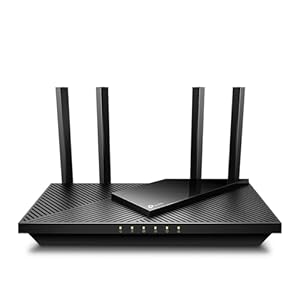
T-Mobile Home Internet: 5G Home Internet, Fixed Wireless
5G fixed wireless uses cellular tower signals to deliver home internet without physical cable connections. Performance varies based on tower proximity, congestion, and physical obstructions between your home and the tower. The main advantage is zero installation hassle -- your gateway arrives by mail and you simply plug it in. Speeds can fluctuate more than wired connections depending on time of day and network demand.
The technology difference between Starlink and T-Mobile Home Internet is not just academic -- it directly impacts your daily internet experience. Consider how each technology type performs during peak evening hours, severe weather, and for upload-heavy tasks like video calls and cloud backups.
Speed Comparison: Starlink vs. T-Mobile Home Internet Plans
| Feature | Starlink | T-Mobile Home Internet |
|---|---|---|
| Technology | Low-Earth Orbit Satellite | 5G Home Internet, Fixed Wireless |
| Data Caps | None | None |
| Contracts Required | No | No |
For context, here is what different speed tiers can handle in practice: 100 Mbps supports 4-5 simultaneous HD streams plus web browsing. 300 Mbps handles 4K streaming on multiple devices plus gaming. 500 Mbps to 1 Gbps supports heavy multi-device households with 10+ connected devices simultaneously. Speeds above 1 Gbps are ideal for content creators, large file transfers, home servers, and future-proofing your connection as demand grows.
Keep in mind that advertised speeds represent maximum capability under ideal conditions. Real-world speeds typically reach 80-95% of the advertised rate on fiber, 60-80% on cable during off-peak hours, and can vary more significantly on wireless and satellite connections.
Customer Service Comparison: Starlink vs. T-Mobile Home Internet
| Support Feature | Starlink | T-Mobile Home Internet |
|---|---|---|
| Support Hours | Support via app and online portal only -- no phone support; 24hr response | 24/7 via T-Force (Twitter/X), phone, chat; T-Mobile stores; T-Mobile app |
| Self-Service App | Yes | Yes |
| In-Store Support | No | Yes |
Customer service quality matters most when something goes wrong -- an outage, billing dispute, or technical issue. Starlink provides support via Support via app and online portal only -- no phone support; 24hr response. T-Mobile Home Internet offers 24/7 via T-Force (Twitter/X), phone, chat; T-Mobile stores; T-Mobile app.
When evaluating customer service, consider these factors: response time during outages, availability of local service centers for in-person help, quality of self-service tools (mobile app, website, chatbot), whether technical support is available 24/7 or only during business hours, and whether you can reach a human representative without navigating lengthy phone trees. Providers with both 24/7 phone support and a robust self-service app generally deliver the best overall support experience.
Coverage and Availability
Starlink serves All 50 states (national). T-Mobile Home Internet covers All 50 states (national). Both providers have broad national footprints, though actual availability varies significantly by address -- even neighbors on the same street may have different options.
Even within a provider's service area, not all addresses receive the same technology or speed tiers. For example, a provider may offer fiber at one address and only DSL a few blocks away. Always check availability at your exact address through each provider's website or by calling their sales line. Some addresses may only have one of these two options available, which simplifies the decision considerably.
Best For: Who Should Choose Which Provider?
Best for Gaming
For online gaming, low latency and consistent speeds matter most. Both providers can support gaming, though wired connections generally provide more consistent performance than wireless alternatives. Look for plans with at least 100 Mbps and low latency for the best gaming experience. For competitive titles like Fortnite, Call of Duty, and Valorant, latency under 20ms is ideal. For casual gaming, anything under 50ms works well.
Best for Streaming (Netflix, YouTube, Disney+, Hulu)
4K streaming requires approximately 25 Mbps per stream, while standard HD needs about 5 Mbps. A household streaming on 3-4 screens simultaneously needs 100-150 Mbps minimum. Both Starlink and T-Mobile Home Internet offer plans that exceed this threshold. Neither provider has data caps, so you can stream as much content as you want without worrying about overage charges or speed throttling. If your household has multiple streaming subscriptions and everyone watches simultaneously, prioritize plans with at least 300 Mbps.
Frequently Asked Questions: Starlink vs. T-Mobile Home Internet
Does Starlink or T-Mobile Home Internet have data caps?
Starlink does not impose data caps on any plan, so you can use as much data as you need. T-Mobile Home Internet also has no data caps, giving you unlimited usage.
Do Starlink or T-Mobile Home Internet require contracts?
Starlink does not require any contract -- you can cancel anytime without penalty. T-Mobile Home Internet also operates on a month-to-month basis with no contract required. Contract-free plans offer more flexibility if you may move or want to switch providers based on service quality.
Which is better for gaming, Starlink or T-Mobile Home Internet?
For gaming, wired connections generally outperform wireless options for gaming due to lower and more consistent latency. Look for plans with at least 100 Mbps download speed and under 30ms latency. Upload speed matters for streaming gameplay on Twitch or YouTube.
Can I get both Starlink and T-Mobile Home Internet at my address?
Starlink is available in All 50 states (national) and T-Mobile Home Internet covers All 50 states (national). Availability varies by specific address even within a provider's service area. Visit each provider's website and enter your street address to confirm availability, or call their sales line for the most accurate information about your location.
Final Verdict: Starlink vs. T-Mobile Home Internet (2026)
| Category | Winner | Why |
|---|---|---|
| Speed | T-Mobile Home Internet | Higher maximum speeds and wider range of plan tiers |
| No Contracts | Tie -- both contract-free | Month-to-month flexibility without early termination penalties |
| No Data Caps | Tie -- both unlimited | Unlimited data usage without throttling or overage fees |
| Customer Service | T-Mobile Home Internet | Better support availability and self-service options |
| Upload Speed | Tie | Faster uploads for video calls, cloud backups, and content creation |