
What Starlink customers in PA actually get

By Pablo Mendoza, Lead Analyst|Updated April 2026

Quick Answer

Compare Starlink internet plans, pricing, and availability in PA. Check speeds, coverage, and current deals for your address.

Key Findings

  • Starlink serves 100+ cities across Pennsylvania
  • Plans start at $120/mo
  • Compare with 8 other providers in Pennsylvania

Starlink Satellite Internet in Pennsylvania

Starlink, developed by SpaceX, provides high-speed satellite internet service across all of Pennsylvania using a growing constellation of low-Earth orbit (LEO) satellites. Unlike traditional satellite internet providers that rely on geostationary satellites orbiting at 22,000 miles above Earth, Starlink's constellation operates at approximately 340 miles altitude. Which dramatically reduces latency to between 20 and 40 milliseconds. This makes Starlink a viable option for video conferencing, online gaming, and other latency-sensitive applications that were previously impractical with satellite internet.

Pennsylvania residents can expect download speeds ranging from 50 to 220 Mbps and upload speeds between 10 and 20 Mbps on the standard residential plan. The service is particularly valuable in Pennsylvania. Because approximately 21% of the state's population lives in rural areas where traditional cable and fiber infrastructure has not been deployed. Starlink requires no ground-based infrastructure beyond the user's own dish, making it accessible virtually anywhere in Pennsylvania with a clear view of the sky.

Starlink Plans & Pricing in Pennsylvania

Starlink currently offers several plan tiers for Pennsylvania residents. The standard residential plan is the most popular option, providing unlimited data with no contracts or long-term commitments required. For businesses, farms, and power users, Starlink offers Priority plans with higher speeds and dedicated bandwidth allocation. All plans include access to the Starlink app for setup, speed testing, and account management.

Plan Monthly Price Download Speed Upload Speed Data Cap
Standard Residential $120/mo 50–220 Mbps 10–20 Mbps Unlimited
Priority (Business) $250–$500/mo 40–220 Mbps 10–20 Mbps 40 GB–6 TB Priority
Starlink Roam $150/mo 5–50 Mbps 2–10 Mbps Unlimited

Equipment costs include a one-time purchase of the Starlink Kit at $599. Which includes the satellite dish (commonly called "Dishy"), a Wi-Fi router, mounting tripod, and cabling. There are no rental options for equipment. Starlink occasionally offers promotional pricing on hardware for new customers in high-demand areas. Business Priority customers may require the High Performance dish at $2,500 for enhanced speeds and wider field of view.

Starlink Coverage in Pennsylvania

Starlink satellite internet is available throughout all of Pennsylvania, from densely populated urban centers to the most remote rural communities. Because the service relies on satellites rather than ground-based infrastructure, coverage does not depend on proximity to cable lines, telephone exchanges, or fiber-optic networks. This makes Starlink one of the few internet providers that can reach every address in Pennsylvania without exception.

The service is especially popular in rural Pennsylvania, where approximately 21% of the population lacks access to high-speed cable or fiber broadband. For these households, Starlink often represents a significant upgrade over existing options like legacy DSL connections that may deliver only 1 to 10 Mbps. While Starlink works well in urban areas too, residents with access to cable or fiber internet may find those services offer more consistent speeds at a lower price point. Starlink performance can also vary based on network congestion in densely populated cells, as each satellite has a finite amount of bandwidth to allocate among users in a given area.

Installation & Equipment

One of Starlink's key advantages is its simple self-installation process. The Starlink Kit arrives pre-configured and ready to set up. The dish uses a motorized system that automatically aligns itself to find the optimal satellite connection, requiring no professional installation or technical expertise from the user. Most Pennsylvania residents can complete the entire setup process in 15 to 30 minutes.

The dish requires a clear, unobstructed view of the sky. Trees, buildings, and other obstructions can degrade performance or cause intermittent connectivity drops. The Starlink app includes an obstruction checker tool that uses your smartphone camera to scan the sky. Identify potential issues before you install the dish. For optimal performance in Pennsylvania, most users mount the dish on a roof, pole, or other elevated location. Starlink sells additional mounting accessories including roof mounts, pole adapters, wall mounts, and a Volcano Mount for flat surfaces.

The system is designed to operate in extreme weather conditions including heavy rain, snow, and temperatures ranging from -22°F to 122°F. The dish includes a built-in snow-melt feature that automatically heats the surface to prevent snow accumulation during winter storms. Which is particularly useful for Pennsylvania residents in areas that experience significant snowfall.

Starlink vs. Other Internet Providers in Pennsylvania

When evaluating internet options in Pennsylvania, it is important to understand how Starlink compares to other available providers. For residents who have access to cable or fiber internet from providers like Spectrum, AT&T, Xfinity, or a local utility, those services typically offer more consistent speeds, lower latency (under 15 ms). Lower monthly costs. A cable plan might deliver 300 Mbps for $50 to $70 per month, compared to Starlink's $120 per month for 50 to 220 Mbps.

However, for Pennsylvania residents in rural areas where cable and fiber are unavailable, Starlink offers a dramatic improvement over legacy alternatives. Traditional satellite internet from providers like HughesNet or Viasat operates on geostationary satellites with latency of 600 to 800 milliseconds, making video calls. Real-time applications nearly unusable. Starlink's 20 to 40 ms latency represents a 15 to 30 times improvement. HughesNet plans also typically cap speeds at 25 to 100 Mbps and impose strict data caps, while Starlink provides unlimited data.

Fixed wireless internet (from providers like T-Mobile 5G Home Internet) is another alternative that may be available in parts of Pennsylvania. T-Mobile's service starts at $50 per month with speeds of 33 to 245 Mbps, making it a strong competitor where coverage exists. However, fixed wireless availability is limited to areas within range of 5G or LTE towers, which excludes many of the rural areas where Starlink excels.

Pennsylvania's Broadband Landscape and the Role of Satellite Internet

Pennsylvania's 12.8 million residents span one of the most geographically diverse states in the eastern United States, from the dense urban corridors of Philadelphia and Pittsburgh to the remote hollows of the Appalachian Plateau and the agricultural expanses of Lancaster and York counties. According to the Pennsylvania Broadband Development Authority (PBDA), approximately 800,000 Pennsylvanians lack access to reliable broadband at the FCC's 100/20 Mbps benchmark. The gap is most severe in rural counties including Potter, Sullivan, Cameron, Tioga, and Forest, where mountainous terrain and sparse population density make traditional wireline deployment prohibitively expensive.

Starlink's low-Earth orbit satellite network directly addresses this infrastructure gap. Unlike geostationary satellite services such as HughesNet and Viasat, which suffer from 600+ millisecond latency due to their 22,000-mile orbital altitude, Starlink satellites orbit at approximately 340 miles. This proximity reduces round-trip latency to 20-40 milliseconds for most Pennsylvania locations, making real-time applications like video calls, VoIP, and online gaming practical for the first time on a satellite connection. SpaceX has launched over 6,000 Starlink satellites as of early 2026, with continuous launches improving capacity and reducing network congestion.

Pennsylvania has also invested heavily in broadband expansion through the Broadband Infrastructure Program, allocating $200 million in state and federal funds to extend fiber and fixed wireless networks into underserved communities. However, these projects typically require 2 to 5 years to complete, leaving many rural Pennsylvanians without immediate alternatives. Starlink fills this gap by delivering service within days of ordering equipment, requiring only a clear view of the northern sky for the satellite dish.

Starlink Hardware, Installation, and Setup in Pennsylvania

The Starlink Kit includes everything needed to connect: the flat-panel satellite dish (internally called "Dishy McFlatface"), a Wi-Fi 6 router, a 75-foot power-over-Ethernet cable, and a mounting tripod. The standard kit costs $599 with no rental options. For Pennsylvania customers who need enhanced performance, SpaceX offers the High Performance dish at $2,500, which provides a wider field of view, better performance in high-temperature conditions, and is designed for business and mobility applications.

Optimal Dish Placement in Pennsylvania

Pennsylvania's varied geography creates unique installation considerations. The satellite dish requires a clear, unobstructed view of the sky, with particular sensitivity to obstructions in the northern arc. Pennsylvania-specific challenges include:

  • Deciduous tree canopy: Pennsylvania's extensive hardwood forests present seasonal challenges. Homes surrounded by oak, maple, and hickory trees may experience improved performance during winter months when leaves have fallen, followed by increased signal obstruction during summer. Roof mounting typically resolves this issue by placing the dish above the tree line.
  • Mountain terrain: Properties in the Appalachian ridge-and-valley system may have restricted sky views due to surrounding ridgelines. The Starlink app includes an obstruction scanner that uses your phone's camera to map potential interference before installation.
  • Snow and ice: Starlink dishes include a built-in heating element that melts snow accumulation. Pennsylvania's average annual snowfall of 30 to 40 inches in most areas is well within the dish's self-clearing capability, though customers in the Lake Erie snow belt near Erie may experience brief service interruptions during heavy lake-effect snow events.
  • Mounting options: The included tripod works for ground placement or flat roofs. For pitched roofs common on Pennsylvania homes, Starlink sells a volcano mount ($42), pivot mount ($25), and pipe adapter ($10) for professional installations. Third-party J-mounts compatible with standard satellite dish hardware also work and cost $15-25.

Network Setup and Configuration

The included Wi-Fi 6 router covers approximately 2,000 square feet in typical Pennsylvania homes. For larger properties such as farmhouses and colonial-style homes common in Chester County and Bucks County, Starlink offers mesh expansion nodes at $130 each. The router creates both 2.4 GHz and 5 GHz networks and supports WPA3 encryption. Advanced users can bypass the Starlink router entirely using the Ethernet adapter ($25) and connecting their own third-party router for more granular network control, VPN configuration, or VLAN segmentation.

Real-World Starlink Performance Across Pennsylvania

Starlink performance in Pennsylvania varies based on several factors including location, local satellite density, ground station proximity, and weather conditions. Based on aggregated speed test data from Pennsylvania users:

MetricTypical RangePeak PerformanceMinimum Observed
Download Speed80-150 Mbps220+ Mbps25 Mbps
Upload Speed10-15 Mbps20+ Mbps3 Mbps
Latency25-45 ms20 ms60+ ms
Packet Loss0.1-0.5%0%2-3%

Performance tends to be strongest during off-peak hours (10 AM to 4 PM on weekdays) and weaker during evening congestion windows (7 PM to 11 PM). Pennsylvania users in less populated areas such as northern-tier counties (Bradford, Susquehanna, Wayne) often report above-average speeds due to lower contention ratios with fewer subscribers sharing satellite capacity. Urban and suburban users near Philadelphia and Pittsburgh may experience more variable performance as satellite beams serve denser populations.

Weather impacts are generally minimal. Light rain, overcast skies, and moderate snowfall have negligible effects on Starlink performance. Heavy thunderstorms with dense precipitation can temporarily reduce speeds or cause brief outages lasting seconds to minutes. Pennsylvania averages 35-40 thunderstorm days per year, concentrated from May through August, meaning weather-related disruptions are infrequent and short-lived.

Starlink for Pennsylvania Farms, Rural Businesses, and Remote Workers

Pennsylvania's agricultural sector, valued at over $7.9 billion annually, increasingly depends on internet connectivity for precision agriculture, market access, and business operations. Starlink has become a transformative tool for Pennsylvania farms that previously relied on slow DSL connections or cellular hotspots with data limitations.

Agricultural Applications

  • Precision agriculture: Automated systems for GPS-guided planting, soil moisture monitoring, and drone-based crop surveys require consistent internet access. Starlink's 80-150 Mbps download speeds support real-time data uploads from field sensors to cloud-based farm management platforms like John Deere Operations Center and Climate FieldView.
  • Livestock monitoring: Pennsylvania dairy farms, which number over 5,200 across the state, use internet-connected cameras and health sensors to monitor herds remotely. Starlink's low latency enables real-time video streaming from barn cameras to farmers' smartphones.
  • Direct-to-consumer sales: Farm stands, CSA programs, and farmers' market operations in Lancaster, Adams, and Berks counties use e-commerce platforms, payment processing systems, and social media marketing that all require reliable internet access.

Remote Work in Rural Pennsylvania

Pennsylvania's remote work rate stands at approximately 18% of the workforce, with higher rates in suburban counties surrounding Philadelphia and Pittsburgh. However, rural counties have seen the most dramatic increase in remote work adoption as Starlink and other broadband solutions have become available. Workers in fields such as software development, financial services, customer support, and creative professions can now operate from rural Pennsylvania locations where traditional broadband was previously unavailable.

Starlink's latency profile supports the most demanding remote work applications: Zoom and Microsoft Teams video calls perform smoothly at 25-45 ms latency, VPN connections to corporate networks remain stable, and cloud-based productivity suites like Google Workspace and Microsoft 365 load quickly. The primary limitation for heavy remote users is the upload speed of 10-20 Mbps, which can create bottlenecks when uploading large files, though this is adequate for most standard work activities.

How Starlink Compares to Other Pennsylvania Internet Options

ProviderTechnologyMax SpeedMonthly CostAvailabilityLatency
StarlinkLEO Satellite220 Mbps$120/moStatewide20-45 ms
XfinityCable/Fiber2 Gbps$30-80/moUrban/Suburban5-15 ms
Verizon FiosFiber940 Mbps$50-90/moEastern PA3-10 ms
T-Mobile 5G HomeFixed Wireless245 Mbps$50/moUrban/Suburban15-35 ms
HughesNetGEO Satellite25 Mbps$50-150/moStatewide600+ ms
ViasatGEO Satellite100 Mbps$70-300/moStatewide600+ ms

For Pennsylvania residents with access to Xfinity or Verizon Fios, those wireline providers generally offer faster speeds at lower monthly costs. Starlink's value proposition is strongest in areas where no terrestrial broadband option exceeds 25 Mbps, which includes approximately 500,000 Pennsylvania households according to FCC Form 477 data. In these locations, Starlink delivers a 4-to-8-fold speed improvement over the next best available option at a comparable or lower cost than legacy satellite services.

T-Mobile 5G Home Internet represents Starlink's closest competitor for rural Pennsylvania homes within range of a T-Mobile tower. At $50 per month with no equipment fee, T-Mobile is significantly cheaper than Starlink's $120 monthly plus $599 equipment cost. However, T-Mobile coverage is concentrated along interstate corridors and near population centers, leaving many of Pennsylvania's most rural addresses without 5G or strong LTE coverage. Where both services are available, T-Mobile typically offers better value; where only Starlink reaches, it remains the clear choice.

Frequently Asked Questions

Is Starlink available in Pennsylvania?

Yes, Starlink satellite internet is available throughout all of Pennsylvania. Because the service uses low-Earth orbit satellites rather than ground-based infrastructure, it can reach every address in the state. You can check exact availability and estimated delivery times for your specific location on the Starlink website. Some areas may have a waitlist during periods of high demand.

How fast is Starlink in Pennsylvania?

Starlink delivers download speeds of 50 to 220 Mbps and upload speeds of 10 to 20 Mbps on the standard residential plan in Pennsylvania. Actual speeds depend on network congestion, weather conditions, obstructions, and the number of active users in your satellite cell. Most users report average download speeds between 80 and 150 Mbps during typical usage periods.

Does Starlink have data caps?

No, Starlink does not impose data caps on any of its residential plans. You can use as much data as you need each month without overage fees or throttling based on usage. The Priority Business plans include a set amount of priority data (40 GB to 6 TB depending on tier), after. Which speeds may be deprioritized during periods of network congestion, but data access is never cut off.

What happens to Starlink during bad weather in Pennsylvania?

Starlink is designed to operate through most weather conditions including rain, snow, and strong winds. Heavy precipitation can temporarily reduce speeds or cause brief interruptions, similar to other satellite services. The dish includes an automatic snow-melt feature to prevent accumulation. Most Pennsylvania users report only occasional, brief weather-related disruptions lasting a few seconds to a few minutes during severe storms.

Cities Served by Starlink in Pennsylvania

Starlink serves residents across 50+ communities in Pennsylvania. The following are among the largest cities in the state where Starlink coverage is available:

Coverage availability varies by address within each city. Use our availability checker to confirm Starlink service at your specific location in Pennsylvania.

Starlink Coverage Details in Pennsylvania

Pennsylvania has a large, diverse state with strong metro broadband in Philadelphia and Pittsburgh but rural gaps between. Here is how Starlink's network technology and coverage break down across the state.

Technology: Low-Earth Orbit (LEO) Satellite

  • Standard Residential — Download speeds of 50-220 Mbps, upload speeds of 10-20 Mbps. Latency typically ranges from 25-60ms, significantly lower than traditional geostationary satellite providers.
  • Starlink Priority (Business) — Enhanced speeds up to 220 Mbps with priority network access and dedicated support. Available in tiers from 40 GB to 6 TB of priority data per month.
  • Starlink Roam — Portable service for RVs, boats, and travel across Pennsylvania and nationwide. Same satellite network with flexible monthly activation.

Starlink achieves near-universal coverage in Pennsylvania through its constellation of 5,000+ LEO satellites orbiting at approximately 550 km altitude. Unlike traditional satellite internet from providers like HughesNet or Viasat, Starlink's low orbit enables dramatically lower latency suitable for video calls, online gaming, and real-time applications.

How Starlink Compares in Pennsylvania

In Pennsylvania, Starlink competes primarily with Xfinity (Cable/Fiber) and T-Mobile. Starlink's key advantage is availability — it works virtually anywhere in Pennsylvania with a clear view of the sky. However, wired providers like Xfinity typically offer faster speeds and lower latency where their infrastructure reaches. Starlink is often the best or only option in rural areas of Pennsylvania where wired service is unavailable.

Provider Technology Coverage
Xfinity Cable, Fiber Up to 97% in served areas
T-Mobile 5G, Fixed Wireless, Mobile Up to 82% in served areas
Verizon 5G Home 5G Up to 82% in served areas
Verizon Fios Fiber Up to 82% in served areas

Provider availability and coverage vary by address. Compare plans for your location using our availability checker.

The Pennsylvania Broadband Landscape

Pennsylvania's broadband landscape includes 13+ providers, but coverage quality varies dramatically between urban and rural areas. With 4.0M residents across tracked urban centers, much of Pennsylvania's population has access to wired broadband. However, Starlink fills a critical gap for the substantial number of Pennsylvania residents living outside cable and fiber service boundaries. As Pennsylvania's only true statewide broadband option, Starlink enables connectivity in communities that traditional providers have not yet reached.

For a complete overview of all internet options in Pennsylvania, including current pricing and availability by city, visit our Pennsylvania Internet Providers guide.

Starlink in Pennsylvania: Additional FAQs

How long does Starlink installation take in Pennsylvania?

Starlink is designed for self-installation in Pennsylvania. After receiving your Starlink Kit (typically 1-2 weeks after ordering), setup takes approximately 30 minutes. Mount the dish with a clear view of the northern sky, connect the cable to the router, and use the Starlink app to complete activation. The app includes an obstruction-detection tool optimized for Pennsylvania's typical terrain and tree cover.

Is Starlink worth it in Philadelphia, PA?

In Philadelphia and other urban areas of Pennsylvania, Starlink faces strong competition from wired providers offering faster speeds at similar or lower prices. Starlink is most valuable for Pennsylvania residents in rural areas where cable and fiber are unavailable. If you have access to wired broadband in Philadelphia, those options typically provide better speeds and lower latency than Starlink.

Can I use Starlink during Pennsylvania power outages?

The Starlink dish and router require electrical power to operate. During power outages in Pennsylvania, you would need a battery backup (UPS), generator, or solar power system to keep Starlink running. The standard Starlink system draws approximately 50-75 watts, making it compatible with most portable power stations. This is a consideration for Pennsylvania residents in areas prone to weather-related outages.

What is the Starlink waitlist situation in Pennsylvania?

Starlink availability in Pennsylvania varies by satellite cell capacity. Some areas of Pennsylvania offer immediate availability, while others may have a waitlist ranging from a few weeks to several months. The Starlink website shows current availability for any address in Pennsylvania. Placing a $150 deposit secures your position in the queue if there is a wait.

Related Internet Resources

Sources & Methodology

Coverage data, plan details, and pricing are compiled from FCC Broadband Data Collection filings, provider-published broadband nutrition labels, and U.S. Census Bureau demographic data including population and median household income figures from the American Community Survey. Pricing, speeds, and availability are verified against provider broadband nutrition labels and may vary by location. For a detailed explanation of our data collection and scoring process, see our methodology page.

Data Sources

Last verified: March 2026. InternetProviders.ai is an independent resource. We may earn commissions from partner links — this does not affect our editorial recommendations. See our methodology for details.

Starlink Coverage Across Pennsylvania

Starlink serves 100+ cities in Pennsylvania. Major coverage areas include Abington, Akron, Aliquippa, Allentown, Allison Park. Select a city below to see local plans, speeds, and provider comparisons.

View all 100+ cities in Pennsylvania

Other Internet Providers in Pennsylvania

Compare Starlink with 8 other providers available in Pennsylvania.

ProviderTechnologiesCoverage
HughesNetSatellite100%
ViasatSatellite88.44%
T-Mobile5G, Fixed Wireless, Mobile67.68%
XfinityCable, Fiber59.16%
AT&T InternetFiber, Fixed Wireless, DSL49.38%
Verizon FiosFiber38.66%
Verizon 5G Home5G38.66%
Frontier FiberFiber, DSL21.93%

Recommended Equipment for Starlink

Shop all on Amazon →
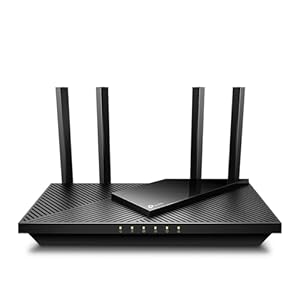
TP-Link AX1800 WiFi 6 Router#1 Best Seller
TP-Link AX1800 WiFi 6 Router
★★★★½4.4(23.9K reviews)
$52.20$79.99-35%

The Archer AX21 delivers WiFi 6 speeds up to 1.8 Gbps with dual-band connectivity. OFDMA and MU-MIMO handle multiple devices without slowdown. Easy Tether app setup in under 5 minutes.

WiFi 6 (802.11ax)Up to 1.8 Gbps1,500 sq ft coverage
Check Price on Amazon

Budget pick for homes under 1,500 sq ft
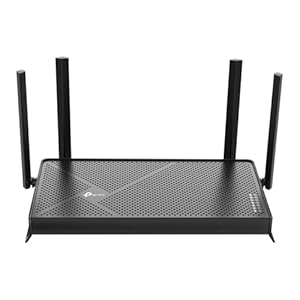
TP-Link BE3600 Wi-Fi 7 Router
★★★★½4.4(19.6K reviews)
$86.98$119.99-28%

The latest Wi-Fi 7 standard delivers 2x faster speeds than WiFi 6. MLO (Multi-Link Operation) reduces latency for gaming and video calls. 320 MHz channels for maximum throughput.

WiFi 7 (802.11be)Up to 3.6 Gbps2.5G WAN port
Check Price on Amazon

Future-proof WiFi 7 for power users

ARRIS SURFboard SB8200 Cable ModemBest Seller
ARRIS SURFboard SB8200 Cable Modem
★★★★☆4.3(19.9K reviews)
$138.35$148.22-7%

DOCSIS 3.1 cable modem with 2 Gigabit Ethernet ports. Compatible with Xfinity, Cox, Spectrum, and most major cable providers. Eliminates the $14/month rental fee.

DOCSIS 3.12x Gigabit EthernetUp to 2 Gbps
Check Price on Amazon

Stop renting — pays for itself in 10 months

As an Amazon Associate, InternetProviders.ai earns from qualifying purchases. Prices and availability are subject to change.

Ready to Get Started?

Order Starlink today and enjoy fast, reliable internet service

Starlink in Other States

Sources & Methodology

Data for Starlink coverage and plans in PA is compiled from FCC Broadband Data Collection filings, provider-published broadband labels, and U.S. Census Bureau demographic data. Population and median household income figures are from the American Community Survey. Pricing, speeds, and availability are verified against provider broadband nutrition labels and may vary by location. For a detailed explanation of our data collection and scoring process, see our methodology page.

InternetProviders.ai is an independent resource. We may earn commissions from partner links — this does not affect our editorial recommendations. See our methodology for details.