
What Starlink customers in WI actually get

By Pablo Mendoza, Lead Analyst|Updated April 2026

Quick Answer

Compare Starlink internet plans, pricing, and availability in WI. Check speeds, coverage, and current deals for your address.

Key Findings

  • Starlink serves 100+ cities across Wisconsin
  • Plans start at $120/mo
  • Compare with 8 other providers in Wisconsin

Starlink Satellite Internet in Wisconsin

Starlink, developed by SpaceX, provides high-speed satellite internet service across all of Wisconsin using a growing constellation of low-Earth orbit (LEO) satellites. Unlike traditional satellite internet providers that rely on geostationary satellites orbiting at 22,000 miles above Earth, Starlink's constellation operates at approximately 340 miles altitude, which dramatically reduces latency to between 20 and 40 milliseconds. This makes Starlink a viable option for video conferencing, online gaming, and other latency-sensitive applications that were previously impractical with satellite internet.

Wisconsin residents can expect download speeds ranging from 50 to 220 Mbps and upload speeds between 10 and 20 Mbps on the standard residential plan. The service is particularly valuable in Wisconsin because approximately 30% of the state's population lives in rural areas where traditional cable and fiber infrastructure has not been deployed. Starlink requires no ground-based infrastructure beyond the user's own dish, making it accessible virtually anywhere in Wisconsin with a clear view of the sky.

Wisconsin's dairy farming communities, northern lake country vacation properties, and remote Northwoods cabins have historically struggled to obtain any broadband service beyond slow DSL or legacy satellite. Starlink has transformed connectivity in these areas. Residents in counties like Bayfield, Price, Forest, and Florence, where the nearest cable connection may be 30 or more miles away, now access speeds that rival what Milwaukee residents get from their cable providers.

Starlink Plans & Pricing in Wisconsin

Starlink currently offers several plan tiers for Wisconsin residents. The standard residential plan is the most popular option, providing unlimited data with no contracts or long-term commitments required. For businesses, farms, and power users, Starlink offers Priority plans with higher speeds and dedicated bandwidth allocation.

Plan Monthly Price Download Speed Upload Speed Data Cap Best For
Standard Residential $120/mo 50–220 Mbps 10–20 Mbps Unlimited Homes, families, remote workers
Priority (Business) $250–$500/mo 40–220 Mbps 10–20 Mbps 40 GB–6 TB Priority Dairy farms, resorts, businesses
Starlink Roam $150/mo 5–50 Mbps 2–10 Mbps Unlimited RVs, lake cabins, seasonal use

Equipment costs include a one-time purchase of the Starlink Kit at $599, which includes the satellite dish, a Wi-Fi router, mounting tripod, and cabling. There are no rental options for equipment. Business Priority customers may require the High Performance dish at $2,500 for enhanced speeds and wider field of view.

Cost Comparison for Wisconsin Rural Households

For Wisconsin households currently relying on DSL or legacy satellite internet, the cost comparison with Starlink is often favorable despite the higher monthly price. A typical rural Wisconsin household paying $60/mo for CenturyLink DSL at 10-25 Mbps would spend $720/year for service that struggles to support a single video stream. Starlink at $120/mo plus the $599 equipment cost totals $2,039 in the first year and $1,440 annually thereafter, delivering 5-20 times faster speeds. The per-megabit cost difference makes Starlink the better value for households that need reliable broadband for remote work, education, or telehealth services.

Starlink Coverage in Wisconsin

Starlink satellite internet is available throughout all of Wisconsin, from the Milwaukee metro area to the most remote communities on the Bayfield Peninsula. Because the service relies on satellites rather than ground-based infrastructure, coverage does not depend on proximity to cable lines, telephone exchanges, or fiber-optic networks.

The service is especially popular in rural Wisconsin, where approximately 30% of the population lacks access to high-speed cable or fiber broadband. For these households, Starlink often represents a significant upgrade over existing options like legacy DSL connections that may deliver only 1 to 10 Mbps.

Wisconsin Regions Where Starlink Is Most Valuable

  • Northwoods (Vilas, Oneida, Forest counties): Wisconsin's Northwoods region is popular for vacation homes and seasonal cabins that have never had broadband access. Starlink's Roam plan is particularly popular here, allowing owners to activate service during summer months and pause it in winter. Permanent residents use the standard plan for year-round connectivity that was previously impossible.
  • Driftless Area (southwest Wisconsin): The unglaciated Driftless Area's deep valleys and ridges create challenges for both cell towers and cable infrastructure. Communities in Crawford, Vernon, and Richland counties often had no broadband option faster than 5 Mbps DSL before Starlink. The hilly terrain does require careful dish placement to maintain clear sky visibility.
  • Door Peninsula and islands: Washington Island and other Lake Michigan communities have extremely limited wired broadband options. Starlink provides consistent speeds regardless of water crossings or geography.
  • Central Wisconsin dairy country: Marathon, Clark, and Taylor counties are home to thousands of dairy operations that increasingly rely on internet-connected milking equipment, herd management software, and online commodity markets. Starlink enables these agricultural technologies in areas where cable broadband has not been built.

Installation & Equipment

The Starlink Kit arrives pre-configured and ready to set up. The dish uses a motorized system that automatically aligns itself to find the optimal satellite connection. Most Wisconsin residents can complete the entire setup process in 15 to 30 minutes.

The dish requires a clear, unobstructed view of the sky. Trees, buildings, and other obstructions can degrade performance or cause intermittent connectivity drops. The Starlink app includes an obstruction checker tool that uses your smartphone camera to scan the sky and identify potential issues before installation. For optimal performance in Wisconsin, most users mount the dish on a roof, pole, or other elevated location.

Wisconsin Winter Considerations

Wisconsin's harsh winters are a primary concern for Starlink users. The dish includes a built-in snow-melt feature that automatically heats the surface to prevent snow accumulation, which is essential in Wisconsin where seasonal snowfall averages 40-60 inches across most of the state and exceeds 100 inches along the Lake Superior shoreline. The snow-melt feature works effectively in most conditions but increases power consumption to approximately 75-100 watts during active heating. During extreme cold snaps that drop temperatures below minus 20 degrees Fahrenheit (which occurs several times per Wisconsin winter), some users report brief performance variations while the thermal management system works to maintain optimal operating temperature.

Ice storms present the greatest weather challenge for Starlink in Wisconsin. A thick ice coating can temporarily overwhelm the snow-melt heater, causing the dish to lose satellite lock until the ice melts or is manually cleared. These events are infrequent but can last several hours during major ice storms. Most Wisconsin Starlink users report that the dish handles typical snowfall and cold without any intervention, maintaining reliable service throughout winter.

For Wisconsin properties with tall pine or hardwood trees, the dish may need to be mounted on an extended pole (20-40 feet) or positioned in a clearing away from the house. Starlink sells a 50-foot cable extension that allows the dish to be placed up to 150 feet from the router location, which gives Wisconsin homeowners flexibility to find the clearest sky view on their property.

Starlink vs. Other Internet Providers in Wisconsin

Wisconsin's broadband landscape varies dramatically between the Milwaukee-Madison corridor and the rest of the state. Here is how Starlink compares to the major alternatives.

Starlink vs. Spectrum in Wisconsin

Spectrum is the dominant cable provider in Wisconsin, serving approximately 92% of its coverage footprint. In areas where Spectrum is available, it offers faster, more consistent speeds at lower prices: 300 Mbps for $49.99/mo vs Starlink's 50-220 Mbps for $120/mo. If Spectrum covers your Wisconsin address, it is typically the better choice for most households. Starlink is the superior option for Wisconsin addresses that fall outside Spectrum's cable footprint.

Starlink vs. AT&T in Wisconsin

AT&T serves parts of Wisconsin with fiber and DSL. AT&T Fiber, where available, offers symmetrical speeds up to 5 Gbps at competitive prices. However, AT&T DSL in rural Wisconsin areas often delivers only 5-25 Mbps, making Starlink's 50-220 Mbps a significant upgrade. Check what AT&T technology is available at your specific address before comparing.

Starlink vs. T-Mobile 5G Home Internet in Wisconsin

T-Mobile 5G Home Internet at $50/mo offers competitive speeds where tower coverage exists. In Wisconsin's urban and suburban areas with strong 5G coverage, T-Mobile provides better value than Starlink. Rural Wisconsin areas with only LTE tower coverage may see T-Mobile speeds of 25-50 Mbps, still competitive but less reliable than Starlink's satellite service.

ProviderTechnologySpeed RangeMonthly CostBest For
StarlinkLEO Satellite50-220 Mbps$120/moRural areas, Northwoods, islands
SpectrumCable300-1,000 Mbps$49.99-$89.99/moUrban and suburban Wisconsin
AT&TFiber/DSL5-5,000 Mbps$55-$180/moAreas with AT&T fiber
T-Mobile5G/Fixed Wireless33-245 Mbps$50/moAreas with 5G tower coverage

Starlink for Wisconsin Agriculture

Wisconsin is America's leading dairy state with over 6,500 dairy farms, most located in rural areas with limited broadband options. Modern dairy operations increasingly depend on internet connectivity for automated milking systems that transmit real-time production data, herd health monitoring sensors that alert farmers to illness before visible symptoms appear, milk quality tracking systems required by processors, weather and commodity market data for business planning, and regulatory compliance reporting to the Wisconsin Department of Agriculture.

Starlink's unlimited data policy is particularly important for dairy farms that run multiple internet-connected systems 24 hours a day. A single automated milking robot can generate several gigabytes of data per month through sensor readings, video feeds, and system logs. Farms with multiple robots, feeding systems, and environmental controls can easily consume 100+ GB monthly, which would exhaust the data caps on legacy satellite plans.

The Wisconsin Farm Bureau has noted increased adoption of Starlink among its members, particularly in counties where USDA broadband programs have been slow to deliver fiber infrastructure. For Wisconsin farmers evaluating Starlink, the Business Priority plan's dedicated bandwidth can be justified as a business expense that enables precision agriculture technologies proven to increase yields and reduce costs.

Starlink for Wisconsin Tourism and Vacation Rentals

Wisconsin's tourism industry generates over $22 billion annually, with much of that spending concentrated in rural areas popular for outdoor recreation. The Northwoods, Door County, and the Driftless Area attract millions of visitors each year who increasingly expect reliable Wi-Fi at their rental properties. Vacation rental owners in these areas face a challenging situation: guests demand fast internet for streaming, remote work during vacations, and social media sharing, but many rental properties sit outside the reach of any cable or fiber provider.

Starlink has become the solution for thousands of Wisconsin vacation rental owners. A single Starlink kit provides the 50-220 Mbps speeds that satisfy most guest expectations, while the unlimited data ensures that even a full house of streaming users will not exceed any caps. Vacation rental operators on platforms like Airbnb and VRBO report that advertising "high-speed Starlink internet" in their listings significantly increases booking rates, particularly among remote workers who combine travel with work. The $120 monthly cost is easily recouped through one or two additional bookings per season.

For seasonal properties that are only occupied during summer months, the Starlink Roam plan allows flexible monthly activation without a long-term commitment. Property owners can activate service in May, run it through October, and pause until the following spring. The standard residential plan is better for properties used year-round or rented during winter snowmobile and ski season.

Performance Tips for Wisconsin Starlink Users

Getting the best performance from Starlink in Wisconsin requires attention to a few key factors that are specific to the state's geography and climate:

  • Tree clearance: Wisconsin's dense hardwood and conifer forests are the number one cause of Starlink performance issues in the state. The dish needs a clear view of the sky, particularly toward the north. Consider professional tree trimming around the dish location, or use the Starlink app's obstruction tool before choosing a mount point. In heavily forested areas, a tall mounting pole (available from Starlink for $59-$129) can place the dish above the tree canopy.
  • Router placement: The included Starlink Wi-Fi router performs best when placed centrally in your home. For Wisconsin homes with thick log walls or concrete basements, consider adding a Wi-Fi mesh system to extend coverage throughout the house. The Starlink router supports both 2.4 GHz and 5 GHz bands.
  • Peak hours: Like all internet services, Starlink speeds can slow during peak evening hours (7-11 PM) when more users in your satellite cell are active. If your satellite cell covers a popular lake area during summer, you may notice more congestion than in winter. Scheduling large downloads for off-peak hours helps manage this.
  • Firmware updates: Starlink pushes firmware updates to the dish automatically, usually during off-peak hours. These updates frequently improve performance, fix bugs, and add features. The dish reboots briefly during updates, so occasional 1-2 minute interruptions are normal and expected.
  • Backup power: For Wisconsin homes that lose power during storms, a battery backup or generator keeps Starlink running. The system draws 50-75 watts during normal operation and 75-100 watts during snow melt, making it compatible with most portable power stations rated 500 watt-hours or higher.

Frequently Asked Questions

Is Starlink available in Wisconsin?

Yes, Starlink satellite internet is available throughout all of Wisconsin. It can reach every address in the state, from downtown Milwaukee to the most remote cabin in the Northwoods. Some areas may have a waitlist during periods of high demand.

How fast is Starlink in Wisconsin?

Starlink delivers download speeds of 50 to 220 Mbps and upload speeds of 10 to 20 Mbps on the standard residential plan. Most Wisconsin users report average download speeds between 80 and 150 Mbps during typical usage periods. Speeds may vary based on network congestion, weather, and the number of active users in your satellite cell.

Does Starlink work in Wisconsin winters?

Yes. The Starlink dish includes a built-in snow-melt feature designed for northern climates. It handles typical Wisconsin snowfall without intervention, automatically heating the dish surface to prevent accumulation. During extreme cold snaps below minus 20 degrees Fahrenheit or heavy ice storms, brief performance impacts are possible but uncommon. Thousands of Wisconsin subscribers use Starlink year-round without significant winter issues.

Does Starlink have data caps?

No, Starlink does not impose data caps on residential plans. You can use unlimited data each month without overage fees. The Priority Business plans include priority data allotments (40 GB to 6 TB), after which speeds may be deprioritized during congestion, but access is never cut off.

Can I use Starlink at my Wisconsin lake cabin seasonally?

Yes. The Starlink Roam plan ($150/mo) is designed for portable and seasonal use. You can activate service during summer months and pause it in winter if you do not visit your cabin. Alternatively, you can keep the standard residential plan active year-round at $120/mo for consistent availability whenever you visit. The Roam plan allows you to use the same dish at multiple locations across Wisconsin and the country.

Is Starlink worth it if I have Spectrum available in Wisconsin?

Generally, no. If Spectrum cable internet is available at your Wisconsin address, it offers faster speeds (300-1,000 Mbps) at lower prices ($49.99-$89.99/mo) with more consistent performance. Starlink is best for Wisconsin addresses where Spectrum, AT&T Fiber, or other wired broadband is not available. The exception is rural properties just outside Spectrum's service boundary where no wired option exists.

Cities Served by Starlink in Wisconsin

Starlink serves every community in Wisconsin. Here are the largest cities where coverage is active, though Starlink's greatest value is in the rural areas surrounding and between these population centers:

  • Milwaukee, WI (pop. 577K) — Strong wired competition; Starlink useful in outer suburbs only
  • Madison, WI (pop. 280K) — State capital with good fiber and cable options; Starlink valuable in surrounding Dane County rural areas
  • Green Bay, WI (pop. 107K) — Spectrum and AT&T serve the metro; Starlink useful for Door County and Marinette County
  • Kenosha, WI (pop. 100K) — Southern Wisconsin metro with good wired options
  • Racine, WI (pop. 78K) — Lakefront city with Spectrum cable coverage
  • Appleton, WI (pop. 76K) — Fox Valley community with cable broadband; Starlink valuable in surrounding Outagamie County
  • Eau Claire, WI (pop. 68K) — Western Wisconsin hub; Starlink fills gaps in Chippewa and Dunn counties
  • Waukesha, WI (pop. 71K) — Milwaukee suburb with strong broadband; Starlink for rural Waukesha County edges

Use our availability checker to confirm service options at your specific Wisconsin address.

The Wisconsin Broadband Landscape

Wisconsin's broadband landscape includes 14+ providers, but coverage quality varies dramatically between the southern urban corridor and the northern rural regions. The state's Broadband Expansion Grant Program and incoming BEAD funding are directing hundreds of millions of dollars toward extending fiber infrastructure to underserved communities. However, these buildouts will take 3-5 years to complete in many areas.

Starlink fills a critical immediate gap for the estimated 300,000+ Wisconsin households that lack access to 100 Mbps broadband. As fiber buildouts reach these communities over the coming years, some residents may transition to wired service for its lower cost and higher consistency. Others, particularly those in the most remote areas, may continue to rely on Starlink as their primary or backup internet connection.

For a complete overview of all internet options in Wisconsin, visit our Wisconsin Internet Providers guide.

Starlink and Wisconsin's Broadband Future

Wisconsin has allocated over $200 million through its Broadband Expansion Grant Program and expects to receive an additional $1 billion or more through the federal BEAD (Broadband Equity, Access, and Deployment) program. These funds will finance fiber-to-the-home buildouts in underserved areas across the state over the next 3-5 years. When fiber arrives, it will offer faster, more consistent speeds than Starlink at a lower monthly cost, typically $50-70 per month for gigabit service.

However, fiber construction takes time. Engineering, permitting, and installation in rural Wisconsin terrain, particularly in the Northwoods and Driftless Area, can take 2-4 years per project. For the estimated 300,000 Wisconsin households currently without broadband, Starlink provides an immediate bridge to connectivity today rather than waiting years for fiber construction. Many broadband policy experts recommend that Wisconsin residents sign up for Starlink now if they lack broadband and evaluate switching to fiber when it arrives in their area. Starlink's no-contract model means you can cancel at any time without penalties when a faster or cheaper alternative becomes available at your address.

Related Internet Resources

Sources & Methodology

Coverage data, plan details, and pricing are compiled from FCC Broadband Data Collection filings, provider-published broadband nutrition labels, and U.S. Census Bureau demographic data including population and median household income figures from the American Community Survey. Pricing, speeds, and availability are verified against provider broadband nutrition labels and may vary by location. For a detailed explanation of our data collection and scoring process, see our methodology page.

Data Sources

Last verified: March 2026. InternetProviders.ai is an independent resource. We may earn commissions from partner links — this does not affect our editorial recommendations. See our methodology for details.

Starlink Coverage Across Wisconsin

Starlink serves 100+ cities in Wisconsin. Major coverage areas include Allenton, Allouez, Altoona, Appleton, Ashwaubenon. Select a city below to see local plans, speeds, and provider comparisons.

View all 100+ cities in Wisconsin

Other Internet Providers in Wisconsin

Compare Starlink with 8 other providers available in Wisconsin.

ProviderTechnologiesCoverage
HughesNetSatellite100%
ViasatSatellite99.99%
CenturyLinkFiber, DSL75.4%
XfinityCable, Fiber73.4%
SpectrumCable73.24%
T-Mobile5G, Fixed Wireless, Mobile65.34%
AT&T InternetFiber, Fixed Wireless, DSL50.68%
Verizon FiosFiber21.19%

Recommended Equipment for Starlink

Shop all on Amazon →

TP-Link AX1800 WiFi 6 Router#1 Best Seller
TP-Link AX1800 WiFi 6 Router
★★★★½4.4(23.9K reviews)
$52.20$79.99-35%

The Archer AX21 delivers WiFi 6 speeds up to 1.8 Gbps with dual-band connectivity. OFDMA and MU-MIMO handle multiple devices without slowdown. Easy Tether app setup in under 5 minutes.

WiFi 6 (802.11ax)Up to 1.8 Gbps1,500 sq ft coverage
Check Price on Amazon

Budget pick for homes under 1,500 sq ft
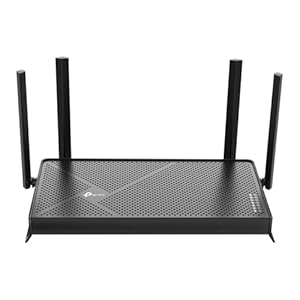
TP-Link BE3600 Wi-Fi 7 Router
★★★★½4.4(19.6K reviews)
$86.98$119.99-28%

The latest Wi-Fi 7 standard delivers 2x faster speeds than WiFi 6. MLO (Multi-Link Operation) reduces latency for gaming and video calls. 320 MHz channels for maximum throughput.

WiFi 7 (802.11be)Up to 3.6 Gbps2.5G WAN port
Check Price on Amazon

Future-proof WiFi 7 for power users

ARRIS SURFboard SB8200 Cable ModemBest Seller
ARRIS SURFboard SB8200 Cable Modem
★★★★☆4.3(19.9K reviews)
$138.35$148.22-7%

DOCSIS 3.1 cable modem with 2 Gigabit Ethernet ports. Compatible with Xfinity, Cox, Spectrum, and most major cable providers. Eliminates the $14/month rental fee.

DOCSIS 3.12x Gigabit EthernetUp to 2 Gbps
Check Price on Amazon

Stop renting — pays for itself in 10 months

As an Amazon Associate, InternetProviders.ai earns from qualifying purchases. Prices and availability are subject to change.

Ready to Get Started?

Order Starlink today and enjoy fast, reliable internet service

Starlink in Other States

Sources & Methodology

Data for Starlink coverage and plans in WI is compiled from FCC Broadband Data Collection filings, provider-published broadband labels, and U.S. Census Bureau demographic data. Population and median household income figures are from the American Community Survey. Pricing, speeds, and availability are verified against provider broadband nutrition labels and may vary by location. For a detailed explanation of our data collection and scoring process, see our methodology page.

InternetProviders.ai is an independent resource. We may earn commissions from partner links — this does not affect our editorial recommendations. See our methodology for details.