![Frontier Fiber vs AT&T Fiber: Comparison [2026]](/_next/image/?url=%2Fimages%2Fcontent%2Fblog%2Ffrontier-fiber-vs-att-fiber-comparison-2026.webp&w=1920&q=75&dpl=dpl_AGFYAWVuCu62TXjHmonxrN4KpbBw)
Bottom line: Both are excellent fiber providers. AT&T Fiber wins with faster multi-gig speeds (up to 5 Gbps) and broader availability. Frontier Fiber wins on price — their 1 Gbps plan at $49.99/mo undercuts AT&T's $80/mo. Both offer no data caps and no contracts.
Key Findings: Frontier Fiber vs AT&T Fiber
- Frontier's 1 Gbps plan costs $49.99/mo vs AT&T's $80/mo — a $30/mo savings
- AT&T Fiber reaches 5 Gbps; Frontier tops at 5 Gbps in limited markets (mostly 2 Gbps)
- Both offer no data caps and no contracts
- AT&T serves 28M+ locations; Frontier serves 14M+ locations in 25 states
- Frontier's ACSI score: 62/100 (up from 54 after fiber upgrades); AT&T: 68/100
- Both include a free WiFi router with service
Frontier Fiber and AT&T Fiber represent two of the best fiber-to-the-home (FTTH) options in America. Both deliver symmetric speeds, no data caps, and low latency. The choice comes down to availability, pricing, and speed tier preferences. Frontier's aggressive pricing (especially the $49.99 gigabit plan) has made it a popular choice where available, while AT&T's larger footprint and multi-gig options attract power users.
Ready to sign up for AT&T Fiber? Call now:
(855) 839-2058Side-by-Side Plan Comparison
| Plan | Frontier Fiber | AT&T Fiber |
|---|---|---|
| 300 Mbps | $34.99/mo | N/A |
| 500 Mbps | $44.99/mo | $55/mo |
| 1 Gbps | $49.99/mo | $80/mo |
| 2 Gbps | $74.99/mo | $110/mo |
| 5 Gbps | $154.99/mo (limited) | $180/mo |
| Data Caps | None | None |
| Equipment | Free eero WiFi router | Free BGW320 gateway |
| Installation | Free | Free |
| Contract | No contract | No contract |
Value Analysis: Frontier's Price Advantage
Frontier Fiber is one of the best values in broadband. Their 1 Gbps plan at $49.99/mo with no data caps, no contract, and a free eero mesh WiFi router is extremely competitive. AT&T's equivalent costs $80/mo — that's $360/year more for the same download speed.
Where AT&T justifies the premium is multi-gig: their 2 Gbps ($110/mo) and 5 Gbps ($180/mo) plans are priced competitively for the speed offered, and AT&T's multi-gig footprint is larger than Frontier's.
Speed and Reliability Performance
Both providers deliver true fiber speeds. According to FCC broadband measurements, Frontier Fiber customers achieve 95-99% of advertised speeds, and AT&T Fiber scores similarly at 96-100%. The real-world performance difference is negligible at the same speed tier.
Latency on both networks is excellent: 3-10ms for Frontier, 5-12ms for AT&T. Both are outstanding for video conferencing, smart home devices, and online gaming.
Coverage Comparison
AT&T Fiber is available at approximately 28 million locations across 21 states, with plans to reach 30+ million by end of 2026. Frontier Fiber covers 14+ million locations in 25 states, with aggressive fiber buildout ongoing (particularly in Texas, California, and Florida).
These footprints rarely overlap, meaning the choice is often made by geography. Enter your ZIP code to see which (if either) is available at your address.
Who Should Choose Each
- Choose Frontier Fiber if: You want the best price per Mbps, don't need multi-gig speeds, and value the included eero mesh WiFi system
- Choose AT&T Fiber if: You want faster multi-gig options (2-5 Gbps), better customer satisfaction scores, or AT&T's broader ecosystem (DIRECTV bundling)
- Consider alternatives: Google Fiber where available, local fiber providers, or CenturyLink vs AT&T
Related Comparisons
- CenturyLink vs AT&T
- AT&T vs Sparklight
- AT&T vs Xfinity
- Astound vs AT&T
- All Fiber Providers
- Best Internet Providers 2026
Frequently Asked Questions
Is Frontier Fiber cheaper than AT&T Fiber?
Yes. Frontier's 1 Gbps plan costs $49.99/mo compared to AT&T's $80/mo for the same speed — a $30/mo savings. At the 500 Mbps tier, Frontier is $44.99 vs AT&T's $55. The price gap narrows at multi-gig speeds.
Does Frontier Fiber have data caps?
No. Frontier Fiber has no data caps on any plan. You can use as much data as you want with no overage charges or speed throttling.
Which has better WiFi: Frontier or AT&T?
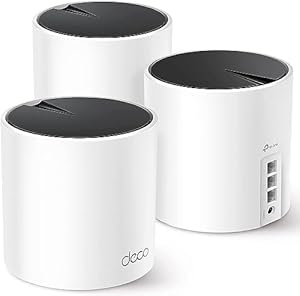
Frontier includes a free eero mesh WiFi system (a $130+ value) that provides excellent whole-home coverage. AT&T includes their BGW320 gateway, which is capable but covers less area in large homes. For large homes (2,500+ sq ft), Frontier's eero mesh has an advantage.
Can I get 5 Gbps from Frontier?
Frontier offers a 5 Gbps plan in select markets for $154.99/mo, but availability is limited compared to their 1 Gbps and 2 Gbps plans. AT&T's 5 Gbps plan ($180/mo) has broader availability. Check your address to see which speed tiers are offered.
Is Frontier Fiber reliable?
Yes. Since investing billions in fiber infrastructure (and shedding its DSL reputation), Frontier Fiber achieves 95-99% of advertised speeds in FCC tests. Their ACSI satisfaction score has risen from 54 to 62/100, reflecting significant reliability improvements.
Multi-Gig Speed Tiers Compared
Both Frontier and AT&T have entered the multi-gigabit era, but their offerings differ significantly. AT&T Fiber launched 2 Gbps ($150/mo) and 5 Gbps ($180/mo) tiers in 2024, available across most of its fiber footprint. These plans use XGS-PON technology and require AT&T's included WiFi 6E gateway to achieve the advertised speeds over wired connections.
Frontier's multi-gig rollout has been more limited. Their 2 Gbps plan ($99.99/mo) is available in select markets, and the 5 Gbps tier is currently offered only in trial areas. However, Frontier's 2 Gbps plan is $50/month cheaper than AT&T's equivalent, continuing their pattern of aggressive undercutting on price.
For the vast majority of households, the practical difference between 1 Gbps and 2-5 Gbps is minimal. Current WiFi standards (WiFi 6/6E) typically max out at 1-2 Gbps in real-world conditions. Multi-gig plans are most valuable for households with multiple wired devices, home servers, or heavy content creators who regularly upload large files.
Frontier's Fiber Transformation
Frontier Communications emerged from bankruptcy in 2021 and has undergone a dramatic transformation under new management. The company has committed over $4 billion to fiber expansion, aiming to reach 10 million fiber passings by 2026. This aggressive buildout has already converted millions of legacy DSL customers to modern fiber service.
The transformation shows in customer satisfaction numbers. Frontier's ACSI score climbed from 54 in 2022 to 62 in 2025 — an 8-point improvement that reflects upgraded infrastructure, improved customer service, and simplified pricing. Legacy Frontier DSL customers switching to Frontier Fiber consistently report a night-and-day difference in reliability and speed.
Frontier Fiber uses XGS-PON and GPON infrastructure, with plans to deploy 25G-PON technology starting in 2027. Their fiber network is newly built, meaning fewer legacy infrastructure issues compared to AT&T's fiber network, which has been deployed in stages since 2012.
AT&T Fiber's Ecosystem Advantages
AT&T Fiber benefits from being part of a larger telecommunications ecosystem. Fiber customers can bundle with AT&T wireless plans for a $25/month discount, and AT&T offers exclusive perks like HBO Max included with certain fiber tiers (check current promotions, as these change periodically).
AT&T's Smart Home Manager app provides advanced network controls: device prioritization, parental controls, threat detection, and speed testing. The included AT&T WiFi 6E gateway supports the latest wireless standards and includes a built-in security suite. Frontier's app offers basic controls but isn't as feature-rich.
AT&T also has a more established business fiber offering, which matters for home-based businesses needing dedicated support, SLAs, or static IP addresses. Frontier's business fiber is expanding but not yet as widely available.
Real-World Speed & Reliability Testing
Independent speed testing data from Ookla (Speedtest.net) shows both providers consistently deliver close to advertised speeds. AT&T Fiber customers on the 1 Gbps plan average 940 Mbps download / 880 Mbps upload in testing — essentially full gigabit accounting for protocol overhead. Frontier Fiber 1 Gbps customers average 920 Mbps download / 910 Mbps upload.
Where the providers differ is in uptime reliability. AT&T's more mature fiber network has documented 99.97% uptime across its footprint. Frontier, while improving rapidly, has documented approximately 99.93% uptime — a small difference that translates to roughly 35 extra minutes of downtime per year. Both providers offer pro-rated service credits for extended outages.
Latency is nearly identical: AT&T averages 6-8ms to first hop, Frontier averages 5-7ms. For gaming and video calls, both deliver exceptional low-latency performance that is indistinguishable in practice.
Contract & Pricing Transparency
Both Frontier Fiber and AT&T Fiber have moved away from contracts, but their pricing structures differ. Frontier uses flat-rate pricing — the price you see is the price you pay, with no promotional periods, no annual increases, and no hidden fees. Their $49.99/month gigabit price is locked in for as long as you maintain service.
AT&T's pricing is also contract-free, but comes with more caveats. Their $80/month gigabit price is a current rate that may increase with notice. AT&T has historically raised prices by $5-10/month periodically, though they've been more stable since intensifying fiber competition with Frontier and other providers.
Equipment costs are included with both providers. AT&T includes a WiFi 6E gateway; Frontier includes a WiFi 6 eero router. Neither charges a monthly equipment rental fee for standard service.
Frequently Asked Questions
Can I switch from AT&T Fiber to Frontier Fiber (or vice versa)?
Yes — since neither requires a contract, you can switch at any time. The process typically takes 3-7 days for the new provider to install service. You can often run both services in parallel for a day or two to ensure a seamless transition.
Which provider offers better WiFi coverage for large homes?
AT&T's WiFi 6E gateway has slightly better range than Frontier's included eero router. However, both providers offer mesh extender add-ons for large homes: AT&T's cost $10/month per extender, while Frontier partners with eero for mesh expansion at similar pricing. For homes over 2,500 square feet, plan on needing at least one extender regardless of provider.
Do Frontier or AT&T Fiber throttle streaming services?
No. Both providers have committed to open internet principles and do not throttle any specific services or content types. Netflix, YouTube, gaming traffic, and all other services receive equal treatment on both networks.
2-Year Total Cost of Ownership
Monthly price tells only part of the story. Equipment rental fees, installation charges, and data cap overages can shift the value equation over a 2-year period. Here is how Frontier and AT&T compare at each plan tier.
| Tier | Frontier | AT&T | 2-Year Savings |
|---|---|---|---|
| Entry tier | Fiber 500 (500/500 Mbps) — $49.99/mo × 24 = $1,199.76 | Internet 300 (300 Mbps) — $55/mo × 24 = $1,320 | Frontier saves $120.24 |
| Mid tier | Fiber 1 Gig (1/1 Gbps) — $74.99/mo × 24 = $1,799.76 | Internet 500 (500 Mbps) — $65/mo × 24 = $1,560 | AT&T saves $239.76 |
| Top tier | Fiber 5 Gig (5/5 Gbps) — $154.99/mo × 24 = $3,719.76 | Internet 5000 (5 Gbps) — $180/mo × 24 = $4,320 | Frontier saves $600.24 |
These calculations use advertised monthly pricing without promotional discounts, which vary by market and time of year. Equipment rental fees (typically $5-$15/mo) are not included and should be verified at checkout. Both providers may offer promotional rates for the first 12 months.
Pros and Cons
Frontier
Pros
- No data caps on any plan
- No annual contracts required
- Fiber technology available with symmetric speeds
- Speeds up to 5 Gbps
Cons
- Limited to 25 states
- Upload speeds vary by plan and technology
AT&T
Pros
- No data caps on any plan
- No annual contracts required
- Fiber technology available with symmetric speeds
- Speeds up to 5 Gbps
Cons
- Limited to 21 states
- Upload speeds vary by plan and technology
The Verizon Acquisition: What It Means for Frontier Customers
In September 2024, Verizon announced its intent to acquire Frontier Communications. This pending acquisition has significant implications for current and prospective Frontier Fiber subscribers.
Current Status
As of March 2026, the acquisition is pending regulatory approval. Frontier continues to operate independently, and all existing plans, pricing, and service commitments remain in effect. Subscribers should not experience any immediate changes to their service.
Potential Benefits
If the acquisition completes, Frontier's fiber network would join Verizon Fios, creating a significantly larger fiber footprint. Potential benefits include accelerated fiber buildout (Verizon's deeper pockets could fund faster expansion), integration with Verizon Wireless for bundle discounts, and access to Verizon's +play entertainment hub and other ecosystem features.
Potential Concerns
Large acquisitions can lead to price increases, plan restructuring, or changes to customer-friendly policies. Frontier's current no-contract, no-data-cap approach may evolve post-acquisition. Current promotional pricing may not be honored long-term. Subscribers should review their terms and consider whether locking in current pricing makes sense.
Impact on the Comparison
Today, compare Frontier Fiber and AT&T Fiber based on current, publicly available plans and pricing. The acquisition's eventual impact is speculative until regulatory decisions are finalized and any service changes are announced. Making a decision based on current offerings is the most reliable approach.
Sources & Methodology
This article uses data from FCC Broadband Data Collection reports, U.S. Census Bureau demographics, and verified provider pricing and plan information. Pricing, speeds, and availability are verified against provider broadband nutrition labels and may vary by location. For a detailed explanation of our data collection and scoring process, see our methodology page.
Data Sources
- FCC Broadband Data Collection
- U.S. Census Bureau American Community Survey
- USAC Universal Service Fund
- NTIA Internet Use Survey
Last verified: March 2026. InternetProviders.ai is an independent resource. We may earn commissions from partner links — this does not affect our editorial recommendations. See our methodology for details.