Frontier Fiber and Google Fiber are two of the most competitively priced fiber internet providers in the United States. Where their service areas overlap, consumers often have to choose between two excellent options. This comparison breaks down pricing, speeds, availability, equipment, and overall value to help you make the right decision.
Plans and Pricing
| Speed Tier | Frontier Fiber | Google Fiber |
|---|---|---|
| 500 Mbps | $49.99/mo | Not offered |
| 1 Gbps | $59.99/mo | $70/mo |
| 2 Gbps | $99.99/mo | $100/mo |
| 5 Gbps | $154.99/mo | $125/mo |
| 7 Gbps | $299.99/mo | Not offered |
| 8 Gbps | Not offered | $150/mo |
Frontier is cheaper at 1 Gbps ($10/mo savings). At 2 Gbps, pricing is nearly identical. Google Fiber becomes the better value at 5+ Gbps speeds, where their 5 Gbps plan at $125/mo undercuts Frontier’s $154.99/mo, and Google offers an 8 Gbps tier at just $150/mo.
Winner: Google Fiber (for multi-gig value). Frontier wins at the popular 1 Gbps tier.
Speed and Technology
Both providers use fiber-to-the-home (FTTH) with XGS-PON technology. Both deliver symmetric upload and download speeds. Neither uses shared coaxial cable segments.
- Frontier: 500 Mbps to 7 Gbps symmetric. XGS-PON in newer markets, GPON in older deployments.
- Google Fiber: 1 Gbps to 8 Gbps symmetric. XGS-PON across all active markets.
In speed tests, both providers consistently deliver at or above advertised speeds. Google Fiber has a slight edge in consistency because all their deployments use the latest technology, while some Frontier areas still run on older GPON infrastructure.
Winner: Google Fiber (marginally, for consistent XGS-PON across all markets).
Availability
This is the biggest differentiator between the two providers:
- Frontier Fiber: 25 states, ~7.5 million locations. Available in major metros and suburban areas across a wide geographic footprint.
- Google Fiber: Approximately 20 metro areas across 12 states. Highly concentrated in specific neighborhoods within each metro.
Frontier’s availability is far more widespread. Google Fiber is an excellent service but only available in select cities: Austin, Charlotte, Denver, Huntsville, Kansas City, Nashville, Orange County, Phoenix, Raleigh-Durham, Salt Lake City, San Antonio, San Diego, and a few others.
Winner: Frontier (significantly broader availability).
Check availability in your area: Texas | California | Arizona | North Carolina
Contracts and Data Caps
- Frontier: No contracts. No data caps. No early termination fees.
- Google Fiber: No contracts. No data caps. No early termination fees.
Winner: Tie. Both providers offer identical consumer-friendly terms.
Equipment
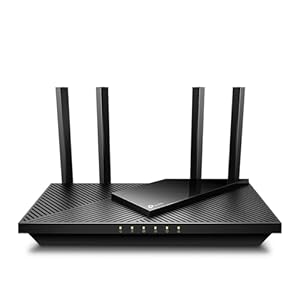
- Frontier: Includes WiFi 6/6E/7 router (depending on plan tier) at no charge. Full bring-your-own-router support via standard Ethernet from the ONT.
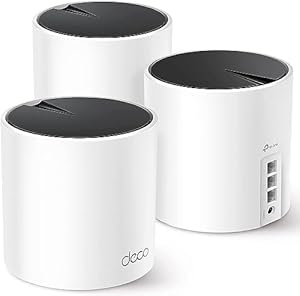
- Google Fiber: Includes their Google Fiber Multi-Gig Router (WiFi 6E) at no charge. Supports bring-your-own-router via Ethernet. Google also offers mesh WiFi extenders for larger homes.
Winner: Tie. Both include quality routers and support BYO hardware.
Installation and Setup
- Frontier: Free professional installation. 3–7 day scheduling. Self-install for existing fiber homes. See installation guide.
- Google Fiber: Free professional installation. Often available within 1–3 days in established markets. Known for punctual and efficient installation crews.
Winner: Google Fiber (slightly faster scheduling and strong installation reputation).
Customer Service
Google Fiber consistently ranks among the top ISPs for customer satisfaction:
- Google Fiber: ACSI score of 76/100 (highest among major ISPs). Known for responsive support, helpful app, and proactive service notifications.
- Frontier: ACSI score of 63/100. Improving under new management but still below average. Support wait times can be longer.
Winner: Google Fiber (by a significant margin).
Additional Features
- Google Fiber: Google Fiber TV package available in some markets ($75/mo). Google Fi wireless discount available. Integration with Google Home ecosystem.
- Frontier: Home phone available as add-on. No TV service. No wireless bundle partner.
Winner: Google Fiber (for ecosystem integration and bundle options).
Overall Verdict
Choose Frontier Fiber if:
- Google Fiber is not available at your address (most common scenario)
- You want the cheapest 1 Gbps plan available
- You need service in any of Frontier’s 25 states outside Google Fiber’s limited markets
Choose Google Fiber if:
- Google Fiber is available at your address
- You want multi-gig speeds at the lowest price (their 5/8 Gbps pricing is excellent)
- You value top-tier customer service
- You want integration with Google’s ecosystem
In the rare markets where both Frontier and Google Fiber are available, Google Fiber is generally the better overall package due to superior customer service and competitive multi-gig pricing. However, Frontier’s 1 Gbps plan is $10/mo cheaper, which adds up to $120/year in savings.
Related: Frontier vs AT&T Fiber | Frontier vs Google Fiber comparison | Frontier plans | Google Fiber provider page
Frequently Asked Questions
Is Google Fiber faster than Frontier Fiber?
Google Fiber offers an 8 Gbps plan that exceeds Frontier’s maximum 7 Gbps plan. At 1 Gbps and 2 Gbps tiers, both deliver identical symmetric speeds. For most users on standard plans, speed performance is equivalent.
Which is cheaper, Frontier or Google Fiber?
Frontier is cheaper at 1 Gbps ($59.99 vs. $70). Google Fiber is cheaper at 5 Gbps ($125 vs. $154.99). At 2 Gbps, they are essentially the same price.
Where do Frontier and Google Fiber both serve?
Overlap is limited. Both serve parts of Dallas-Fort Worth, San Antonio, and a few neighborhoods in other Texas and Florida markets. In most areas, only one is available.
Do both have unlimited data?
Yes. Neither Frontier Fiber nor Google Fiber imposes any data caps or usage limits on any plan.
Can I switch between Frontier and Google Fiber easily?
Yes. Neither requires a contract, so you can switch at any time. Schedule the new installation before canceling the old service to avoid downtime.
Pricing and availability subject to change. Visit our methodology page for evaluation criteria.
Frontier Fiber vs. Google Fiber: Complete Plan Comparison (2026)
Both Frontier Fiber and Google Fiber offer fiber-to-the-home (FTTH) internet with symmetric speeds. Here is how every plan compares:
| Provider | Plan | Download/Upload | Monthly Price | Data Cap | Contract |
|---|---|---|---|---|---|
| Frontier Fiber | Fiber 500 | 500/500 Mbps | $49.99/mo | None | None |
| Frontier Fiber | Fiber 1 Gig | 1,000/1,000 Mbps | $69.99/mo | None | None |
| Frontier Fiber | Fiber 2 Gig | 2,000/2,000 Mbps | $99.99/mo | None | None |
| Frontier Fiber | Fiber 5 Gig | 5,000/5,000 Mbps | $154.99/mo | None | None |
| Google Fiber | 1 Gig | 1,000/1,000 Mbps | $70/mo | None | None |
| Google Fiber | 2 Gig | 2,000/1,000 Mbps | $100/mo | None | None |
| Google Fiber | 5 Gig | 5,000/5,000 Mbps | $125/mo | None | None |
| Google Fiber | 8 Gig | 8,000/8,000 Mbps | $150/mo | None | None |
Coverage: The Deciding Factor
The biggest practical difference between these providers is where they are available:
- Frontier Fiber: Available in parts of 25 states, concentrated in California, Texas, Florida, Connecticut, and the Northeast. Frontier has been aggressively expanding its fiber footprint, converting millions of legacy DSL customers to fiber.
- Google Fiber: Available in 22 metro areas. Concentration in the South and West: Austin, Nashville, Kansas City, Salt Lake City, Huntsville, San Antonio, Raleigh-Durham, Charlotte, and others.
In most locations, only one of these providers is available. The areas where both compete are limited to parts of Texas (Austin, San Antonio, Dallas), Salt Lake City, and a few other metros. If you are in one of these overlap areas, the comparison below will help you choose.
Price and Value Comparison
At comparable speed tiers, pricing is nearly identical:
- 1 Gig: Frontier $69.99 vs. Google Fiber $70 — essentially tied
- 2 Gig: Frontier $99.99 vs. Google Fiber $100 — essentially tied (note: Google's 2 Gig plan has asymmetric upload at 1 Gbps)
- 5 Gig: Frontier $154.99 vs. Google Fiber $125 — Google Fiber is $30/mo cheaper
Frontier has a clear advantage at the low end with its $49.99 Fiber 500 plan—Google Fiber does not offer a sub-gigabit tier. For budget-conscious users who do not need a full gigabit, Frontier's 500 Mbps plan is the best value.
Equipment and Technology Differences
| Feature | Frontier Fiber | Google Fiber |
|---|---|---|
| Router included | Yes (Wi-Fi 6E) | Yes (Wi-Fi 6/6E depending on plan) |
| Mesh extenders | $10/mo per node | Included with 2 Gig+ plans |
| Own router option | Yes (no fee reduction) | Yes (no fee reduction) |
| Fiber technology | XGS-PON | XGS-PON / GPON |
| IPv6 support | Yes | Yes |
Customer Satisfaction and Reliability
Google Fiber has historically led the industry in customer satisfaction scores. However, Frontier's satisfaction has improved markedly since its fiber upgrade program:
- Google Fiber: Consistently ranked #1 or #2 in ACSI and J.D. Power residential ISP surveys. Known for responsive customer service and minimal outages.
- Frontier Fiber: Improved from industry-worst satisfaction (during the DSL era) to above-average since deploying fiber. However, legacy reputation issues persist, and customer service experiences vary by region.
Frontier vs. Google Fiber FAQs
Is Frontier Fiber or Google Fiber faster?
Google Fiber offers a higher top speed (8 Gbps vs. Frontier's 5 Gbps). For most users, this difference is academic—both providers deliver symmetric gigabit speeds that exceed what typical households need. Real-world performance is nearly identical at the 1 Gig tier, with both providers consistently delivering 900–950 Mbps over wired connections.
Which is cheaper: Frontier or Google Fiber?
Frontier is cheaper if you want sub-gigabit service ($49.99 for 500 Mbps). At the gigabit tier, both are within $1 of each other ($70). At higher tiers, Google Fiber undercuts Frontier by $25–30/mo for 5 Gig service. Neither provider uses promotional pricing—the price you sign up at is your ongoing rate.
Does Google Fiber or Frontier have data caps?
Neither provider enforces data caps on any plan. You can use as much data as you want without throttling, overage charges, or deprioritization. This is a standard fiber provider policy and a significant advantage over cable providers like Xfinity (1.2 TB cap).
Can I get both Frontier and Google Fiber at my address?
In most areas, only one of these providers is available. The overlap markets where both compete include parts of Austin TX, San Antonio TX, Dallas TX, and Salt Lake City UT. Enter your address on our home page to see which providers serve your exact location.
For more on Frontier's plans and service, see our Frontier Fiber provider page. For Google Fiber details, visit our Google Fiber provider page. Compare these to cable in our provider comparison hub.
2-Year Total Cost of Ownership
Monthly price tells only part of the story. Equipment rental fees, installation charges, and data cap overages can shift the value equation over a 2-year period. Here is how Frontier and Google Fiber compare at each plan tier.
| Tier | Frontier | Google Fiber | 2-Year Savings |
|---|---|---|---|
| Entry tier | Fiber 500 (500/500 Mbps) — $49.99/mo × 24 = $1,199.76 | 1 Gig (1/1 Gbps) — $70/mo × 24 = $1,680 | Frontier saves $480.24 |
| Mid tier | Fiber 1 Gig (1/1 Gbps) — $74.99/mo × 24 = $1,799.76 | 2 Gig (2/2 Gbps) — $100/mo × 24 = $2,400 | Frontier saves $600.24 |
| Top tier | Fiber 5 Gig (5/5 Gbps) — $154.99/mo × 24 = $3,719.76 | 8 Gig (8/8 Gbps) — $150/mo × 24 = $3,600 | Google Fiber saves $119.76 |
These calculations use advertised monthly pricing without promotional discounts, which vary by market and time of year. Equipment rental fees (typically $5-$15/mo) are not included and should be verified at checkout. Both providers may offer promotional rates for the first 12 months.
Pros and Cons
Frontier
Pros
- No data caps on any plan
- No annual contracts required
- Fiber technology available with symmetric speeds
- Speeds up to 5 Gbps
Cons
- Limited to 25 states
- Upload speeds vary by plan and technology
Google Fiber
Pros
- No data caps on any plan
- No annual contracts required
- Fiber technology available with symmetric speeds
- Speeds up to 8 Gbps
Cons
- Limited to 12 states
- Upload speeds vary by plan and technology
Sources
This content references data from FCC Broadband Map, U.S. Census Bureau. Pricing and availability are subject to change.
Market Context
The broadband market concentration in the United States varies based on population density and infrastructure investment. According to FCC broadband deployment data, median household income and population density are key factors in service availability and pricing. The BEAD (Broadband Equity, Access, and Deployment) program may expand options in underserved areas of the United States.
City-by-City Availability Comparison
The most critical factor in choosing between Frontier Fiber and Google Fiber is whether either is available at your address. Both providers have limited geographic footprints compared to national cable companies.
Google Fiber Cities (as of 2026)
Google Fiber serves select cities in 12 states. Major markets include: Austin and San Antonio, TX; Kansas City, MO/KS; Nashville, TN; Raleigh-Durham, NC; Charlotte, NC; Atlanta, GA; Salt Lake City, UT; Huntsville, AL; and select cities in Colorado and Arizona. Google Fiber has been expanding more aggressively in recent years after pausing growth in 2016-2019. New market announcements occur periodically.
Frontier Fiber Markets
Frontier Fiber serves parts of 25 states with significant fiber presence in Texas (Dallas-Fort Worth, Houston, Austin, San Antonio), California (Los Angeles, Sacramento, San Jose), Florida (Tampa, Jacksonville), Connecticut, and several other states across the South, Midwest, and West. Frontier's footprint is broader but less consistently fiber — some Frontier addresses only have DSL.
Overlap Markets
In cities where both providers operate (notably parts of Texas), you may have the rare luxury of choosing between two fiber providers. In these markets, compare plans tier-by-tier at your address. Google Fiber typically wins on maximum speed (8 Gbps vs. 5 Gbps) and includes WiFi 7 routers on top plans, while Frontier often wins on entry-level pricing ($49.99/month vs. $70/month for the base tier).
If neither provider serves your address, Xfinity cable, Spectrum cable, or T-Mobile 5G Home Internet are the most common alternatives. Check our full provider comparison hub for your area.