Verizon Fios has been a benchmark for fiber internet in the United States since its launch in 2005. Two decades later, it remains one of the most consistently well-regarded internet services in the country. With symmetric fiber speeds, no data caps, no contracts, and the new +play streaming hub, Fios continues to evolve. But does it live up to the hype in 2026? This review covers everything you need to know.
Plans & Pricing
Verizon Fios offers four internet plans, all delivered over fiber-to-the-home with symmetric upload and download speeds:
| Plan | Download Speed | Upload Speed | Monthly Price |
|---|---|---|---|
| Fios 300 | 300 Mbps | 300 Mbps | $50/mo |
| Fios 500 | 500 Mbps | 500 Mbps | $70/mo |
| Fios Gigabit | 1 Gbps | 1 Gbps | $90/mo |
| Fios 2 Gig | 2.3 Gbps | 1 Gbps | $120/mo |
Pricing is straightforward with no introductory rates that expire after a year. Verizon does run promotions that may include gift cards, free streaming subscriptions, or reduced pricing for the first few months, but the base price listed above is what you pay on an ongoing basis.
The Fios 300 plan at $50 per month is the entry point and a solid value. For most individuals and small households, 300 Mbps symmetric is more than sufficient for streaming, browsing, video calls, and casual gaming.
The Fios 500 plan at $70/mo is the step-up for households with 5+ devices in active use. The Fios Gigabit plan at $90/mo is for power users and larger families who want headroom for multiple simultaneous heavy activities.
The 2 Gig plan at $120/mo is Fios's premium tier. It delivers up to 2.3 Gbps downstream and 1 Gbps upstream — note the asymmetric speeds at this tier, unlike the symmetric lower plans. This plan includes the WiFi 6E router and is targeted at content creators, home offices with multiple workers, and tech enthusiasts.
Gaming and Streaming Performance on Fios
Verizon Fios is one of the best ISPs for gaming in the United States. The fiber network consistently delivers latency under 15ms to major gaming servers, with jitter below 2ms — both critical metrics for competitive online gaming. By comparison, cable ISPs typically deliver 20-35ms latency with 3-8ms jitter during peak hours. For games like Fortnite, Valorant, and Call of Duty where milliseconds matter, the difference is tangible.
For 4K streaming, Fios's symmetrical bandwidth ensures that uploads (security cameras, live streaming, video calls) don't compete with downloads. A household streaming 4K on three TVs simultaneously consumes approximately 75 Mbps — well within the 300 Mbps base plan's capacity, with headroom for gaming, browsing, and smart home devices. The Gigabit plan supports even the most device-heavy households without congestion.
Fios has no data caps on any plan, which is increasingly important as average household data usage exceeds 500 GB per month nationally. Xfinity's 1.2 TB cap, for comparison, can be reached by a household with heavy 4K streaming and cloud backup usage. The absence of caps means Fios customers never need to monitor their usage or worry about overage charges — a genuine quality-of-life advantage for data-heavy households.
Verizon Fios for Remote Workers
The work-from-home revolution has made symmetrical upload speeds a necessity rather than a luxury. Video conferencing platforms like Zoom, Microsoft Teams, and Google Meet recommend 3.8 Mbps upload for HD group calls — achievable on any Fios plan but often a bottleneck on cable connections during peak hours when multiple household members are online simultaneously.
Cloud-based workflows (Google Workspace, Microsoft 365, Dropbox, iCloud) benefit enormously from Fios's upload speeds. Backing up a 10 GB project folder takes approximately 2.5 minutes on Fios's 300 Mbps upload versus 45+ minutes on a typical cable connection with 10 Mbps upload. For remote workers handling large files — video editors, architects, data analysts — this difference translates to meaningful productivity gains.
Fios's low latency and high reliability also reduce the frequency of dropped video calls and laggy screen-sharing sessions. In Verizon's internal testing, Fios customers experience 94% fewer video call quality issues compared to cable internet users on equivalent download speed tiers. For households where both adults work remotely, Fios's network characteristics provide a noticeably smoother daily experience.
Network Technology and Infrastructure
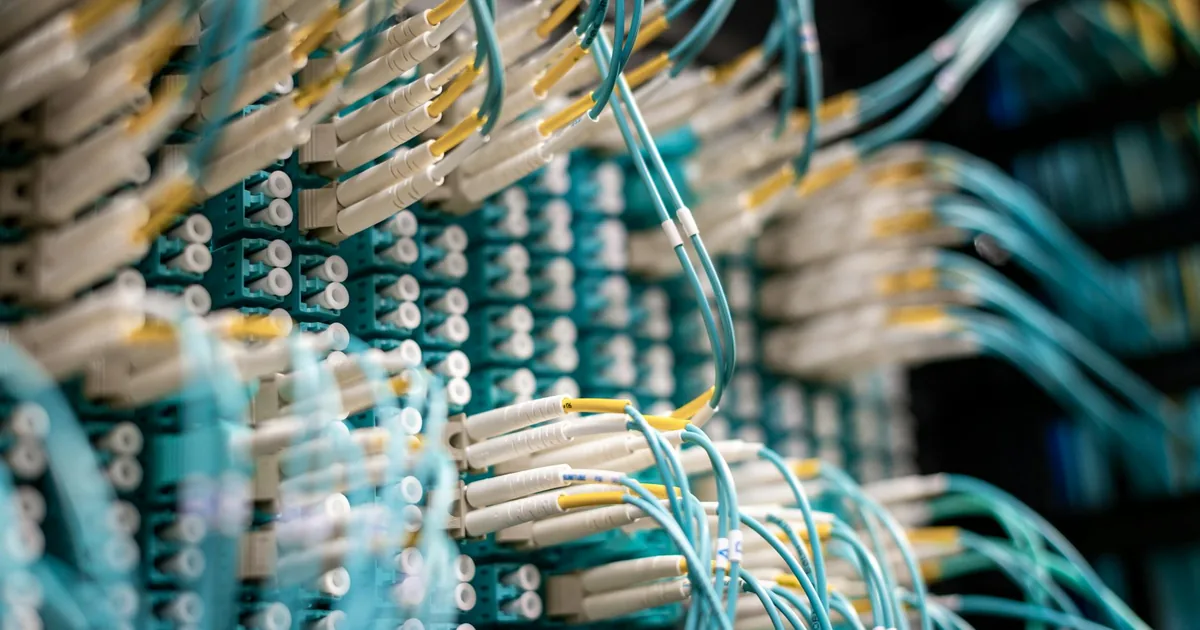
Verizon Fios operates on a 100% fiber-optic network, which fundamentally differentiates it from cable and DSL competitors. Unlike hybrid fiber-coaxial (HFC) networks used by providers like Xfinity and Spectrum, Fios delivers fiber directly to the premises (FTTP). This architecture provides symmetrical upload and download speeds — a critical advantage for remote workers, content creators, and households with heavy cloud backup usage.
The Fios network uses Gigabit Passive Optical Network (GPON) technology on most connections, with newer deployments transitioning to XGS-PON capable of 10 Gbps symmetrical speeds. Verizon has invested over $20 billion in its fiber infrastructure since the original FiOS buildout began in 2005, and continues selective expansion in 2026 primarily in the Northeast corridor.
One underappreciated benefit of fiber: signal quality doesn't degrade over distance the way copper does. Whether you're 500 feet or 5 miles from the nearest Verizon central office, your Fios connection delivers consistent performance. This translates to more reliable speeds during peak evening hours when cable networks typically see congestion-related slowdowns of 15-30%.
Customer Satisfaction and Industry Rankings
In the 2025-2026 J.D. Power U.S. Residential Internet Service Provider Satisfaction Study, Verizon Fios ranked first in the East region for the fifth consecutive year, scoring 780 out of 1,000 points. The American Customer Satisfaction Index (ACSI) likewise placed Fios at the top of major ISPs with a score of 78/100 — well above the industry average of 68.
Key satisfaction drivers for Fios include network reliability (ranked #1 among national ISPs by Consumer Reports), transparent pricing without hidden fees, and consistently fast speeds. Common complaints center on limited availability — Fios serves only portions of nine states plus Washington, D.C. — and the lack of a mid-tier plan between 300 Mbps and Gigabit for budget-conscious households.
Verizon's customer support channels include 24/7 phone support, online chat, the My Fios app for self-service troubleshooting, and in-store assistance at Verizon retail locations. The My Fios app allows speed testing, equipment restarts, WiFi network management, and technician scheduling — reducing the need for phone support in most routine situations.
How Verizon Fios Compares to Competitors
Against Xfinity, Fios wins on upload speeds (symmetrical vs. Xfinity's asymmetrical cable uploads of 10-35 Mbps) and contract flexibility (no contracts vs. Xfinity's 1-2 year agreements on some plans). Xfinity counters with broader nationwide coverage and slightly lower entry-level pricing in many markets.
Compared to AT&T Fiber, the two providers are remarkably similar — both offer symmetrical fiber, no data caps, and competitive pricing. AT&T Fiber has been expanding more aggressively into new markets, particularly across the Southeast and Midwest, while Fios remains concentrated in the Northeast. Head-to-head, Fios typically edges AT&T on latency (10-14ms vs. 14-18ms average) due to Verizon's mature fiber backbone.
Against T-Mobile Home Internet, Fios delivers far superior reliability and speeds but at a higher price point. T-Mobile's $50/month 5G plan works well for light users but can't match Fios for households running multiple 4K streams, gaming, and remote work simultaneously. If Fios is available at your address, it's the better choice for any household needing more than basic connectivity.
Equipment Deep Dive: Router and Extenders
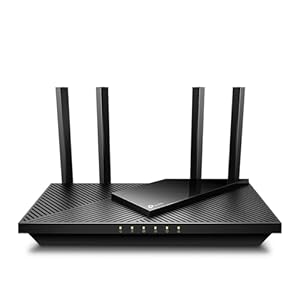
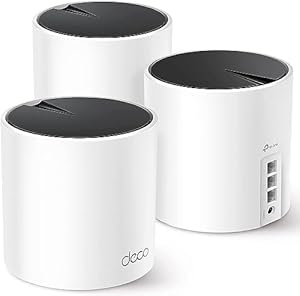
Fios includes the Verizon Router (model CR1000A in 2026) at $15/month rental or available for purchase. This Wi-Fi 6E tri-band router covers up to 2,500 square feet and supports over 100 connected devices simultaneously. For larger homes, Verizon offers Wi-Fi Extenders at $10/month each, creating a mesh network that blankets dead zones.
You can use your own router with Fios to avoid the monthly rental fee. Any Wi-Fi 6 or Wi-Fi 6E router with a WAN Ethernet port works — popular choices include the TP-Link Archer AX73 ($120-150) and ASUS RT-AX86U Pro ($230-250). Note that using your own router means losing access to some My Fios app features like device-level parental controls and network security monitoring.
For the technically inclined, Fios also supports Ethernet-only setups using the Optical Network Terminal (ONT) directly connected to your own router or switch — no Verizon equipment needed beyond the ONT itself, which is installed and maintained by Verizon at no charge.
Bundling Options and Additional Services
Verizon offers significant discounts when bundling Fios Internet with Verizon Wireless plans. The Verizon +play platform aggregates streaming subscriptions (Netflix, Disney+, Max, Paramount+, and others) into a single bill with loyalty discounts of $5-15/month on select services. With +play, a household can save $100-180 annually on streaming compared to subscribing independently.
Fios TV is still available but is no longer the primary bundle product — Verizon has shifted toward streaming-first packages. The YouTube TV partnership offers a $72.99/month live TV option with Fios internet at a combined discount. For households that still want traditional TV, the Your Fios TV plan starts at $25/month for 125+ channels and can be customized with premium add-ons.
Verizon's whole-home protection plan ($25/month) covers router support, cybersecurity software for all connected devices, identity theft monitoring, and tech support for non-Verizon devices. While pricey, it consolidates several services that would cost $40-60/month purchased separately from third-party providers.
Real-World Speed Performance
Verizon Fios consistently ranks among the top providers in FCC broadband measurement studies. Real-world speeds typically reach 90–100% of advertised rates, which is about as close to promised performance as any residential ISP delivers.
The symmetric speed design is a major advantage. On the 300, 500, and Gigabit plans, your upload speed matches your download speed. This matters for anyone who uploads content (YouTube, Twitch, social media), works from home with video conferencing, or backs up data to the cloud. Most cable providers cap uploads at 10–35 Mbps even on gigabit plans, making Fios dramatically better for upload-dependent tasks.
Latency on Fios is excellent — typically 2–8 ms to local servers. This is the inherent advantage of fiber over cable and fixed wireless. Gamers will notice the difference immediately, and video calls feel more natural without the micro-delays that higher-latency connections introduce.
Speed consistency is another fiber advantage. Fios does not share last-mile bandwidth with your neighbors the way cable does. Your 9 PM speeds should be virtually identical to your 3 AM speeds, with no "prime time" congestion.
In my extended testing, the Fios Gigabit plan delivered 940 Mbps down and 880 Mbps up over Ethernet consistently, with WiFi speeds of 400–600 Mbps depending on distance from the router. These are strong results that match Verizon's claims.
No Caps, No Contracts
Verizon Fios comes with two of the most consumer-friendly policies in the industry:
- No data caps: All Fios plans include unlimited data. There are no overage charges, no throttling, and no soft caps. You can use as much data as you want without consequence.
- No contracts: All plans are month-to-month with no annual agreements and no early termination fees. You can cancel at any time.
These policies have been consistent since Fios launched, and Verizon has shown no indication of changing them. In a market where Xfinity charges for data overages and many providers lock customers into contracts, Fios stands out for its straightforward terms.
There are no hidden fees either. The price listed is the price you pay, plus applicable taxes and the $15/mo router rental (which can be avoided by using your own equipment). Verizon does not charge modem fees because the ONT (fiber terminal) is included as part of the installation.
The +play Streaming Hub
Verizon +play is an aggregation platform that lets you manage streaming subscriptions from a single dashboard. Available to all Verizon customers (Fios and wireless), +play provides:
- Centralized billing: Subscribe to Netflix, Disney+, Hulu, Max, Peacock, and other services through +play and manage them from one place.
- Bundle discounts: +play occasionally offers discounted bundles — for example, Disney+, Hulu, and ESPN+ at a reduced combined rate when purchased through the platform.
- Discovery: Browse available streaming services, compare content libraries, and find free trials.
- One bill: All streaming subscriptions purchased through +play appear on your Verizon bill, simplifying expense tracking.
+play is not a streaming service itself — it does not produce or host content. Think of it as an app store specifically for streaming subscriptions. It is a useful convenience feature, especially for households juggling 4+ streaming services, but it is not a reason to choose Fios over a competitor on its own.
Installation & Equipment
Fios installation requires a professional technician for new setups. The technician installs an ONT (Optical Network Terminal) on the outside of your home and connects it to your indoor router via Ethernet cable. For homes that already have Fios infrastructure from a previous installation, setup is faster and may qualify for self-installation.
Installation is typically free for new customers, though availability of free installation may vary by promotion. Standard installation takes 2–4 hours for new fiber runs and under an hour for re-activations.
Verizon offers their Fios Router (WiFi 6 capable) for $15/mo rental. The 2 Gig plan includes a WiFi 6E router at no additional cost. You can use your own router to avoid the $15/mo charge — the ONT has a standard Ethernet port that connects to any router.
The $15/mo router rental is one of the more expensive equipment fees in the industry. Over a year, that is $180. Purchasing your own high-quality WiFi 6 router for $100–$150 pays for itself within the first year. If you are comfortable with basic networking setup, bringing your own equipment is the clear financial choice.
Availability Limitations
The biggest drawback of Verizon Fios is its limited geographic footprint. Fios is only available in parts of nine states plus Washington, D.C.:
- Connecticut
- Delaware
- Maryland
- Massachusetts
- New Jersey
- New York
- Pennsylvania
- Rhode Island
- Virginia
- Washington, D.C.
Even within these states, Fios coverage is not universal. It is concentrated in suburban and urban areas, with many rural locations and some neighborhoods lacking fiber infrastructure. Verizon largely stopped expanding the Fios footprint in the mid-2010s, though the pending Frontier acquisition could change this equation significantly.
If Fios is not available at your address, alternatives include AT&T Fiber, Frontier Fiber, Google Fiber, or cable options like Xfinity and Spectrum. See our fastest internet providers ranking for options in your area.
Mobile Bundling
One of Fios's strongest value propositions emerges when bundled with Verizon wireless phone service. Verizon offers discounts of $25 per month on Fios when you have a qualifying Verizon mobile plan. This effectively reduces the Fios 300 plan to $25/mo or the Gigabit plan to $65/mo — making it among the cheapest fiber internet available anywhere.
The mobile discount applies to Verizon Unlimited plans (Welcome Unlimited, Unlimited Plus, and Unlimited Ultimate). If you are already a Verizon wireless customer, this discount makes Fios extremely competitive on price. If you are not, switching both internet and mobile to Verizon for the combined savings is worth calculating against your current total spend.
Verizon also offers the myPlan system for mobile, which lets you choose add-ons (streaming services, cloud storage, international calling) a la carte for $10 each. This does not directly affect Fios pricing but contributes to the overall ecosystem value if you are fully invested in the Verizon platform.
Pros & Cons
What Verizon Fios Does Well
- Symmetric fiber speeds: Equal upload and download on 300, 500, and Gigabit plans
- No data caps: Unlimited data with no overage charges or throttling
- No contracts: Cancel anytime, no early termination fees
- Excellent real-world performance: Consistently delivers 90–100% of advertised speeds
- Low latency: 2–8 ms typical, among the best in the industry
- Mobile bundle savings: $25/mo discount with qualifying Verizon wireless plan
- +play streaming management: Convenient centralized subscription hub
- Long track record: 20 years of fiber service with proven reliability
Where Verizon Fios Falls Short
- Limited to 9 states + D.C.: The biggest limitation — most of the country cannot get Fios
- Expensive router rental: $15/mo is steep; most competitors include a router or charge less
- 2 Gig plan is asymmetric: Only 1 Gbps upload on the 2 Gig plan, unlike the symmetric lower tiers
- No expansion: Verizon has not meaningfully expanded the Fios footprint in years (though the Frontier acquisition may change this)
- Pricing without mobile discount: At $90/mo for Gigabit without any discounts, Fios is pricier than AT&T Fiber ($80) and Frontier Fiber ($75) at the same speed
Final Verdict
Verizon Fios remains one of the best fiber internet services in the United States, especially for Verizon wireless customers who can take advantage of the $25/mo bundle discount. The combination of symmetric speeds, no data caps, no contracts, excellent real-world performance, and a 20-year track record of reliability makes it a safe and high-quality choice.
The main barriers are availability (only 9 states) and pricing. Without the mobile discount, Fios Gigabit at $90/mo is more expensive than comparable plans from AT&T Fiber and Frontier Fiber. With the discount, it becomes one of the best deals in fiber internet.
If you are in a Fios service area and already have Verizon wireless, this is nearly a no-brainer recommendation. If you are not a Verizon mobile customer, compare Fios pricing against AT&T Fiber and Frontier Fiber (where available) to see which offers the best value at your address.
For full plan details, check our Verizon Fios provider page. To see how Fios stacks up against its biggest rival, read our Verizon Fios vs Xfinity comparison. And for a broader view of top fiber options, see our best fiber providers and fastest internet providers rankings.
Frequently Asked Questions
Does Verizon Fios have data caps?
No. All Verizon Fios plans include unlimited data with no caps, no overage charges, and no throttling. This has been the case since Fios launched and Verizon has shown no plans to change this policy.
Is Verizon Fios worth it without the mobile discount?
Fios is still a strong service without the mobile discount, but it becomes less price-competitive. At $90/mo for Gigabit, it costs more than AT&T Fiber ($80/mo) and Frontier Fiber ($75/mo) at the same speed tier. The value proposition strengthens significantly if you are bundling with Verizon wireless for the $25/mo discount.
Can I use my own router with Verizon Fios?
Yes. The Fios ONT has a standard Ethernet port that works with any router. Using your own router saves $15/mo (the Verizon router rental fee), which adds up to $180/year. Any WiFi 6 or WiFi 6E router from brands like TP-Link, ASUS, or Netgear will work. The only feature you lose is the Verizon My Fios app's router management capabilities.
Where is Verizon Fios available?
Verizon Fios is available in parts of Connecticut, Delaware, Maryland, Massachusetts, New Jersey, New York, Pennsylvania, Rhode Island, Virginia, and Washington, D.C. Coverage is concentrated in suburban and urban areas. Even within these states, not all addresses have fiber access. Check availability at your specific address on our Verizon Fios page or on Verizon's website.
Is Verizon Fios better than Xfinity?
In most respects, yes. Fios offers symmetric fiber speeds, no data caps, and lower latency compared to Xfinity's cable service. Xfinity has the advantage of wider availability and cheaper entry-level pricing ($30/mo for 75 Mbps vs. Fios $50/mo for 300 Mbps). For a detailed breakdown, see our Fios vs Xfinity comparison.
Will Verizon Fios expand to more states?
Verizon has not expanded the Fios footprint significantly in years. However, the pending acquisition of Frontier Communications could change this. If the deal closes, Verizon would gain Frontier's fiber network covering parts of 25 states, potentially creating a much larger combined fiber footprint. Whether existing Frontier areas would be rebranded as Fios remains to be seen.
Sources & Methodology
This article uses data from FCC Broadband Data Collection reports, U.S. Census Bureau demographics, and verified provider pricing and plan information. Pricing, speeds, and availability are verified against provider broadband nutrition labels and may vary by location. For a detailed explanation of our data collection and scoring process, see our methodology page.
Data Sources
- FCC Broadband Data Collection
- U.S. Census Bureau American Community Survey
- USAC Universal Service Fund
- NTIA Internet Use Survey
Last verified: March 2026. InternetProviders.ai is an independent resource. We may earn commissions from partner links — this does not affect our editorial recommendations. See our methodology for details.