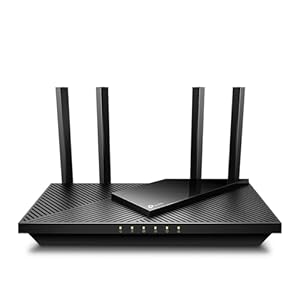
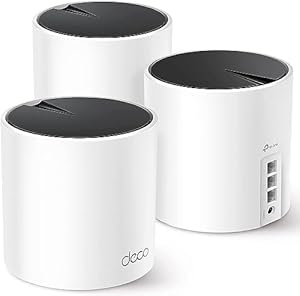
HughesNet vs T-Mobile 5G: HughesNet reaches 100 Mbps via satellite. T-Mobile 5G tops out at 245 Mbps using 5G fixed wireless. Overall, T-Mobile 5G delivers stronger performance for the price.
Introduction: Understanding Your Options
Choosing between HughesNet and T-Mobile 5G Home Internet requires understanding fundamental differences in internet delivery technology, performance characteristics, and service availability. HughesNet, founded in 1971, operates primarily using Satellite technology, while T-Mobile 5G Home Internet, established in 1994, delivers connectivity via 5G.
The technology gap between these providers creates vastly different user experiences. HughesNet offers speeds up to 100 Mbps with pricing starting at $50/mo, requiring contracts. In contrast, T-Mobile 5G Home Internet provides speeds reaching 245 Mbps starting at $40/mo, with flexible month-to-month terms.
This comprehensive analysis examines speed capabilities, pricing structures, coverage areas, contract requirements, and real-world performance to help you make an informed decision. We'll break down technical specifications, evaluate practical use cases, and identify which households benefit most from each provider's unique service model.
Side-by-Side Comparison
| Feature | HughesNet | T-Mobile 5G Home Internet |
|---|---|---|
| Technology | Satellite | 5G |
| Max Speed | 100 Mbps | 245 Mbps |
| Starting Price | $50/mo | $40/mo |
| Data Cap | 100 GB | None |
| Contract | Required | No Contract |
| Best For | Rural users with no other internet options | Users wanting easy setup with no contracts or caps |
HughesNet Overview
Satellite internet everywhere
Operating from Germantown, MD since 1971, HughesNet has built its reputation on satellite technology delivery. The provider's network reaches areas where traditional wired infrastructure proves economically unfeasible, making it a crucial option for underserved communities.
Plans & Pricing
HughesNet structures its service offerings around satellite technology limitations and capabilities. Entry-level plans start at $50/mo, with premium tiers reaching 100 Mbps download speeds. All plans include data allowances of 100 GB, with reduced speeds after exceeding monthly thresholds.
Equipment fees typically include installation charges and monthly rental costs for required hardware. Contract commitments of 12-24 months apply to all service tiers, with early termination fees for customers who disconnect before agreement completion.
Pros & Cons
Advantages:
- Available almost everywhere
- Fusion plans offer lower latency
- No hard data limits
Limitations:
- High latency (600ms+)
- Data caps on all plans
- Contracts required
- Weather affects signal
Check availability: to confirm HughesNet service in your area.
T-Mobile 5G Home Internet Overview
5G home internet pioneer
Based in Bellevue, WA and founded in 1994, T-Mobile 5G Home Internet leverages 5g infrastructure to deliver high-performance connectivity. The provider's technology foundation enables competitive performance characteristics that appeal to bandwidth-intensive users.
Plans & Pricing
T-Mobile 5G Home Internet offers service tiers beginning at $40/mo, with top-tier plans delivering 245 Mbps speeds. Data caps do not apply to any service level, allowing unlimited monthly usage without throttling or overage charges.
Installation processes often support self-installation with shipped equipment and guided setup procedures. No-contract service provides maximum flexibility with consistent monthly pricing.
Pros & Cons
Advantages:
- No contracts
- No data caps
- Easy self-install
- Great for rural areas
Limitations:
- Speeds vary by location
- Lower max speeds than cable/fiber
- Dependent on tower proximity
Speed Comparison: Performance Analysis
The speed differential between HughesNet and T-Mobile 5G Home Internet reflects fundamental technology constraints rather than infrastructure investment choices. HughesNet's 100 Mbps maximum speed represents the practical ceiling for satellite technology, while T-Mobile 5G Home Internet's 245 Mbps capability demonstrates 5g's superior bandwidth potential.
Download speeds tell only part of the performance story. HughesNet customers typically experience latency measurements exceeding 600 milliseconds due to signal travel distance to orbital satellites, making real-time applications like video conferencing. Online gaming problematic. Upload speeds remain limited to 3-5 Mbps regardless of plan tier, creating bottlenecks for cloud backup, video uploads, and remote work applications.
T-Mobile 5G Home Internet's 5g infrastructure provides asymmetric speed profiles with uploads typically reaching 10-50% of download speeds. Latency measurements generally range from 20-50ms, acceptable for most internet activities including streaming and gaming.
Real-world speed tests reveal consistency differences between providers. HughesNet customers report significant speed variations during peak usage hours and weather events, with actual throughput often falling 30-50% below advertised maximums. T-Mobile 5G Home Internet users generally see 80-95% of advertised speeds with some variation during neighborhood peak hours.
Pricing Breakdown: Value Analysis
Headline prices mask significant cost differences when analyzing total ownership expenses. HughesNet's $50/mo entry point excludes mandatory equipment leases averaging $15-20 monthly, plus installation fees typically ranging $100-200 for professional dish mounting and alignment. First-year total costs frequently exceed $800-1,000 when factoring in all required charges.
T-Mobile 5G Home Internet's $40/mo starting rate includes equipment in most markets, with installation fees waived during promotional periods. Consistent month-to-month pricing eliminates bill shock from promotional rate expirations.
Mid-tier plan comparisons reveal steeper differentials. HughesNet's 100 Mbps tier costs $90-110 monthly after equipment and fees, delivering approximately $1.00-1.10 per Mbps. T-Mobile 5G Home Internet's mid-range plans offer competitive per-megabit pricing.
Data overage charges create additional cost variability. HughesNet implements soft caps where speeds reduce to 1-3 Mbps after exhausting priority data allowances, though customers can purchase data tokens at $10-15 per 10GB. T-Mobile 5G Home Internet eliminates overage concerns entirely with unlimited data policies across all service tiers.
Coverage & Availability Analysis
Geographic reach represents the most significant differentiator between these providers. HughesNet's satellite infrastructure provides nearly universal coverage across all 50 states, requiring only clear sky view for signal reception. This ubiquitous availability makes HughesNet the default option—and often the only option—for rural households beyond cable and fiber footprints.
T-Mobile 5G Home Internet operates within geographically limited service territories concentrated in WA and surrounding regions. The provider's 5g network depends on existing infrastructure and network density.
Availability checking processes differ substantially. HughesNet customers can verify service eligibility through online address checks, with approval granted to virtually any location with unobstructed southern sky exposure. T-Mobile 5G Home Internet requires location verification to confirm network coverage.
Contract Terms & Fees
HughesNet mandates 24-month service agreements on all plans, with early termination fees calculated as $400 minus $15 per completed month. These contracts protect the provider's significant upfront equipment and installation costs, but lock customers into service regardless of performance satisfaction or changing needs.
Equipment policies add complexity to HughesNet's total cost picture. Customers must lease proprietary satellite modems and dishes, with unreturned equipment fees reaching $300-400 upon service cancellation. Professional installation proves mandatory in most cases, adding $100-200 to initial costs.
T-Mobile 5G Home Internet provides month-to-month service with no early termination penalties. Equipment policies vary by market and technology type.
Hidden fees require careful analysis. HughesNet charges $10-15 monthly for equipment, $100-200 for installation, and potential shipping fees for equipment returns. T-Mobile 5G Home Internet structures fees based on service type and market.
Who Should Choose Each Provider?
Choose {p1_name} if you:
- Live beyond cable and fiber infrastructure reach
- Need internet access with no wired alternatives available
- Use internet primarily for email, web browsing, and standard-definition streaming
- Can tolerate higher latency for basic connectivity
- Accept data cap limitations in exchange for rural availability
Choose {p2_name} if you:
- Live within the provider's service footprint
- Require low-latency connections for gaming or video conferencing
- Need symmetric upload speeds for content creation or remote work
- Want unlimited data without soft caps or throttling
- Prioritize performance and reliability over universal availability
Frequently Asked Questions
Can I switch providers without penalties?
Early termination fees apply to HughesNet contracts, typically $400 minus $15 per completed month. T-Mobile 5G Home Internet offers no-contract service that allows cancellation anytime without penalties.
Which provider offers better customer service?
T-Mobile 5G Home Internet typically receives higher customer satisfaction ratings due to modern infrastructure and service approach. HughesNet customers frequently report frustration with speed throttling after data cap exhaustion and high-latency performance issues.
Do both providers support 4K streaming?
T-Mobile 5G Home Internet easily supports 4K streaming with ample bandwidth for multiple simultaneous streams. HughesNet technically supports 4K (which requires 25 Mbps) but data caps make sustained 4K streaming impractical—four hours of 4K content consumes approximately 25GB.
Can I use VPNs with both services?
VPN functionality works with both providers but performance differs substantially. HughesNet connections already suffer from 600ms+ latency; adding VPN overhead can push total latency above 800ms, making most applications unusable. T-Mobile 5G Home Internet handles VPN traffic efficiently with acceptable performance characteristics.
Which provider works better for remote work?
T-Mobile 5G Home Internet provides the superior remote work experience with adequate performance for video conferencing and file transfers. HughesNet struggles with video conferencing due to 600ms+ latency that causes audio delays and frozen video, while 3-5 Mbps upload speeds bottleneck file sharing.
Are installation appointments required for both?
HughesNet requires professional installation for satellite dish mounting, alignment, and modem configuration—typically taking 3-4 hours. T-Mobile 5G Home Internet may offer self-installation kits for straightforward connections but recommends professional installation for optimal performance.
What happens if I move during my contract?
Contract portability depends on service availability at your new address. If HughesNet serves your new location, service transfers without penalty. If not, early termination fees apply. T-Mobile 5G Home Internet offers contract-free service, allowing simple cancellation or transfer.
Ready to get connected? now for exclusive deals:
HughesNet vs T-Mobile: Frequently Asked Questions
Can I switch from HughesNet to T-Mobile?
Switching providers is generally straightforward. Check if you have any remaining contract obligations with your current provider that might incur early termination fees. Schedule your new installation before canceling existing service to avoid a gap in connectivity. Many providers offer to buy out your existing contract as a promotional incentive.
Which provider has better customer service, HughesNet or T-Mobile?
Customer service quality can vary by region and changes over time. Check recent customer satisfaction surveys from J.D. Power and the American Customer Satisfaction Index for current ratings. Online reviews for your specific area can also provide insight into local service quality. Both providers offer phone, chat, and online support channels.
Which is better for gaming, HughesNet or T-Mobile?
For gaming, low latency (ping) matters more than raw download speed. Fiber connections from either provider typically deliver the lowest latency (5-15ms). Cable internet provides acceptable gaming performance (15-30ms latency). Satellite and fixed wireless connections generally have higher latency that can affect competitive gaming. Choose the provider that offers fiber or cable at your address.
Do HughesNet and T-Mobile both offer no-contract plans?
Many current plans from both HughesNet and T-Mobile are available without annual contracts. However, some promotional pricing may require a commitment period. No-contract plans offer flexibility to switch or cancel anytime, though monthly rates may be slightly higher than contract plans. Verify contract terms for the specific plan you're considering.
Which provider has better reliability, HughesNet or T-Mobile?
Network reliability depends on the technology type and local infrastructure. Fiber networks generally offer the highest reliability with fewer outages. Cable networks are typically reliable but can experience congestion during peak hours. Check outage reports for your area and ask neighbors about their experience with each provider before deciding.
Which is faster, HughesNet or T-Mobile?
Maximum speeds depend on the technology each provider uses at your address. Fiber connections from either provider can reach 1-5 Gbps, while cable typically maxes out at 1-1.2 Gbps. Compare the specific plans available at your address, as speeds vary by location. For the most accurate comparison, check what technology each provider offers at your specific address.
Disclosure: InternetProviders.ai is an independent review site funded by advertising partnerships. We receive compensation when you click certain links or provider phone numbers listed on our site. This compensation may influence which providers we review and how they're presented, but it does not affect our editorial independence. Our reviews are based on objective research and analysis. We maintain strict editorial standards to ensure our content remains impartial and accurate. Provider information is regularly updated, but you should verify current offers directly with providers before making decisions.