EarthLink Internet in California at a Glance
EarthLink delivers fiber, DSL, and fixed wireless internet across California, with plans starting at $49.99 per month. Fiber speeds reach up to 5 Gbps in select California metro areas like Los Angeles, while fixed wireless provides coverage where fiber has not yet been deployed.
About EarthLink Internet in California
As the most populous state in the nation with nearly 40 million residents, California presents unique broadband challenges and opportunities. EarthLink addresses these by partnering with multiple infrastructure providers to deliver fiber-optic connections in metropolitan areas like Los Angeles, San Francisco, San Diego, Sacramento, and San Jose. These partnerships allow EarthLink to offer symmetrical speeds that support streaming, gaming, remote work, and smart home devices simultaneously across the state's diverse geography.
California's massive and diverse population creates enormous demand for broadband. From the tech hubs of Silicon Valley to the agricultural Central Valley, internet needs span every use case from remote work and cloud computing to precision farming and telehealth. In the Central Valley, North Coast, and Sierra Nevada foothills, EarthLink's fixed wireless option provides an alternative to traditional wired connections, delivering up to 100 Mbps download speeds without the need for a phone line or cable infrastructure. This flexibility makes EarthLink a viable option for California residents across a wide range of communities, from dense urban neighborhoods to semi-rural towns.
One of EarthLink's standout features in California is the absence of contracts on all plans. Whether you choose the entry-level Fiber 300 plan or the blazing-fast Fiber 5 Gig tier, there are no early termination fees and no surprise price increases during a locked-in period. Combined with unlimited data on every plan, EarthLink positions itself as a straightforward, transparent choice for California households tired of complicated pricing structures from larger ISPs.
EarthLink Plans Available in California (2026)
| Plan | Download Speed | Upload Speed | Monthly Price | Technology |
|---|---|---|---|---|
| Fiber 300 | 300 Mbps | 300 Mbps | $49.99/mo | Fiber |
| Fiber 500 | 500 Mbps | 500 Mbps | $54.99/mo | Fiber |
| Fiber 1 Gig | 1,000 Mbps | 1,000 Mbps | $69.99/mo | Fiber |
| Fiber 2 Gig | 2,000 Mbps | 2,000 Mbps | $99.99/mo | Fiber |
| Fiber 5 Gig | 5,000 Mbps | 5,000 Mbps | $109.99/mo | Fiber |
| Fixed Wireless | Up to 100 Mbps | Up to 20 Mbps | $49.99–$79.99/mo | Fixed Wireless |
All EarthLink plans include unlimited data, no contracts, and no equipment rental fees when using your own compatible router. EarthLink also provides a managed Wi-Fi router for $9.95/mo for customers who prefer not to supply their own equipment. Symmetrical speeds on fiber plans mean your upload speed matches your download speed — critical for video conferencing, cloud backups, and content creation that California's large remote workforce depends on daily.
EarthLink Fiber Coverage in California
EarthLink's fiber service in California is delivered through partnerships with regional and national fiber infrastructure providers. This approach allows EarthLink to offer fiber-optic speeds in areas served by its partner networks without building its own last-mile infrastructure. Fiber availability varies by address, and coverage is concentrated in California's major metropolitan areas:
- Los Angeles Metro — Extensive fiber coverage across LA, Long Beach, Pasadena, Glendale, and surrounding communities in Los Angeles County. EarthLink fiber competes with AT&T Fiber and Spectrum throughout the LA basin.
- San Francisco Bay Area — Coverage in San Francisco, Oakland, San Jose, and select Silicon Valley communities. The Bay Area's high concentration of tech workers makes symmetrical gigabit speeds especially valuable for remote work and home lab setups.
- San Diego — Fiber available in central San Diego and several surrounding communities, competing with Cox and AT&T in the market.
- Sacramento — Growing fiber footprint in the state capital and surrounding suburbs including Elk Grove, Roseville, and Folsom.
- Inland Empire — Coverage in Riverside, San Bernardino, Ontario, and Rancho Cucamonga, serving one of California's fastest-growing population corridors.
To check fiber availability at your California address, enter your address on the EarthLink website or EarthLink's sales team. Availability is determined by address-level infrastructure, so two homes on the same street may have different plan options depending on which fiber network reaches each property.
EarthLink Fixed Wireless in California
For California addresses where fiber infrastructure is not available, EarthLink offers fixed wireless internet as an alternative. Fixed wireless uses radio signals transmitted from a nearby tower to a receiver installed on or near your home, delivering broadband speeds without the need for cable or phone line infrastructure.
In California, EarthLink's fixed wireless service is particularly relevant for communities in the Central Valley, northern California, the Sierra Nevada foothills, and other areas where fiber and cable buildout has lagged behind urban centers. Speeds of up to 100 Mbps are available depending on distance from the transmission tower and line-of-sight conditions. Fixed wireless latency is comparable to cable at 20–40 ms, making it suitable for video conferencing and most online activities.
EarthLink vs Major California ISPs
EarthLink vs AT&T Fiber in California
AT&T Fiber is EarthLink's most direct competitor in California's fiber market. AT&T offers speeds up to 5 Gbps with symmetrical upload, unlimited data, and no contracts — features that mirror EarthLink's offerings. AT&T's pricing starts at $55/mo for 300 Mbps, slightly higher than EarthLink's $49.99 entry point. The key difference is that AT&T builds and operates its own fiber network, while EarthLink resells fiber capacity from partner networks. For most consumers, the practical experience is identical — same fiber infrastructure, same speeds, similar pricing.
EarthLink vs Spectrum in California
Spectrum (Charter Communications) is the largest cable provider in California, serving millions of households across the state. Spectrum's plans start at $49.99/mo for 300 Mbps download but offer only 10 Mbps upload on the entry-level tier — a significant disadvantage compared to EarthLink's symmetrical fiber. Spectrum does not require contracts and includes unlimited data, matching EarthLink on those features. For upload-intensive activities, EarthLink fiber is the clear winner; for basic downloading and streaming, both providers are comparable at the entry level.
EarthLink vs Cox in California
Cox serves limited areas of California, primarily in parts of Orange County and San Diego County. Where Cox and EarthLink fiber overlap, EarthLink typically offers better value due to symmetrical speeds and the absence of data caps. Cox's 1.25 TB data cap and lower upload speeds put it at a disadvantage against EarthLink's unlimited, symmetrical fiber plans.
EarthLink vs Google Fiber in California
Google Fiber does not currently serve California. If Google Fiber expands into the California market in the future, it would become a direct competitor to EarthLink's fiber offerings. For now, EarthLink fiber and AT&T Fiber are the primary symmetrical fiber options for California residents.
EarthLink Customer Experience in California
EarthLink has reinvented itself since its dial-up era of the 1990s and early 2000s. The company now focuses on delivering a premium broadband experience with an emphasis on simplicity and transparency. Key aspects of the EarthLink customer experience include:
- No price increases: The monthly rate at signup remains your rate for the duration of service. Unlike many cable providers that offer promotional rates that jump after 12 months, EarthLink's pricing is consistent.
- No contracts: Cancel at any time without early termination fees. This flexibility is especially valuable in California, where high mobility rates mean residents move frequently.
- Unlimited data: No data caps on any plan, fiber or fixed wireless. Heavy users do not face throttling or overage charges.
- US-based support: EarthLink's customer support team is based in the United States, with phone support available during extended business hours and chat support available 24/7.
EarthLink's customer satisfaction scores are generally above average for the ISP industry, though the company does not receive the volume of reviews needed to rank in major satisfaction surveys alongside larger providers like Comcast, AT&T, and Spectrum. Customer reviews on third-party platforms consistently praise EarthLink's straightforward pricing and lack of hidden fees, while noting that availability can be limited depending on location.
Installation and Setup
EarthLink fiber installation in California follows the same process as the underlying infrastructure provider's installation. A technician will visit your home, install or activate the fiber terminal (also called an Optical Network Terminal or ONT), and verify your connection. Installation typically takes 1–3 hours and is usually scheduled within 1–2 weeks of placing your order.
For fixed wireless installation, a technician mounts a small receiver on your home's exterior, pointed at the nearest transmission tower, and runs a cable inside to your router. Fixed wireless installation takes approximately 1–2 hours and requires clear line-of-sight to the tower. In some cases, the technician may need to adjust the receiver position to optimize signal strength.
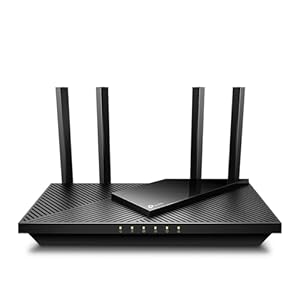
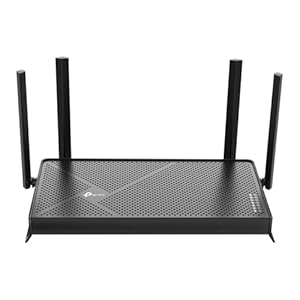
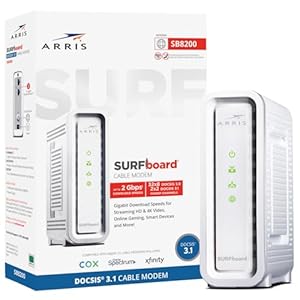
EarthLink includes a free modem with all fiber plans. The included modem supports Wi-Fi 6 and provides adequate coverage for homes up to approximately 1,500 square feet. Larger homes may benefit from EarthLink's managed Wi-Fi service ($9.95/mo) or a customer-supplied mesh system connected to the EarthLink modem's Ethernet ports.
EarthLink for California Remote Workers
California's remote work adoption rate is among the highest in the nation, particularly in the technology, entertainment, and professional services sectors. EarthLink's symmetrical fiber plans are well-suited for remote workers who need reliable upload speeds for video conferencing, screen sharing, and file transfers to cloud-based collaboration tools.
A typical remote worker on a Zoom or Teams uses approximately 2–5 Mbps of both download and upload bandwidth. With EarthLink's base Fiber 300 plan at 300 Mbps symmetrical, a household could theoretically support 60 simultaneous HD video calls — far more capacity than any household would need. Even the most bandwidth-intensive remote work scenarios (simultaneously running a VPN, streaming 4K on a second monitor, and uploading large files to the cloud) will not approach the limits of EarthLink's entry-level fiber plan.
For content creators in California's entertainment industry — video editors, YouTubers, podcasters, and live streamers — EarthLink's higher-tier plans (2 Gig and 5 Gig) provide the upload bandwidth needed to transfer large media files quickly. Uploading a 10 GB video file takes approximately 40 seconds on the 2 Gig plan versus over 13 minutes on a typical cable connection with 10 Mbps upload.
California Broadband Market Context
California has invested heavily in broadband infrastructure through state programs and federal funding. The California Public Utilities Commission (CPUC) administers the California Advanced Services Fund (CASF), which provides grants and loans to expand broadband into underserved areas. Also, California is expected to receive approximately $1.86 billion in federal BEAD program funding to address broadband gaps, primarily in rural and tribal areas.
Despite these investments, significant broadband disparities persist across the state. Rural communities in the Central Valley, northern California, and the eastern Sierra Nevada often lack access to high-speed wired internet. EarthLink's fixed wireless service fills part of this gap, though the speeds and coverage do not match what fiber delivers in urban areas. As California's broadband infrastructure continues to improve, EarthLink's multi-technology approach positions it to serve customers across the spectrum of available infrastructure.
California's competitive broadband market means consumers have choices in most urban areas. EarthLink competes effectively by offering no-contract, no-cap fiber service at competitive prices. For California residents evaluating their options, EarthLink deserves consideration alongside AT&T Fiber, Spectrum, and local municipal fiber providers as a straightforward, transparent alternative to the larger incumbents.
Frequently Asked Questions About EarthLink in California
Is EarthLink fiber available at my California address?
EarthLink fiber availability depends on whether a partner fiber network reaches your specific address. Check the EarthLink website or their sales team to verify availability. Coverage is strongest in major metro areas including Los Angeles, San Francisco, San Diego, and Sacramento.
Does EarthLink have data caps in California?
No. All EarthLink plans, both fiber and fixed wireless, include unlimited data with no caps, throttling, or overage charges.
Is EarthLink's fiber actually its own network?
EarthLink delivers fiber service through partnerships with regional infrastructure providers rather than operating its own fiber network. The practical experience for customers is the same — EarthLink handles billing, customer support, and account management while the partner network provides the physical fiber connection.
Can I bundle EarthLink internet with TV?
EarthLink does not offer a traditional TV bundle. However, customers can pair EarthLink internet with any streaming service of their choice. EarthLink's unlimited data and high speeds make it ideal for streaming-heavy households that use services like YouTube TV, Hulu + Live TV, Netflix, or Disney+.
How does EarthLink compare to Starlink in rural California?
In rural areas where EarthLink's fixed wireless service is available, it typically offers lower latency (20–40 ms vs 20–40 ms for Starlink) and a lower monthly cost. However, Starlink is available at virtually any California address with a clear sky view, while EarthLink fixed wireless requires proximity to a transmission tower. For truly remote locations, Starlink may be the only broadband option.
EarthLink Internet Performance for Everyday Activities
Streaming and Entertainment
California households stream more video content per capita than any other state, driven by the entertainment industry's presence and the state's tech-savvy population. EarthLink's fiber plans deliver more than enough bandwidth for even the most demanding streaming households. A family of four with two 4K streams running simultaneously, a teenager gaming online, and a parent on a video uses roughly 60–80 Mbps total — well within the capacity of EarthLink's entry-level Fiber 300 plan.
EarthLink's unlimited data means there are no consequences for heavy streaming. Unlike providers with data caps where 4K streaming can consume 7 GB per hour and quickly eat into monthly allowances, EarthLink customers can stream without monitoring their usage. This is particularly valuable for cord-cutting California households that rely entirely on streaming for entertainment.
Gaming
California's gaming community is one of the largest in the nation, with major esports organizations, game development studios, and competitive gaming events concentrated in Los Angeles, San Francisco, and San Diego. EarthLink fiber's low latency (typically 1–10 ms to nearby game servers) and symmetrical speeds make it an excellent choice for competitive gamers. The high upload speeds ensure smooth performance in games that require real-time data transmission, and the absence of data caps means large game downloads and updates do not impact monthly allowances.
Smart Home and IoT
California leads the nation in smart home adoption, with many new-construction homes coming pre-wired for smart devices. EarthLink's fiber connection provides the stable, always-on connectivity that smart thermostats, security cameras, smart locks, and voice assistants require. The included Wi-Fi 6 modem supports dozens of simultaneous device connections without degradation, and customers with extensive smart home setups can add mesh Wi-Fi for whole-home coverage.
EarthLink Reliability and Network Performance
EarthLink's fiber reliability is determined by the underlying infrastructure partner's network. Fiber-optic connections are inherently more reliable than cable or DSL because fiber is immune to electromagnetic interference, resistant to weather damage, and delivers consistent speeds regardless of distance from the central office. California's fiber infrastructure has been extensively built out in urban areas, with underground conduit protecting the lines from the state's occasional severe weather events.
For fixed wireless customers, reliability depends on line-of-sight conditions and weather. Heavy rain can cause temporary signal degradation, though modern fixed wireless technology is significantly more resilient than older wireless systems. EarthLink's fixed wireless uptime typically exceeds 99% in normal weather conditions, with brief interruptions possible during severe storms.
EarthLink monitors its network proactively and notifies customers of scheduled maintenance or known outages through email and the customer portal. Unscheduled outages are relatively rare on fiber but can occur due to physical damage to fiber lines from construction activity or natural events like earthquakes — a relevant consideration in seismically active California.
EarthLink Security Features
EarthLink includes several security features with its internet service at no additional cost. All plans include EarthLink's Security Suite, which provides antivirus protection, anti-malware scanning, and a personal firewall for up to three devices. While dedicated third-party security software offers more comprehensive protection, EarthLink's included suite provides a baseline level of protection for customers who do not maintain their own security tools.
EarthLink also offers identity theft protection as an optional add-on service. Given California's status as a frequent target for cybercrime due to its large population and concentration of high-net-worth individuals, identity protection services have meaningful value for California residents. EarthLink's identity protection includes credit monitoring, social security number alerts, and dark web surveillance.
For privacy-conscious California residents, EarthLink has committed to not selling customer browsing data to third-party advertisers — a practice that some larger ISPs engage in. This privacy stance aligns with California's strong privacy culture and the state's landmark California Consumer Privacy Act (CCPA), which gives residents significant control over how companies handle their personal data.
Switching to EarthLink from Another California ISP
Switching to EarthLink from Spectrum, AT&T, Cox, or another California provider is straightforward. EarthLink does not require a contract, so you can set up service before canceling your existing provider to avoid any gap in connectivity. The recommended switching process is:
- Check EarthLink availability at your California address and select your plan
- Schedule installation for your preferred date, typically available within 1–2 weeks
- Keep your current service active until EarthLink installation is complete and verified
- Cancel your previous provider after confirming EarthLink is working properly
- Return any equipment to your previous provider to avoid unreturned equipment charges
EarthLink does not charge activation fees or require a deposit for residential service in California. The first month of service is typically prorated from your installation date. If you are switching from a provider with a contract (such as AT&T's promotional plans), check for any early termination fees before canceling.
EarthLink California: The Bottom Line
EarthLink offers a compelling internet option for California residents who want fast, reliable broadband without contracts, data caps, or hidden fees. The fiber plans deliver symmetrical speeds up to 5 Gbps at prices competitive with AT&T Fiber and substantially better than cable alternatives from Spectrum and Cox. For rural and semi-rural California residents, EarthLink's fixed wireless service provides a reasonable alternative where fiber infrastructure has not yet reached.
The primary consideration is availability. EarthLink's fiber coverage, while growing, does not reach every California address. Checking availability at your specific address is the essential first step. For those in covered areas, EarthLink's combination of transparent pricing, no contracts, unlimited data, and symmetrical speeds makes it one of the strongest broadband options available in the California market. Whether you are a remote worker in Silicon Valley, a student in Sacramento, or a family in the Inland Empire, EarthLink's plans scale to meet California's diverse broadband needs.
Sources & Methodology
Coverage data, plan details, and pricing are compiled from FCC Broadband Data Collection filings, provider-published broadband nutrition labels, and U.S. Census Bureau demographic data including population and median household income figures from the American Community Survey. Pricing, speeds, and availability are verified against provider broadband nutrition labels and may vary by location. For a detailed explanation of our data collection and scoring process, see our methodology page.
Data Sources
- FCC Broadband Data Collection
- U.S. Census Bureau American Community Survey
- USAC Universal Service Fund
- NTIA Internet Use Survey
Last verified: March 2026. InternetProviders.ai is an independent resource. We may earn commissions from partner links — this does not affect our editorial recommendations. See our methodology for details.