
What Starlink customers in IL actually get

By Pablo Mendoza, Lead Analyst|Updated April 2026

Quick Answer

Compare Starlink internet plans, pricing, and availability in IL. Check speeds, coverage, and current deals for your address.

Key Findings

  • Starlink serves 100+ cities across Illinois
  • Plans start at $120/mo
  • Compare with 8 other providers in Illinois

Starlink Satellite Internet in Illinois

Starlink, developed by SpaceX, provides high-speed satellite internet service across all of Illinois using a growing constellation of low-Earth orbit (LEO) satellites. Unlike traditional satellite internet providers that rely on geostationary satellites orbiting at 22,000 miles above Earth, Starlink's constellation operates at approximately 340 miles altitude, which dramatically reduces latency to between 20 and 40 milliseconds. This makes Starlink a viable option for video conferencing, online gaming, and other latency-sensitive applications that were previously impractical with satellite internet.

Illinois residents can expect download speeds ranging from 50 to 220 Mbps and upload speeds between 10 and 20 Mbps on the standard residential plan. The service is particularly valuable in Illinois because approximately 12% of the state's population lives in rural areas where traditional cable and fiber infrastructure has not been deployed. Starlink requires no ground-based infrastructure beyond the user's own dish, making it accessible virtually anywhere in Illinois with a clear view of the sky.

While Chicago and its suburbs have abundant wired broadband options, the broadband landscape changes dramatically once you travel south of I-80. Downstate Illinois communities, particularly in the southern third of the state below Springfield, face some of the most limited broadband options in the Midwest. For these communities, Starlink provides a level of connectivity that was previously only available to urban residents, enabling telehealth appointments, remote work, distance learning, and modern farming operations.

Starlink Plans & Pricing in Illinois

Starlink currently offers several plan tiers for Illinois residents. The standard residential plan is the most popular option, providing unlimited data with no contracts or long-term commitments required. For businesses, farms, and power users, Starlink offers Priority plans with higher speeds and dedicated bandwidth allocation.

Plan Monthly Price Download Speed Upload Speed Data Cap Best For
Standard Residential $120/mo 50–220 Mbps 10–20 Mbps Unlimited Homes, families, remote workers
Priority (Business) $250–$500/mo 40–220 Mbps 10–20 Mbps 40 GB–6 TB Priority Farms, businesses, grain elevators
Starlink Roam $150/mo 5–50 Mbps 2–10 Mbps Unlimited RVs, hunting camps, seasonal use

Equipment costs include a one-time purchase of the Starlink Kit at $599, which includes the satellite dish (commonly called "Dishy"), a Wi-Fi router, mounting tripod, and cabling. There are no rental options for equipment. Business Priority customers may require the High Performance dish at $2,500 for enhanced speeds and wider field of view.

Total Cost Analysis for Illinois Households

The first-year cost of Starlink in Illinois totals approximately $2,039 ($599 equipment + $120/mo x 12). After the first year, ongoing costs are $1,440 annually. For downstate Illinois households currently paying $50-80/mo for DSL service at 5-15 Mbps, the effective cost per usable megabit drops substantially with Starlink. A household receiving 100 Mbps average from Starlink pays approximately $1.20 per Mbps per month, compared to $5-10 per Mbps for a 10 Mbps DSL connection at $50/mo. For households that depend on internet for remote work income, the speed and reliability upgrade often pays for itself through improved productivity.

Starlink Coverage in Illinois

Starlink satellite internet is available throughout all of Illinois, from the Chicago Loop to the most remote communities in the Shawnee National Forest. Because the service relies on satellites rather than ground-based infrastructure, coverage does not depend on proximity to cable lines, telephone exchanges, or fiber-optic networks.

The service is especially popular in rural Illinois, where approximately 12% of the population lacks access to high-speed cable or fiber broadband. While that percentage is lower than many states, it still represents over 1.5 million Illinois residents in an absolute count. The concentration of underserved populations in southern and western Illinois creates distinct pockets where Starlink is transformative.

Illinois Regions Where Starlink Delivers the Most Value

  • Southern Illinois (below I-64): Counties like Alexander, Pulaski, Hardin, Pope, and Gallatin have some of the lowest broadband penetration rates in the state. Many communities here rely on DSL service from small telephone cooperatives delivering 3-10 Mbps. Starlink's 50-220 Mbps represents a 10-50x speed increase for these households.
  • Western Illinois: The region between Quincy, Macomb, and Galesburg has limited cable coverage outside city centers. Agricultural communities in Henderson, Warren, and Hancock counties use Starlink for both residential and farming applications.
  • Central Illinois farmland: While cities like Springfield, Decatur, and Champaign have good broadband, the rural areas between them often lack cable service. Illinois's 72,000 farms span 27 million acres, and many farm homesteads sit miles from the nearest cable or fiber connection.
  • Chicago exurbs: Some communities at the far edges of the Chicago metro area, particularly in western McHenry County, southern Will County, and rural Kendall County, find themselves just outside Comcast and AT&T service boundaries. Starlink serves these "broadband deserts" that exist surprisingly close to one of America's largest cities.

Installation & Equipment

One of Starlink's key advantages is its simple self-installation process. The Starlink Kit arrives pre-configured and ready to set up. The dish uses a motorized system that automatically aligns itself to find the optimal satellite connection. Most Illinois residents can complete the entire setup in 15 to 30 minutes.

The dish requires a clear, unobstructed view of the sky. Trees, buildings, and other obstructions can degrade performance or cause intermittent connectivity drops. The Starlink app includes an obstruction checker tool that uses your smartphone camera to scan the sky and identify potential issues before you install the dish.

Illinois-Specific Installation Tips

  • Flat terrain advantage: Central and northern Illinois's flat topography is excellent for Starlink reception. Without hills or mountains to obstruct the view, most properties can achieve a clear sky view from a standard roof mount without needing an elevated pole.
  • Tree management: Southern Illinois and wooded river valleys along the Illinois, Wabash, and Ohio rivers have denser tree canopy. During summer, fully leafed deciduous trees can obstruct satellite signals even if winter reception was clear. Evaluate your sky view during peak foliage season before finalizing dish placement.
  • Winter performance: The dish includes a built-in snow-melt feature essential for Illinois winters, where seasonal snowfall averages 25-40 inches. The heater activates automatically and handles typical Illinois snow without user intervention.
  • Storm resilience: Illinois is in Tornado Alley's eastern extent. During severe weather, the dish may temporarily lose signal but recovers quickly once storms pass. The dish is rated for winds up to 60 mph.
  • Grain bin interference: Illinois farm properties with metal grain bins near the planned dish location should mount the dish at least 20-30 feet from bins to avoid signal reflection and interference.

Starlink vs. Other Internet Providers in Illinois

Illinois has a diverse broadband market, but the options available to any individual household vary enormously based on location.

Chicago Metro Area

In the Chicago metro area, residents have access to Xfinity (cable, up to 2 Gbps), AT&T Fiber (up to 5 Gbps), T-Mobile 5G, and other providers. These services offer faster speeds at lower prices than Starlink. There is no practical reason to choose Starlink in downtown Chicago or most Chicago suburbs.

Medium-Sized Illinois Cities

Cities like Springfield, Peoria, Rockford, Champaign, and Bloomington typically have cable service from Comcast/Xfinity and may have AT&T or Frontier fiber. In these cities, wired broadband is usually available and preferable to Starlink. Starlink becomes relevant in the rural areas surrounding these cities, just a few miles outside city limits where cable lines end.

Rural and Southern Illinois

This is where Starlink delivers its greatest value in Illinois. For residents whose only options are DSL at 5-15 Mbps, HughesNet satellite at 25 Mbps with strict data caps, or no broadband at all, Starlink's 50-220 Mbps unlimited service is transformative. The $120/mo cost is higher than urban broadband, but there is no comparable alternative available at these addresses.

ProviderTechnologySpeed RangeMonthly CostBest For
StarlinkLEO Satellite50-220 Mbps$120/moRural Illinois, farms, southern IL
XfinityCable/Fiber75-2,000 Mbps$35-$80/moChicago metro, medium cities
AT&TFiber/DSL5-5,000 Mbps$55-$180/moAreas with fiber buildout
T-Mobile5G/LTE33-245 Mbps$50/moAreas with 5G tower coverage
FrontierFiber/DSL25-2,000 Mbps$49.99-$74.99/moNorthern IL fiber areas

Starlink for Illinois Farms and Agriculture

Illinois is one of America's top agricultural states, ranking first in soybean production and second in corn. The state's 72,000 farms and 27 million acres of farmland depend increasingly on internet connectivity for precision agriculture technologies. Starlink enables critical farm operations including GPS-guided planter and combine systems that require real-time correction data, grain marketing platforms where timing a sale by minutes can mean thousands of dollars in difference, soil and crop monitoring sensor networks, drone-based field scouting with cloud-based image analysis, and livestock health monitoring and automated feeding systems.

The standard residential plan at $120/mo handles most farm connectivity needs. Large operations with multiple buildings, precision agriculture equipment, and employee internet access may benefit from the Business Priority plan for dedicated bandwidth and priority support. During harvest season when timing is critical, having reliable internet for market data, weather updates, and equipment diagnostics can directly impact farm profitability.

Illinois farm families also benefit from Starlink enabling telehealth appointments with specialists in Chicago, Springfield, or St. Louis without driving hours to reach a clinic. Rural school-age children can access the same online learning resources as their urban peers, helping address the digital divide that has impacted educational outcomes in downstate Illinois communities.

Real-World Starlink Performance in Illinois

Illinois Starlink users report a range of performance characteristics that vary by location, time of day, and season. Based on speed test data and user reports from across the state, here is what Illinois residents can realistically expect:

MetricTypical RangeNotes
Download speed80-180 MbpsAverage during normal hours; peaks above 200 Mbps off-peak
Upload speed10-18 MbpsSufficient for video conferencing and cloud uploads
Latency25-45 msSuitable for gaming and real-time applications
Packet lossLess than 1%Brief micro-outages during satellite handoffs
Uptime99.5-99.8%Brief interruptions every few hours, lasting seconds

The most significant performance variable for Illinois users is satellite cell congestion. Each Starlink satellite serves a geographic cell, and the available bandwidth is shared among all active users in that cell. In the Chicago metro area, where satellite cells may serve thousands of users, peak-hour speeds can drop to 50-80 Mbps. In rural downstate Illinois, where fewer users share each cell, speeds are typically higher and more consistent, often exceeding 150 Mbps even during evening hours.

Seasonal weather patterns also affect performance. Illinois's spring thunderstorm season (April through June) can cause temporary speed reductions during heavy rain, though service rarely drops completely. Winter snowfall is handled well by the dish's built-in heater, with most Illinois users reporting no meaningful winter performance degradation beyond the brief moments when heavy snow accumulates before the heater melts it.

Starlink Enabling Telehealth and Education in Rural Illinois

Two of the most impactful use cases for Starlink in downstate Illinois are telehealth and distance education. Southern Illinois faces a significant healthcare provider shortage, with many rural counties classified as Health Professional Shortage Areas (HPSAs) by the federal government. Residents in these areas often must drive 30-60 minutes or more to reach a primary care physician, and specialist appointments may require trips to St. Louis, Springfield, or Chicago.

Starlink's reliable broadband enables telehealth consultations that can replace many of these trips. Video appointments with physicians, mental health professionals, and specialists require stable internet with at least 10-25 Mbps download speed and low latency, both of which Starlink delivers consistently. For elderly Illinois residents or those with mobility limitations, telehealth over Starlink can mean the difference between receiving care and going without it.

The education impact is equally significant. During the pandemic, Illinois students in rural areas without broadband were unable to participate in remote learning, widening an achievement gap that persists today. Schools in southern Illinois counties now recommend Starlink to families without broadband access, recognizing that homework, research, and educational applications increasingly require reliable internet. The 50-220 Mbps speeds support video lessons, educational streaming, and collaborative online tools that were impossible over the 3-10 Mbps DSL connections these families previously relied on.

For Illinois families with multiple school-age children, Starlink's unlimited data and consistent speeds mean all students can participate in online learning simultaneously without bandwidth contention. This is particularly important during standardized testing periods when schools use online assessment platforms that require stable connections.

Tips for New Starlink Subscribers in Illinois

If you are considering Starlink for your Illinois home, these practical tips will help you get the best experience:

  • Use the obstruction tool first: Before ordering, download the Starlink app and use the sky scanner at your planned dish location. The tool shows exactly how much sky obstruction you have and estimates the impact on service quality. This is especially important for wooded properties in southern Illinois.
  • Plan your mount location: The standard tripod mount works well on flat roofs or open ground. For peaked roofs common on Illinois farmhouses, you will likely need the roof mount accessory ($39). Properties with tall trees may need a pole mount ($59-$129) to clear the canopy.
  • Budget for the full first year: The $599 equipment cost plus $1,440 in monthly fees totals $2,039 for year one. After that, ongoing costs are $120/mo with no equipment rental or additional fees.
  • Try it risk-free: Starlink offers a 30-day return policy. If speeds, reliability, or obstructions do not meet your needs, you can return the equipment for a full refund of the hardware cost.
  • Consider your backup: For Illinois households that depend on internet for work or medical needs, consider keeping a mobile hotspot as backup for the rare occasions when Starlink experiences extended outages during severe weather or system updates.

Frequently Asked Questions

Is Starlink available in Illinois?

Yes, Starlink satellite internet is available throughout all of Illinois. Because the service uses low-Earth orbit satellites rather than ground-based infrastructure, it can reach every address in the state from Chicago to Cairo. Check the Starlink website for availability and estimated delivery times at your specific address.

How fast is Starlink in Illinois?

Starlink delivers download speeds of 50 to 220 Mbps and upload speeds of 10 to 20 Mbps on the standard residential plan. Most Illinois users report average download speeds between 80 and 150 Mbps. Speeds vary based on network congestion, weather, obstructions, and the number of users in your satellite cell. Central Illinois's flat terrain generally provides excellent conditions for consistent Starlink performance.

Does Starlink have data caps?

No, Starlink does not impose data caps on residential plans. You can use unlimited data each month without overage fees or throttling. The Priority Business plans include priority data allotments (40 GB to 6 TB depending on tier), after which speeds may be deprioritized during congestion, but access is never cut off.

What happens to Starlink during Illinois storms?

Starlink operates through most weather conditions including rain, snow, and strong winds. Heavy precipitation can temporarily reduce speeds or cause brief interruptions. The dish includes an automatic snow-melt feature for Illinois winters. During severe thunderstorms and tornado warnings, most users report only occasional brief disruptions. The dish is rated for winds up to 60 mph, which covers the vast majority of Illinois weather events.

Should I get Starlink in Chicago?

For most Chicago residents, no. The Chicago metro area has abundant wired broadband options from Xfinity, AT&T Fiber, T-Mobile, and RCN that offer faster speeds at lower prices. Starlink makes sense in Chicago only if you live in an area where no wired provider offers service, which is rare within city limits but possible at the far exurban edges of the metro area in western McHenry County or rural Will County.

Is Starlink good for farming in Illinois?

Yes, Starlink has become popular among Illinois farmers who need reliable broadband for precision agriculture, grain marketing, and remote equipment monitoring. The unlimited data policy supports always-on agricultural sensors and equipment, and the $120/mo cost is a justifiable business expense for operations that depend on real-time data. The flat terrain of central Illinois provides ideal conditions for satellite reception.

Cities Served by Starlink in Illinois

Starlink serves every address in Illinois. While the service works statewide, its greatest value is in rural areas between and surrounding these population centers:

  • Chicago, IL (pop. 2.7M) — Extensive wired broadband; Starlink only for far exurban areas
  • Aurora, IL (pop. 201K) — Suburban with good cable/fiber options
  • Rockford, IL (pop. 148K) — Cable available in city; Starlink useful in rural Winnebago County
  • Peoria, IL (pop. 115K) — Central Illinois hub; Starlink for surrounding Tazewell and Woodford counties
  • Springfield, IL (pop. 114K) — State capital with cable; Starlink fills rural Sangamon County gaps
  • Champaign, IL (pop. 88K) — University town with fiber; Starlink for surrounding farmland
  • Bloomington, IL (pop. 90K) — Good in-city broadband; Starlink for rural McLean County
  • Carbondale, IL (pop. 21K) — Southern Illinois university town; Starlink critical for surrounding Jackson and Williamson counties

Use our availability checker to confirm Starlink service at your specific Illinois location.

The Illinois Broadband Landscape

Illinois's broadband landscape includes 14+ providers, but access quality varies dramatically between the Chicago metro area and downstate communities. With 6.1 million residents in tracked urban centers, most Illinoisans have access to multiple wired broadband options. However, the state's rural population of approximately 1.5 million people faces significantly fewer choices.

The Illinois Broadband Advisory Council and incoming BEAD funding are directing significant investment toward closing the digital divide. Illinois expects to receive approximately $1.4 billion in BEAD funding for broadband infrastructure buildouts in unserved and underserved areas. These projects will take 3-5 years to complete, with construction prioritizing areas classified as unserved (below 25/3 Mbps) before expanding to underserved areas. This leaves Starlink as the best immediate option for rural Illinois households that cannot wait for fiber construction to reach their community.

For a complete overview of all internet options in Illinois, including current pricing and availability by city, visit our Illinois Internet Providers guide.

Related Internet Resources

Sources & Methodology

Coverage data, plan details, and pricing are compiled from FCC Broadband Data Collection filings, provider-published broadband nutrition labels, and U.S. Census Bureau demographic data including population and median household income figures from the American Community Survey. Pricing, speeds, and availability are verified against provider broadband nutrition labels and may vary by location. For a detailed explanation of our data collection and scoring process, see our methodology page.

Data Sources

Last verified: March 2026. InternetProviders.ai is an independent resource. We may earn commissions from partner links — this does not affect our editorial recommendations. See our methodology for details.

Starlink Coverage Across Illinois

Starlink serves 100+ cities in Illinois. Major coverage areas include Addison, Aledo, Alexander, Algonquin, Alsip. Select a city below to see local plans, speeds, and provider comparisons.

View all 100+ cities in Illinois

Other Internet Providers in Illinois

Compare Starlink with 8 other providers available in Illinois.

ProviderTechnologiesCoverage
HughesNetSatellite100%
ViasatSatellite95.52%
XfinityCable, Fiber68.82%
T-Mobile5G, Fixed Wireless, Mobile67.72%
Consolidated Communications / FidiumFiber, DSL52.85%
AT&T InternetFiber, Fixed Wireless, DSL49.99%
SpectrumCable49.57%
Rise BroadbandFixed Wireless, Fiber45.69%

Recommended Equipment for Starlink

Shop all on Amazon →

TP-Link AX1800 WiFi 6 Router#1 Best Seller
TP-Link AX1800 WiFi 6 Router
★★★★½4.4(23.9K reviews)
$52.20$79.99-35%

The Archer AX21 delivers WiFi 6 speeds up to 1.8 Gbps with dual-band connectivity. OFDMA and MU-MIMO handle multiple devices without slowdown. Easy Tether app setup in under 5 minutes.

WiFi 6 (802.11ax)Up to 1.8 Gbps1,500 sq ft coverage
Check Price on Amazon

Budget pick for homes under 1,500 sq ft
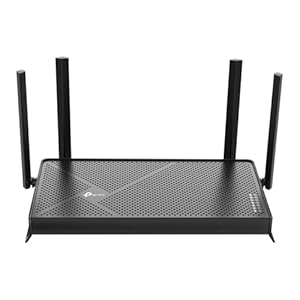
TP-Link BE3600 Wi-Fi 7 Router
★★★★½4.4(19.6K reviews)
$86.98$119.99-28%

The latest Wi-Fi 7 standard delivers 2x faster speeds than WiFi 6. MLO (Multi-Link Operation) reduces latency for gaming and video calls. 320 MHz channels for maximum throughput.

WiFi 7 (802.11be)Up to 3.6 Gbps2.5G WAN port
Check Price on Amazon

Future-proof WiFi 7 for power users

ARRIS SURFboard SB8200 Cable ModemBest Seller
ARRIS SURFboard SB8200 Cable Modem
★★★★☆4.3(19.9K reviews)
$138.35$148.22-7%

DOCSIS 3.1 cable modem with 2 Gigabit Ethernet ports. Compatible with Xfinity, Cox, Spectrum, and most major cable providers. Eliminates the $14/month rental fee.

DOCSIS 3.12x Gigabit EthernetUp to 2 Gbps
Check Price on Amazon

Stop renting — pays for itself in 10 months

As an Amazon Associate, InternetProviders.ai earns from qualifying purchases. Prices and availability are subject to change.

Ready to Get Started?

Order Starlink today and enjoy fast, reliable internet service

Starlink in Other States

Sources & Methodology

Data for Starlink coverage and plans in IL is compiled from FCC Broadband Data Collection filings, provider-published broadband labels, and U.S. Census Bureau demographic data. Population and median household income figures are from the American Community Survey. Pricing, speeds, and availability are verified against provider broadband nutrition labels and may vary by location. For a detailed explanation of our data collection and scoring process, see our methodology page.

InternetProviders.ai is an independent resource. We may earn commissions from partner links — this does not affect our editorial recommendations. See our methodology for details.