T-Mobile Home Internet in California at a Glance
T-Mobile offers 5G and Fixed Wireless home internet plans in California starting at $40/mo with no annual contracts or data caps. Service availability depends on T-Mobile's 5G/LTE network coverage at your specific address, with strongest performance in Los Angeles, San Francisco, San Diego, San Jose, and Sacramento.
T-Mobile 5G Home Internet in California
As the most populous state, California is a flagship market for T-Mobile's 5G Home Internet service. The state's diverse geography, from dense coastal cities to agricultural Central Valley towns, means coverage varies dramatically by region. California's tech-savvy population has been among the earliest adopters of fixed wireless internet. The state's high cost of living makes T-Mobile's competitive pricing particularly attractive.
T-Mobile Home Internet uses the same 5G. 4G LTE network as its mobile service, delivering broadband speeds through a compact gateway device that plugs into any standard outlet. Unlike traditional cable or fiber connections, there is no installation appointment needed and no technician visit required. Residents in California simply plug in the T-Mobile gateway, connect their devices to Wi-Fi, and start using the internet within minutes of receiving their equipment.
For California residents comparing options against Spectrum, AT&T Fiber. Sonic fiber, T-Mobile's combination of no contracts, unlimited data, and competitive monthly pricing represents a straightforward alternative. While wired connections may offer more consistent speeds, T-Mobile's 5G Home Internet eliminates the frustration of long-term commitments. Hidden fees that have defined the traditional ISP experience.
T-Mobile Home Internet Plans in California
| Plan | Price | Download | Upload | Data | Contract |
|---|---|---|---|---|---|
| T-Mobile 5G Home Internet | $50.00/mo | 245 Mbps | 23 Mbps | Unlimited | None |
| T-Mobile Rely Internet | $45.00/mo | 100 Mbps | 10 Mbps | Unlimited | None |
| T-Mobile All-In Internet | $55.00/mo | 245 Mbps | 23 Mbps | Unlimited | None |
| T-Mobile Home Internet Plus | $55.00/mo | 245 Mbps | 23 Mbps | Unlimited | None |
| T-Mobile Home Internet Lite | $40.00/mo | 33 Mbps | 6 Mbps | Unlimited | None |
| T-Mobile Away Internet | $40.00/mo | 33 Mbps | 6 Mbps | Unlimited | None |
All T-Mobile Home Internet plans in California include truly unlimited data with no throttling or overage charges. Speeds shown are typical download and upload speeds and may vary based on your location, network congestion, and signal strength at your address. Plans range from the budget-friendly Home Internet Lite at $40/mo for basic browsing to the premium All-In. Home Internet Plus tiers at $55/mo for households needing faster speeds for streaming and video calls.
Frequently Asked Questions
Does this provider offer fiber internet in your state?
this provider's fiber availability in your state depends on your specific area. Check their coverage map for the most accurate information.
How do I sign up for this provider in your state?
You can sign up for this provider service in your state through their website, by phone, or at local retail locations.
What internet speeds does this provider offer in your state?
this provider's speed offerings in your state range from basic plans to gigabit service, depending on your location and infrastructure.
What is this provider's customer service like in your state?
this provider's customer service experience can vary. We recommend reading recent customer reviews and checking their J.D. Power ratings.
What equipment does this provider provide in your state?
this provider typically provides modems and routers, though you may also be able to use your own compatible equipment.
What speeds does T-Mobile offer in California?
T-Mobile offers fixed wireless internet plans in California with speeds that typically range from 25 Mbps to 245 Mbps or more, depending on tower proximity. Local network capacity. Speed availability varies by location within California, with urban areas generally receiving faster tiers. Actual throughput depends on signal strength, network congestion, and the number of connected devices. Visit the T-Mobile website to check exact speeds offered at your address.
Does T-Mobile require a contract in California?
T-Mobile home internet plans in California generally do not require long-term contracts, allowing customers to cancel or modify their service on a month-to-month basis without early termination fees. This no-contract approach provides flexibility for California residents who want to try the service before committing long-term. Equipment fees may apply separately. Confirm contract terms during signup, as promotional pricing conditions may vary by plan and location.
How do I check T-Mobile availability at my address?
To check T-Mobile availability at your California address, visit the official T-Mobile website and use their online address lookup tool. Enter your full street address and ZIP code to see which plans, speeds, and pricing options are available at your specific location. You can also T-Mobile customer service directly for assistance. Representatives can confirm service availability, explain current promotions, and help schedule installation if service is available in your area of California.
Plan details and pricing sourced from FCC Broadband Labels as of February 2026. Actual speeds and availability may vary by location within California.
T-Mobile 5G Coverage in California
T-Mobile has extensive 5G coverage across California's major metro areas, with Ultra Capacity mid-band 5G widely available in Los Angeles, San Francisco, San Diego. The Bay Area. The Central Valley, Sacramento region, and Inland Empire have solid coverage. Mountainous regions in the Sierra Nevada and far northern California have more limited service.
T-Mobile continues to expand its 5G network across California, with ongoing tower upgrades and new site deployments. The company's mid-band 5G spectrum, acquired through the Sprint merger, has been rapidly deployed in metro areas to improve speeds and capacity. Residents can check exact availability at their address on T-Mobile's website or by calling to speak with a representative. California's Silicon Valley. Los Angeles tech ecosystem have driven T-Mobile to prioritize the state for its fastest 5G deployments, making it one of the best states for fixed wireless performance.
T-Mobile Home Internet California FAQ
Is T-Mobile Home Internet available at my address in California?
T-Mobile Home Internet availability in California depends on 5G and 4G LTE coverage at your specific address. Service is most widely available in Los Angeles, San Francisco, San Diego, San Jose, and Sacramento and surrounding suburbs. You can check availability by entering your address on T-Mobile's website or calling their sales line. Even within covered metro areas, availability can vary block by block depending on tower capacity and signal strength.
How fast is T-Mobile Home Internet in California?
T-Mobile offers typical download speeds ranging from 33 Mbps on the Home Internet Lite plan up to 245 Mbps on the 5G Home Internet, All-In. Home Internet Plus plans. Upload speeds range from 6 Mbps to 23 Mbps. Actual speeds in California depend on your distance from the nearest tower, the type of 5G spectrum available (mid-band delivers faster speeds than low-band). How many users share your local cell site.
Does T-Mobile Home Internet have data caps in California?
No, all T-Mobile Home Internet plans in California include truly unlimited data. There are no data caps, overage charges, or throttling based on usage. This applies to all six plan tiers, from the $40/mo Home Internet Lite to the $55/mo premium plans. You can stream, download, and browse as much as you want without worrying about hitting a usage limit.
Do I need a contract for T-Mobile Home Internet in California?
No, T-Mobile Home Internet requires no annual contract in California or any other state. You pay month-to-month and can cancel at any time without early termination fees. This is a significant advantage over many traditional cable and fiber providers that require 1-2 year commitments. If T-Mobile Home Internet does not meet your needs, you can simply return the equipment and stop service.
Can I use T-Mobile Home Internet for gaming in California?
T-Mobile Home Internet can support online gaming, though the experience varies. Fixed wireless connections typically have higher latency (ping times) than wired connections, usually ranging from 30-80ms. This is adequate for most casual and even competitive gaming, though professional-level competitive players may prefer a wired fiber connection. For households that mix gaming with streaming and general browsing, T-Mobile's unlimited data and no-contract flexibility make it a practical choice.
How does T-Mobile Home Internet compare to Spectrum, AT&T Fiber, and Sonic fiber in California?
T-Mobile Home Internet in California differentiates itself through contract-free service, unlimited data, and simple flat-rate pricing starting at $40/mo. Traditional providers like Spectrum, AT&T Fiber, and Sonic fiber may offer faster peak speeds, especially with fiber. Connections, but often require contracts and may impose data caps. T-Mobile's self-install process and no technician visit are additional conveniences. The best choice depends on your specific address, speed requirements, and how much you value contract flexibility.
Ready to sign up for T-Mobile?
now to check availability and get the best deal:
T-Mobile 5G Network Performance and Coverage Details
T-Mobile's home internet service leverages the same 5G and 4G LTE network that serves its mobile customers. In areas with mid-band (2.5 GHz) 5G coverage, customers typically experience download speeds of 100-245 Mbps, with some locations seeing peak speeds above 300 Mbps during off-peak hours. Upload speeds generally range from 20-50 Mbps, suitable for video conferencing, cloud backups, and streaming. Low-band 5G and LTE coverage areas see more modest speeds of 33-100 Mbps.
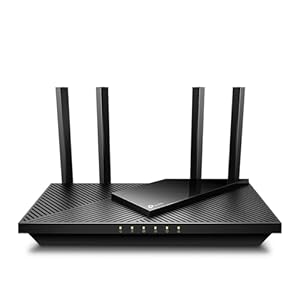
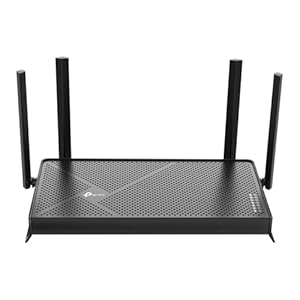
Network performance varies by time of day, distance from the nearest tower, and local congestion levels. T-Mobile continuously expands its mid-band 5G footprint, which now covers over 300 million people nationwide. The gateway device (currently the Arcadyan KVD21 or Nokia 5G21) includes a built-in WiFi 6 router, eliminating the need for separate networking equipment. Customers can monitor signal strength and optimize gateway placement using the T-Mobile Internet app.
InternetProviders.ai may earn compensation through affiliate links. This does not influence our rankings or recommendations. All plan details are verified against FCC Broadband Labels.
Service Coverage Details for T-Mobile in California
T-Mobile delivers 5G and 4G LTE fixed wireless internet access across California, leveraging its wireless network infrastructure to provide home internet without traditional wired connections. Coverage concentrates around population centers where tower density supports consistent speeds, though T-Mobile continues expanding its wireless footprint into suburban and semi-rural areas of California. The fixed wireless approach bridges the gap between wired broadband. Mobile connectivity, offering an alternative for households where cable or fiber installation is not available.
Availability in California depends on proximity to T-Mobile towers and local network capacity. Urban and suburban addresses generally receive stronger signal strength and faster speeds compared to locations farther from tower sites. T-Mobile recommends checking availability at your specific California address before signing up, as coverage can vary even within the same neighborhood. You can verify service availability by entering your address on the T-Mobile website or by calling their customer service team to confirm. Which speed tiers are offered at your location.
Ready to Order? or Click Below
T-Mobile 5G Performance Across California Regions
California's size and geographic diversity create significant variations in T-Mobile Home Internet performance across the state. Understanding regional differences helps you evaluate whether the service meets your needs at your specific location.
In the Los Angeles metropolitan area—including Los Angeles proper, Long Beach, Anaheim, Pasadena, Glendale, and the Inland Empire—T-Mobile has deployed extensive Ultra Capacity 5G (mid-band) coverage. Customers in these areas frequently experience download speeds between 150-400 Mbps, with some locations reporting speeds above 500 Mbps during off-peak hours. The dense population and correspondingly dense tower infrastructure in Southern California's urban core make this one of T-Mobile's strongest markets nationally.
The San Francisco Bay Area, including San Jose, Oakland, Fremont, and surrounding Silicon Valley communities, features strong 5G coverage with typical speeds of 100-350 Mbps. The tech-savvy population in this region has driven early adoption of T-Mobile Home Internet as an alternative to traditional ISPs, particularly among renters in apartments and condominiums where installation flexibility is valued.
San Diego, Sacramento, Fresno, and other major California cities maintain solid Extended Range and growing Ultra Capacity 5G coverage. Speeds in these markets generally range from 75-250 Mbps, providing reliable performance for streaming, remote work, and multi-device households. T-Mobile continues expanding mid-band spectrum deployment in these areas throughout 2026.
California's rural regions—including the Central Valley agricultural communities, mountain communities in the Sierra Nevada, and remote areas along the northern coast—present more variable coverage. Some rural communities receive only Extended Range 5G or LTE, with speeds between 25-100 Mbps. However, even these speeds often surpass DSL and satellite alternatives that have traditionally served these areas. Communities along major highways and in the Central Valley's larger towns generally have better coverage than remote mountain or desert locations.
California Internet Market: How T-Mobile Compares
California has one of the most competitive broadband markets in the country, with multiple providers offering high-speed options across most metropolitan areas. Understanding where T-Mobile fits helps you make an informed choice.
Spectrum (Charter Communications) provides cable internet across large portions of California, offering speeds from 300 Mbps to 1 Gbps with no data caps. Spectrum's consistent wired performance and wide availability make it a strong competitor, though monthly costs ($50-90 depending on tier) and the requirement for professional installation differentiate it from T-Mobile's approach.
AT&T Fiber serves select California neighborhoods with symmetrical speeds up to 5 Gbps, representing the premium tier of home internet service. Where available, AT&T Fiber's speed, reliability, and competitive pricing make it difficult to beat. However, fiber availability remains limited to specific areas within larger metro markets, leaving many California residents without access.
Frontier Fiber, following the company's emergence from bankruptcy and aggressive fiber build-out program, serves portions of Southern California, the Inland Empire, and Central Valley communities. Frontier's fiber plans offer competitive speeds and pricing where available, providing another wired alternative to T-Mobile's wireless service.
For California's rural communities, T-Mobile Home Internet at $50/month with no data caps competes favorably against satellite options like HughesNet ($75+/month with strict data caps) and Starlink ($120/month plus $599 equipment). Local fixed wireless ISPs serve some rural areas but often have limited capacity and higher per-megabit costs than T-Mobile.
T-Mobile Home Internet for California Renters
California's large renter population—more than 44% of households statewide—faces unique internet service challenges that T-Mobile Home Internet is well-positioned to address.
Many apartment buildings and rental properties in California have exclusive or preferred provider agreements with specific ISPs, limiting tenant choice. Some older buildings lack the wiring infrastructure for high-speed cable or fiber connections, leaving tenants with slow DSL as their only wired option. T-Mobile Home Internet bypasses all building infrastructure limitations since it connects wirelessly to the cellular network, giving renters a competitive internet option regardless of their building's wiring situation.
The portability of T-Mobile Home Internet benefits California renters who move frequently. Rather than scheduling disconnection at one address and installation at another—a process that can involve days without internet service—you simply unplug the gateway, move it to your new home, and plug it back in. Service transfers automatically to your new address without scheduling, equipment swaps, or gaps in connectivity.
For California renters in apartments, condos, or shared housing situations where multiple roommates need reliable internet, T-Mobile's flat $50/month pricing and Wi-Fi 6 gateway provide straightforward, shareable connectivity. The absence of installation drilling, cable routing through walls, or equipment mounting makes it apartment-friendly with no potential security deposit impacts from installation modifications.
California-Specific Considerations
Several factors unique to California influence the T-Mobile Home Internet experience and value proposition in the state.
California's wildfire season can affect both wired and wireless internet infrastructure. T-Mobile's network includes backup power systems and mobile cell-on-wheels units that can be rapidly deployed during natural disasters, maintaining connectivity in affected areas. While wired infrastructure may take weeks to repair after fire damage, cellular coverage can often be restored more quickly through temporary tower deployments.
California's electricity costs—among the highest in the nation—make T-Mobile's energy-efficient gateway a minor but real advantage. The 5G Gateway consumes approximately 15-25 watts, comparable to a standard light bulb, keeping power costs negligible even with 24/7 operation. In contrast, traditional cable modems, routers, and associated networking equipment can consume more total power.
The California Public Utilities Commission (CPUC) regulates telecommunications services in the state, and T-Mobile's fixed wireless offerings fall under FCC federal jurisdiction rather than CPUC state regulation. This means pricing, service terms, and coverage commitments operate under federal rather than state oversight, which can affect consumer protection mechanisms and complaint resolution processes.
T-Mobile Home Internet for California's Gig Economy and Remote Workers
California leads the nation in gig economy participation and remote work adoption, with millions of residents relying on home internet connectivity for their livelihoods. T-Mobile Home Internet addresses several common pain points for this workforce segment.
Freelancers, independent contractors, and gig workers who operate from home offices, co-working spaces, and various client locations benefit from T-Mobile's portable connectivity. The gateway device can move between a home office and a temporary work location without service interruption, providing consistent internet access wherever cellular coverage is available. For California's estimated 2+ million gig workers, this flexibility means uninterrupted productivity regardless of work location changes.
Remote workers dealing with California's frequent power shutoffs during fire season—known as Public Safety Power Shutoff (PSPS) events—find that T-Mobile's 5G Gateway continues operating during outages when paired with a battery backup or small UPS system. While wired ISPs require powered network equipment throughout the neighborhood to maintain service, T-Mobile's cellular connection only requires the gateway itself to have power, making it more resilient during short-duration outages common during PSPS events.
The absence of data caps on T-Mobile Home Internet benefits California remote workers who participate in extended video conferences, upload large design files, maintain cloud backups, and stream training content throughout the workday. Monthly data usage for active remote workers commonly exceeds 500 GB, and T-Mobile's unlimited policy ensures no throttling, overage charges, or service degradation regardless of usage volume.
Sources & Methodology
Coverage data, plan details, and pricing are compiled from FCC Broadband Data Collection filings, provider-published broadband nutrition labels, and U.S. Census Bureau demographic data including population and median household income figures from the American Community Survey. Pricing, speeds, and availability are verified against provider broadband nutrition labels and may vary by location. For a detailed explanation of our data collection and scoring process, see our methodology page.
Data Sources
- FCC Broadband Data Collection
- U.S. Census Bureau American Community Survey
- USAC Universal Service Fund
- NTIA Internet Use Survey
Last verified: March 2026. InternetProviders.ai is an independent resource. We may earn commissions from partner links — this does not affect our editorial recommendations. See our methodology for details.