T-Mobile Home Internet in Hawaii at a Glance
T-Mobile offers 5G and Fixed Wireless home internet plans in Hawaii starting at $40/mo with no annual contracts or data caps. Service availability depends on T-Mobile's 5G/LTE network coverage at your specific address, with strongest performance in Honolulu, Pearl City, Hilo, and Kailua.
T-Mobile 5G Home Internet in Hawaii
Hawaii's unique island geography creates both challenges and opportunities for T-Mobile's 5G Home Internet. The state's isolation means internet infrastructure costs are inherently higher, and traditional cable/fiber options are limited compared to the mainland. T-Mobile's wireless approach avoids some of the physical infrastructure challenges of stringing cable across mountainous volcanic terrain.
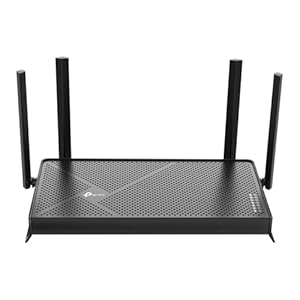
T-Mobile Home Internet uses the same 5G. 4G LTE network as its mobile service, delivering broadband speeds through a compact gateway device that plugs into any standard outlet. Unlike traditional cable or fiber connections, there is no installation appointment needed and no technician visit required. Residents in Hawaii simply plug in the T-Mobile gateway, connect their devices to Wi-Fi, and start using the internet within minutes of receiving their equipment.
For Hawaii residents comparing options against Spectrum (Hawaiian Telcom). Hawaiian Telcom fiber, T-Mobile's combination of no contracts, unlimited data, and competitive monthly pricing represents a straightforward alternative. While wired connections may offer more consistent speeds, T-Mobile's 5G Home Internet eliminates the frustration of long-term commitments. Hidden fees that have defined the traditional ISP experience.
T-Mobile Home Internet Plans in Hawaii
| Plan | Price | Download | Upload | Data | Contract |
|---|---|---|---|---|---|
| T-Mobile 5G Home Internet | $50.00/mo | 245 Mbps | 23 Mbps | Unlimited | None |
| T-Mobile Rely Internet | $45.00/mo | 100 Mbps | 10 Mbps | Unlimited | None |
| T-Mobile All-In Internet | $55.00/mo | 245 Mbps | 23 Mbps | Unlimited | None |
| T-Mobile Home Internet Plus | $55.00/mo | 245 Mbps | 23 Mbps | Unlimited | None |
| T-Mobile Home Internet Lite | $40.00/mo | 33 Mbps | 6 Mbps | Unlimited | None |
| T-Mobile Away Internet | $40.00/mo | 33 Mbps | 6 Mbps | Unlimited | None |
All T-Mobile Home Internet plans in Hawaii include truly unlimited data with no throttling or overage charges. Speeds shown are typical download and upload speeds and may vary based on your location, network congestion, and signal strength at your address. Plans range from the budget-friendly Home Internet Lite at $40/mo for basic browsing to the premium All-In. Home Internet Plus tiers at $55/mo for households needing faster speeds for streaming and video calls.
Frequently Asked Questions
Provider T Mobile Hi Service Details in
Provider T Mobile Hi's presence in includes a range of internet plans designed for different household needs. Understanding the specific options available helps residents make informed decisions about their internet service.
Plan tiers available: Provider T Mobile Hi typically offers multiple speed tiers in , ranging from basic plans suitable for light browsing to premium plans designed for heavy streaming and gaming households. Plan availability varies by address within , so checking your specific location is important.
Coverage areas: Provider T Mobile Hi's service area includes major metropolitan areas and many suburban communities. Rural areas may have limited or no coverage. Check availability at your specific address to see which Provider T Mobile Hi plans and speeds are offered at your location.
Contract terms: Provider T Mobile Hi plans in may come with or without contract commitments. No-contract options provide flexibility but may have higher monthly rates. Contract plans often include promotional pricing for 12-24 months with early termination fees if you cancel early.
Alternatives to Provider T Mobile Hi in
While Provider T Mobile Hi serves many areas of , comparing alternatives ensures you're getting the best available deal. Multiple internet providers typically operate in 's major metro areas, giving residents options to choose from.
Comparing providers: When evaluating Provider T Mobile Hi against competitors in , look beyond the advertised price. Consider the technology type (fiber vs. cable vs. DSL), actual speeds delivered in your neighborhood, contract requirements, equipment fees. Customer satisfaction ratings from other customers.
Switching providers: If you find a better option in , switching is typically straightforward. Most providers handle the transition within 1-2 weeks. Time your switch to minimize overlap charges — ideally coordinating the new installation with the cancellation of your existing service.
Negotiating with Provider T Mobile Hi: Before switching, contact Provider T Mobile Hi's retention department. Mentioning specific competitor offers in often results in improved pricing or upgraded speeds. Many customers save $10-30/month simply by expressing interest in switching to a competitor.
How do I sign up for this provider in your state?
You can sign up for this provider service in your state through their website, by phone, or at local retail locations.
What internet speeds does this provider offer in your state?
this provider's speed offerings in your state range from basic plans to gigabit service, depending on your location and infrastructure.
What is this provider's customer service like in your state?
this provider's customer service experience can vary. We recommend reading recent customer reviews and checking their J.D. Power ratings.
What equipment does this provider provide in your state?
this provider typically provides modems and routers, though you may also be able to use your own compatible equipment.
Is this provider expanding coverage in your state?
this provider regularly updates their network infrastructure. Check their website or contact them directly for expansion plans in your area.
What speeds does T-Mobile offer in Hawaii?
T-Mobile offers fixed wireless internet plans in Hawaii with speeds that typically range from 25 Mbps to 245 Mbps or more, depending on tower proximity. Local network capacity. Speed availability varies by location within Hawaii, with urban areas generally receiving faster tiers. Actual throughput depends on signal strength, network congestion, and the number of connected devices. Visit the T-Mobile website to check exact speeds offered at your address.
Does T-Mobile require a contract in Hawaii?
T-Mobile home internet plans in Hawaii generally do not require long-term contracts, allowing customers to cancel or modify their service on a month-to-month basis without early termination fees. This no-contract approach provides flexibility for Hawaii residents who want to try the service before committing long-term. Equipment fees may apply separately. Confirm contract terms during signup, as promotional pricing conditions may vary by plan and location.
How do I check T-Mobile availability at my address?
To check T-Mobile availability at your Hawaii address, visit the official T-Mobile website and use their online address lookup tool. Enter your full street address and ZIP code to see which plans, speeds, and pricing options are available at your specific location. You can also T-Mobile customer service directly for assistance. Representatives can confirm service availability, explain current promotions, and help schedule installation if service is available in your area of Hawaii.
Plan details and pricing sourced from FCC Broadband Labels as of February 2026. Actual speeds and availability may vary by location within Hawaii.
T-Mobile 5G Coverage in Hawaii
T-Mobile's 5G coverage in Hawaii is strongest on Oahu, particularly in the Honolulu metro area and along the south shore corridor. Maui has growing coverage around Kahului and Lahaina. The Big Island has coverage in Hilo and Kona, while Kauai and Molokai have more limited service.
T-Mobile continues to expand its 5G network across Hawaii, with ongoing tower upgrades and new site deployments. The company's mid-band 5G spectrum, acquired through the Sprint merger, has been rapidly deployed in metro areas to improve speeds and capacity. Residents can check exact availability at their address on T-Mobile's website or by calling to speak with a representative. Hawaii's high internet costs, often 30-50% above mainland averages, make T-Mobile's nationally uniform pricing structure an especially good value for island residents.
T-Mobile Home Internet Hawaii FAQ
Is T-Mobile Home Internet available at my address in Hawaii?
T-Mobile Home Internet availability in Hawaii depends on 5G and 4G LTE coverage at your specific address. Service is most widely available in Honolulu, Pearl City, Hilo, and Kailua and surrounding suburbs. You can check availability by entering your address on T-Mobile's website or calling their sales line. Even within covered metro areas, availability can vary block by block depending on tower capacity and signal strength.
How fast is T-Mobile Home Internet in Hawaii?
T-Mobile offers typical download speeds ranging from 33 Mbps on the Home Internet Lite plan up to 245 Mbps on the 5G Home Internet, All-In. Home Internet Plus plans. Upload speeds range from 6 Mbps to 23 Mbps. Actual speeds in Hawaii depend on your distance from the nearest tower, the type of 5G spectrum available (mid-band delivers faster speeds than low-band). How many users share your local cell site.
Does T-Mobile Home Internet have data caps in Hawaii?
No, all T-Mobile Home Internet plans in Hawaii include truly unlimited data. There are no data caps, overage charges, or throttling based on usage. This applies to all six plan tiers, from the $40/mo Home Internet Lite to the $55/mo premium plans. You can stream, download, and browse as much as you want without worrying about hitting a usage limit.
Do I need a contract for T-Mobile Home Internet in Hawaii?
No, T-Mobile Home Internet requires no annual contract in Hawaii or any other state. You pay month-to-month and can cancel at any time without early termination fees. This is a significant advantage over many traditional cable and fiber providers that require 1-2 year commitments. If T-Mobile Home Internet does not meet your needs, you can simply return the equipment and stop service.
Can I use T-Mobile Home Internet for gaming in Hawaii?
T-Mobile Home Internet can support online gaming, though the experience varies. Fixed wireless connections typically have higher latency (ping times) than wired connections, usually ranging from 30-80ms. This is adequate for most casual and even competitive gaming, though professional-level competitive players may prefer a wired fiber connection. For households that mix gaming with streaming and general browsing, T-Mobile's unlimited data and no-contract flexibility make it a practical choice.
How does T-Mobile Home Internet compare to Spectrum (Hawaiian Telcom) and Hawaiian Telcom fiber in Hawaii?
T-Mobile Home Internet in Hawaii differentiates itself through contract-free service, unlimited data, and simple flat-rate pricing starting at $40/mo. Traditional providers like Spectrum (Hawaiian Telcom) and Hawaiian Telcom fiber may offer faster peak speeds, especially with fiber connections. Often require contracts and may impose data caps. T-Mobile's self-install process and no technician visit are additional conveniences. The best choice depends on your specific address, speed requirements, and how much you value contract flexibility.
Ready to sign up for T-Mobile?
now to check availability and get the best deal:
T-Mobile 5G Network Performance and Coverage Details
T-Mobile's home internet service leverages the same 5G and 4G LTE network that serves its mobile customers. In areas with mid-band (2.5 GHz) 5G coverage, customers typically experience download speeds of 100-245 Mbps, with some locations seeing peak speeds above 300 Mbps during off-peak hours. Upload speeds generally range from 20-50 Mbps, suitable for video conferencing, cloud backups, and streaming. Low-band 5G and LTE coverage areas see more modest speeds of 33-100 Mbps.
Network performance varies by time of day, distance from the nearest tower, and local congestion levels. T-Mobile continuously expands its mid-band 5G footprint, which now covers over 300 million people nationwide. The gateway device (currently the Arcadyan KVD21 or Nokia 5G21) includes a built-in WiFi 6 router, eliminating the need for separate networking equipment. Customers can monitor signal strength and optimize gateway placement using the T-Mobile Internet app.
InternetProviders.ai may earn compensation through affiliate links. This does not influence our rankings or recommendations. All plan details are verified against FCC Broadband Labels.
Service Coverage Details for T-Mobile in Hawaii
T-Mobile delivers 5G and 4G LTE fixed wireless internet access across Hawaii, leveraging its wireless network infrastructure to provide home internet without traditional wired connections. Coverage concentrates around population centers where tower density supports consistent speeds, though T-Mobile continues expanding its wireless footprint into suburban and semi-rural areas of Hawaii. The fixed wireless approach bridges the gap between wired broadband. Mobile connectivity, offering an alternative for households where cable or fiber installation is not available.
Availability in Hawaii depends on proximity to T-Mobile towers and local network capacity. Urban and suburban addresses generally receive stronger signal strength and faster speeds compared to locations farther from tower sites. T-Mobile recommends checking availability at your specific Hawaii address before signing up, as coverage can vary even within the same neighborhood. You can verify service availability by entering your address on the T-Mobile website or by calling their customer service team to confirm. Which speed tiers are offered at your location.
T-Mobile's 5G Network in Hawaii: Coverage and Performance Details
T-Mobile's network infrastructure in Hawaii presents unique characteristics shaped by the state's island geography and population distribution. The company operates a combination of 5G (both sub-6 GHz and limited mmWave) and LTE networks across the Hawaiian islands. 5G coverage is strongest on Oahu, where the majority of Hawaii's population lives, with robust coverage in Honolulu, Pearl City, Kailua, Kaneohe, and Kapolei. On neighbor islands, coverage is concentrated in population centers: Hilo and Kona on Hawaii Island, Kahului and Wailuku on Maui, and Lihue on Kauai.
Performance data from crowdsourced speed tests shows T-Mobile Home Internet in Hawaii delivering median download speeds of 80-180 Mbps, with peak speeds exceeding 300 Mbps in areas with strong 5G mid-band (2.5 GHz) coverage. Upload speeds typically range from 15-40 Mbps. Latency averages 25-45 milliseconds, which is suitable for video conferencing, online gaming, and other real-time applications. These speeds are competitive with or superior to DSL service available in many Hawaii neighborhoods, though generally below the performance of Hawaiian Telcom's fiber network where available.
Hawaii's topography creates coverage challenges that mainland customers do not face. Mountain ridges, volcanic terrain, and dense tropical vegetation can block or weaken 5G signals. If your home is in a valley or behind a ridge from the nearest tower, you may receive LTE-only coverage with lower speeds. Before committing to T-Mobile Home Internet, use the T-Mobile coverage map and, ideally, the 15-day trial period to verify adequate signal strength at your specific address. Gateway placement near a window facing the nearest tower can significantly improve performance.
Hawaii Internet Market: How T-Mobile Compares
Hawaii's internet market has historically offered fewer choices and higher prices than the mainland US, driven by the cost of undersea fiber cables connecting the islands to the continental internet backbone and the expense of deploying infrastructure across mountainous island terrain. T-Mobile's entry into the Hawaii home internet market has introduced meaningful competition and price pressure.
The primary broadband providers in Hawaii include:
- Hawaiian Telcom (now Lumen/Brightspeed): The legacy telephone company offers DSL (up to 50 Mbps) and fiber (up to 1 Gbps) service. Fiber availability is limited to portions of Oahu, primarily in Honolulu and surrounding suburbs. Where fiber is available, Hawaiian Telcom provides the fastest and most reliable service in the state. DSL service is widely available but offers modest speeds, especially for customers far from central offices.
- Spectrum: The largest cable provider in Hawaii, serving Oahu, Maui, Hawaii Island, and Kauai. Spectrum offers 300 Mbps to 1 Gbps plans starting at $49.99/month with no data caps and no contracts. Spectrum's cable network provides reliable service in urban and suburban areas and is the default choice for many Hawaii residents.
- Starlink: Available across all Hawaiian islands, Starlink provides 50-200 Mbps satellite internet. Given Hawaii's geographic isolation, Starlink's LEO satellite network provides a viable alternative for rural addresses where cable and fiber do not reach. The $120/month price and $599 equipment cost are significant, but for remote Hawaii locations with no other broadband option, Starlink fills a critical gap.
T-Mobile Home Internet at $50/month undercuts Spectrum's entry price and dramatically undercuts Hawaiian Telcom's DSL pricing while often delivering faster speeds than DSL. For Hawaii residents currently paying $50-70/month for 15-50 Mbps DSL service, switching to T-Mobile can deliver 3-10x faster speeds at the same or lower cost. This value proposition has made T-Mobile one of the fastest-growing internet providers in the state.
Practical Considerations for T-Mobile Home Internet in Hawaii
Gateway Placement and Signal Optimization
T-Mobile's 5G Home Internet gateway is a self-install device that connects to the nearest T-Mobile tower via 5G or LTE signal. In Hawaii's tropical climate, window placement is particularly effective because many homes have large windows and open floor plans that facilitate signal reception. Place the gateway on a windowsill or elevated surface facing the direction of the nearest T-Mobile tower. The T-Mobile Internet app includes a signal strength indicator that helps you find the optimal position.
Hawaii homes built with concrete block, stucco over wire mesh, or volcanic rock walls present higher signal attenuation than typical mainland construction materials. If your home uses these materials and you experience weak indoor signal, consider placing the gateway in a window-mounted position or on a lanai (covered porch) where it has a more direct path to the tower. Some Hawaii customers report significant speed improvements (50-100% gains) simply by moving the gateway from an interior room to a window-facing position.
Weather and Environmental Factors
Hawaii's weather can affect T-Mobile Home Internet performance in ways unique to the islands. Heavy tropical rain showers, which are common on windward sides of the islands, can temporarily reduce 5G signal strength and lower speeds. Tradewind-driven rain typically passes quickly, and performance returns to normal within minutes. Kona storms and hurricane-season weather events may cause more prolonged disruptions, though T-Mobile's network in Hawaii has demonstrated strong resilience during recent weather events.
Salt air corrosion is an environmental factor that mainland customers do not face. While the T-Mobile gateway is designed for indoor use and is not directly exposed to salt spray, homes very close to the ocean may experience corrosion on window screens and exterior metal surfaces that can slightly attenuate wireless signals over time. Keeping the gateway away from salt-exposed windows and ensuring window screens are clean can help maintain optimal signal reception.
Data Usage and Deprioritization
T-Mobile Home Internet in Hawaii includes unlimited data with no hard data cap. However, T-Mobile's network management policy may temporarily reduce speeds for home internet customers during periods of network congestion if a tower is at capacity. In Hawaii, where tower density is lower than many mainland markets, this deprioritization can be more noticeable during peak evening hours in densely populated areas like Waikiki, Ala Moana, and downtown Honolulu.
If you consistently experience slowdowns during peak hours (typically 6 PM to 10 PM), this is likely a deprioritization issue rather than a fault with your equipment. Solutions include shifting bandwidth-heavy activities (large downloads, system updates) to off-peak hours, or using the gateway's Quality of Service settings to prioritize time-sensitive traffic like video calls over background downloads.
T-Mobile Home Internet for Hawaii Vacation Rentals and Second Homes
T-Mobile Home Internet's no-contract, month-to-month structure makes it an attractive option for Hawaii vacation rental operators and second-home owners. Unlike Spectrum or Hawaiian Telcom, which may require annual commitments or charge installation and disconnection fees for seasonal use, T-Mobile allows you to activate and deactivate service as needed. The self-install gateway means no technician visit is required, and you can set up service in minutes upon arriving at your property.
For vacation rental operators (VRBO, Airbnb), T-Mobile Home Internet provides reliable Wi-Fi for guests at a predictable $50/month cost. The gateway's built-in Wi-Fi supports multiple simultaneous users, adequate for a rental property with 4-8 guests streaming, browsing, and using social media. For larger properties expecting 10+ simultaneous users, connect the T-Mobile gateway to a dedicated Wi-Fi access point or mesh system for better coverage and capacity management.
The portability of T-Mobile's gateway is another advantage for Hawaii residents with properties on multiple islands. The same gateway can be used at any Hawaii address within T-Mobile's coverage area, allowing you to move it between homes as needed. Note that T-Mobile's terms of service specify that the gateway should be used at the registered service address, but address changes can be made through the app or customer service.
Sources & Methodology
Coverage data, plan details, and pricing are compiled from FCC Broadband Data Collection filings, provider-published broadband nutrition labels, and U.S. Census Bureau demographic data including population and median household income figures from the American Community Survey. Pricing, speeds, and availability are verified against provider broadband nutrition labels and may vary by location. For a detailed explanation of our data collection and scoring process, see our methodology page.
Data Sources
- FCC Broadband Data Collection
- U.S. Census Bureau American Community Survey
- USAC Universal Service Fund
- NTIA Internet Use Survey
Last verified: March 2026. InternetProviders.ai is an independent resource. We may earn commissions from partner links — this does not affect our editorial recommendations. See our methodology for details.