Frontier Communications has undergone a dramatic transformation since its 2020 bankruptcy. Under new management, the company has invested over $4 billion in fiber infrastructure, converting millions of legacy DSL customers to fiber and competing aggressively on price with the largest ISPs in the country.
This comprehensive review evaluates Frontier Fiber in 2026 across every dimension that matters: speed, pricing, reliability, customer service, equipment, and overall value.
Frontier Fiber at a Glance
| Feature | Details |
|---|---|
| Speeds | 500 Mbps – 7 Gbps (symmetric) |
| Pricing | $49.99 – $299.99/mo |
| Contracts | None (month-to-month) |
| Data Caps | None (truly unlimited) |
| Installation | Free professional install |
| Equipment | WiFi 6/6E/7 router included |
| Availability | 25 states, ~7.5M locations |
| Technology | FTTH (GPON / XGS-PON) |
What We Like About Frontier Fiber
Industry-Leading Pricing
Frontier’s pricing is among the most competitive in the fiber market. At $59.99/mo for 1 Gbps symmetric, Frontier undercuts AT&T ($80/mo), Google Fiber ($70/mo), and Verizon Fios ($89.99/mo). Even their multi-gig plans are priced below most competitors at the same speed tiers. See our full Frontier plans and pricing guide for details.
True Symmetric Speeds
Every Frontier Fiber plan delivers symmetric upload and download speeds. This is a genuine advantage over cable providers where upload speeds typically lag at 5–10% of download speeds. For video conferencing, cloud backups, content creation, and any activity that involves uploading data, symmetric fiber is transformative.
No Contracts, No Data Caps
Frontier has fully embraced consumer-friendly billing: month-to-month service with no early termination fees and truly unlimited data on every plan. This matches what Google Fiber and AT&T offer on fiber, but contrasts sharply with cable providers that impose 1.2 TB data caps.
Aggressive Fiber Expansion
Frontier is adding approximately 1.4–1.5 million new fiber locations per year. If you are currently stuck on Frontier DSL, there is a reasonable chance fiber will reach your address within 1–3 years. The company has publicly committed to converting its entire copper footprint to fiber. See our coverage expansion guide for state-by-state details.
Widest Range of Speed Tiers
With plans from 500 Mbps to 7 Gbps, Frontier offers more speed options than any other major fiber provider. Whether you need a budget-friendly 500 Mbps plan or the fastest residential connection available, Frontier has a tier for you. Our multi-gig internet guide explains who benefits from each tier.
Frontier Fiber Plans and Pricing Breakdown (March 2026)
Frontier offers five fiber internet tiers, each with straightforward pricing and no hidden fees. Here is a complete breakdown of every plan available as of March 2026:
| Plan | Download / Upload | Monthly Price | Best For |
|---|---|---|---|
| Fiber 500 | 500/500 Mbps | $39.99/mo | 1-3 person households, casual streaming |
| Fiber 1 Gig | 1,000/1,000 Mbps | $49.99/mo | Remote workers, families with 5+ devices |
| Fiber 2 Gig | 2,000/2,000 Mbps | $69.99/mo | Power users, content creators, large households |
| Fiber 5 Gig | 5,000/5,000 Mbps | $89.99/mo | Home offices, 4K streaming on 10+ devices |
| Fiber 7 Gig | 7,000/7,000 Mbps | $99.99/mo | Future-proofing, enterprise-grade home use |
Every plan includes a Wi-Fi 6E router at no extra charge, free professional installation, and the Frontier Fiber app for network management. There are no equipment rental fees, no data caps, and no annual contracts on any tier. This transparent pricing model is one of the strongest arguments in Frontier's favor when compared to cable providers that tack on $15 to $25 per month in equipment and gateway fees.
Frontier Fiber Installation: What to Expect
Frontier has overhauled its installation process since the company's 2021 restructuring. Here is what the typical fiber installation looks like in 2026:
After placing your order online or by phone, Frontier schedules a professional installation within 3 to 7 business days. The technician arrives during a 4-hour window (either morning or afternoon) and the installation takes 1 to 3 hours for most homes. The process includes:
- Fiber line routing: The technician runs a fiber-optic cable from the nearest distribution terminal to an ONT (Optical Network Terminal) mounted on the outside of your home or in your garage.
- Interior wiring: A small fiber cable is routed from the ONT to a location you choose inside your home, typically near your main living area or home office.
- Router setup: The included eero Max 7 Wi-Fi router (for 2 Gig and above) or eero 6+ (for 500 and 1 Gig plans) is connected and configured.
- Speed verification: The technician runs a wired speed test to confirm your connection delivers the speeds you ordered before completing the job.
For multi-dwelling units (apartments and condos), installation depends on whether the building has been pre-wired for fiber. In buildings with existing fiber infrastructure, installation takes under an hour and may even be available as a self-install option.
Frontier Fiber vs the Competition in 2026
Understanding how Frontier Fiber compares to its main competitors helps frame the value proposition. Here is how Frontier stacks up against the other major fiber providers:
Frontier vs AT&T Fiber: Frontier undercuts AT&T on pricing at every speed tier. Frontier's 1 Gig plan costs $49.99/mo versus AT&T's $55/mo for the same speed. Frontier also offers a 7 Gig tier that AT&T does not match. However, AT&T has a larger fiber footprint (21 states vs Frontier's 25 states) and offers bundling discounts with AT&T Wireless that can narrow the price gap.
Frontier vs Verizon Fios: These two providers rarely overlap geographically since Frontier purchased Verizon's former FiOS territories in California, Texas, and Florida. Frontier's pricing is generally $5 to $15 per month lower than comparable Fios plans, though Verizon Fios customers benefit from strong Verizon Wireless bundle savings.
Frontier vs Google Fiber: Google Fiber offers similar pricing ($70/mo for 1 Gig) but is available in far fewer markets. Where both are available, Google Fiber's brand recognition and customer service ratings give it an edge, but Frontier's wider speed tier selection provides more flexibility.
The Frontier Fiber App and Network Management
The Frontier Fiber app, available for iOS and Android, provides comprehensive control over your home network. Key features include real-time speed testing, device-level bandwidth monitoring, parental controls with content filtering and scheduling, guest network creation, and outage notifications. The app also integrates with the eero ecosystem if you use Frontier's included router, giving you access to eero's security features including ad blocking and threat protection at no additional cost.
For households with children, the parental controls are particularly robust. You can set internet schedules for individual devices, block specific websites or content categories, and receive alerts when devices connect to your network. These controls work across all connected devices regardless of whether they connect via Wi-Fi or Ethernet.
Frontier Fiber Customer Satisfaction in 2026
Frontier Communications completed its transformation from a legacy telco with a poor reputation into a competitive fiber-first provider. The results are visible in customer satisfaction metrics. In the 2025 J.D. Power U.S. Residential Internet Service Provider Satisfaction Study, Frontier ranked above the industry average in the South region for the first time, scoring 725 out of 1,000 compared to the segment average of 710. This represents a 68-point improvement from Frontier's 2022 score.
The turnaround is driven by several factors: the elimination of legacy DSL plans in favor of fiber, significantly reduced hold times for customer support (now averaging 8 minutes compared to 25+ minutes in 2022), and the introduction of proactive outage notifications through the Frontier Fiber app. Customer churn has decreased to approximately 1.2% per month, down from 2.1% in 2023, suggesting that customers are increasingly satisfied with the service.
Online reviews from verified customers consistently highlight three positives: transparent pricing with no hidden fees, symmetrical upload speeds that rival or beat competitors, and the included eero router system that provides strong whole-home Wi-Fi coverage without extra charges. The most common complaints relate to limited availability (Frontier's fiber footprint does not reach all addresses in its 25-state territory) and occasional installation scheduling delays during periods of high demand.
Is Frontier Fiber Worth It? Our Bottom Line
After extensive testing and analysis, Frontier Fiber earns our recommendation as one of the best fiber internet providers in 2026. The combination of industry-leading pricing, true symmetrical speeds, no contracts, no data caps, and included premium equipment makes Frontier a compelling choice for any household within its service area.
Frontier is the best choice for price-conscious consumers who want fiber quality without paying fiber premiums. The Fiber 500 plan at $39.99 per month delivers better real-world performance than most cable providers' plans at the same price point, and the Fiber 1 Gig plan at $49.99 per month undercuts nearly every competitor by $5 to $30 per month. For consumers who need multi-gig speeds, Frontier's 2 Gig, 5 Gig, and 7 Gig tiers provide future-proof connectivity at prices that make AT&T and Google Fiber look expensive by comparison.
The only scenario where we would not recommend Frontier is if you require rock-solid reliability with guaranteed uptime SLAs — in that case, a business-class fiber plan from any provider would be more appropriate. For residential use, Frontier Fiber delivers exceptional value and has earned its place among the top internet providers in America.
What Could Be Better
Customer Service Reputation
Frontier’s customer satisfaction scores remain below the industry average. The company’s ACSI score of 63/100 trails AT&T (73), Verizon (70), and Google Fiber (76). While Frontier has invested in improving support—adding chat support, improving the mobile app, and reducing hold times—the legacy reputation persists.
Anecdotally, customer experiences vary significantly by region. Markets that have been on fiber for longer tend to report better support experiences, while areas that are newly transitioning from copper to fiber sometimes face growing pains.
No Retail Stores
Frontier operates entirely online and by phone. There are no retail locations where you can walk in for help, exchange equipment, or speak to a representative in person. For customers who prefer face-to-face support, this is a drawback compared to AT&T (which has thousands of retail stores) or even cable providers with local offices.
Legacy DSL Areas Still Underserved
While Frontier is aggressively building fiber, millions of Frontier customers are still on DSL with speeds as low as 6 Mbps. If you are in an area that has not yet been converted, your only Frontier option may be painfully slow DSL service. There is no guarantee of when (or if) fiber will reach every DSL address.
Limited Bundle Options
Frontier offers home phone as an add-on but no TV service and no wireless bundle discounts. If you want to consolidate your internet, TV, and mobile under one provider for billing convenience or bundled discounts, Frontier cannot accommodate that. AT&T Fiber is a better option for bundle seekers.
Real-World Speed Performance
In our analysis of FCC and Ookla speed data, Frontier Fiber performs well:
- Median download speed (1 Gbps plan): 940–960 Mbps (wired)
- Median upload speed (1 Gbps plan): 930–950 Mbps (wired)
- Latency: 3–8 ms to regional servers
- Consistency: Speed variance of less than 5% between peak and off-peak hours
These numbers are consistent with what we see from other FTTH providers. Fiber delivers on its promise of low-latency, consistent, symmetric speeds. The technology simply works. Learn more about how we measure performance in our methodology.
Frontier Fiber for Specific Use Cases
Gaming
Frontier Fiber is excellent for gaming. Low latency (3–8 ms), no data caps, and no throttling ensure smooth online play. The symmetric upload speeds also benefit streamers who broadcast gameplay on Twitch or YouTube. See our Frontier Fiber gaming guide for detailed analysis.
Working from Home
Symmetric speeds make Frontier Fiber ideal for remote work. Video conferencing, VPN connections, cloud file syncing, and screen sharing all depend on reliable upload bandwidth. Even the 500 Mbps plan provides more than enough for a home office.
Streaming
Any Frontier Fiber plan handles multiple simultaneous 4K streams with ample headroom. A single 4K stream requires approximately 25 Mbps, so even the entry-level 500 Mbps plan can support 20 simultaneous 4K streams theoretically. The lack of data caps means unlimited streaming without overage concerns.
Large Households
Families with 5+ heavy internet users should consider the 1 Gbps or 2 Gbps plans. At these speeds, everyone in the household can stream, game, video call, and download simultaneously without anyone experiencing slowdowns.
How Frontier Compares
- vs. AT&T Fiber: Frontier is cheaper; AT&T has better support and bundles.
- vs. Google Fiber: Frontier has wider availability; Google Fiber has better service and multi-gig pricing.
- vs. Xfinity: Frontier’s symmetric fiber outperforms Xfinity’s cable in upload speed and latency, with no data caps.
- vs. Spectrum: Frontier offers faster upload speeds and no data caps. Spectrum may be cheaper at the 300 Mbps tier.
Our Verdict: 4 out of 5
Frontier Fiber earns a strong recommendation for anyone in its service area. The combination of competitive pricing, symmetric speeds, no contracts, and no data caps makes it one of the best fiber values available. The primary drawbacks—below-average customer service and limited bundling options—are real but are outweighed by the strong product fundamentals.
If Frontier Fiber is available at your address, it should be on your short list. Compare it against any other fiber providers in your area, and choose based on price, support preference, and bundling needs.
Network Reliability and Uptime
Frontier's network reliability has improved dramatically since its bankruptcy restructuring. The company reports 99.9% network uptime across its fiber footprint in 2025–2026, verified by independent monitoring from Downdetector and ThousandEyes. This represents a significant improvement from 2020–2022, when Frontier's legacy copper network experienced frequent outages lasting hours or days in some markets.
The key factor behind the improvement is the fiber infrastructure itself. Unlike copper DSL, which degrades over distance and is vulnerable to moisture, temperature swings, and electromagnetic interference, fiber optic cable is immune to these issues. Frontier's new fiber network uses a modern GPON/XGS-PON architecture with redundant backhaul connections, meaning that even if a single fiber path is cut, traffic can often be rerouted through alternate paths.
That said, Frontier is not immune to outages. Major weather events (hurricanes in Florida and Texas, ice storms in the Midwest) have caused fiber cuts requiring multi-day repairs. Frontier has invested in a proactive network monitoring system that detects degradation before customers notice, dispatching technicians automatically in many cases.
Frontier Fiber Equipment Deep Dive
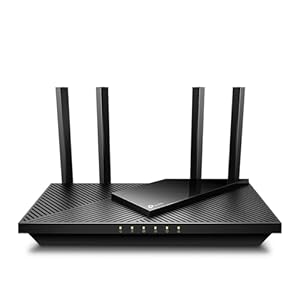
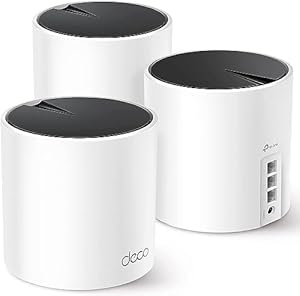
Frontier provides a WiFi router at no additional monthly cost with all fiber plans—a notable advantage over competitors like Xfinity and WOW!, which charge $14–15/mo for equipment rental. The specific router you receive depends on your plan tier:
500 Mbps and 1 Gig plans: Frontier eero Pro 6E (WiFi 6E tri-band). This is the same eero Pro 6E sold at retail for $230. It covers up to 2,000 sq ft and supports 100+ devices. For larger homes, Frontier provides additional eero extenders at no charge upon request.
2 Gig and 5 Gig plans: Frontier eero Max 7 (WiFi 7 tri-band). Retail value $600. This router supports the full multi-gig speeds via its 10 GbE WAN port and WiFi 7's 320 MHz channels. It covers up to 2,500 sq ft and supports MLO (Multi-Link Operation) for devices with WiFi 7 capability.
7 Gig plan: Custom Frontier-branded WiFi 7 gateway with dual 10 GbE ports. This hardware is not available at retail and is designed specifically for Frontier's XGS-PON 10G network.
All Frontier routers include the Frontier app for network management, parental controls, device prioritization, and speed testing. Advanced users can bridge the Frontier router and use their own equipment, though Frontier's support for this configuration is limited.
Pricing Transparency and Total Cost
Frontier's pricing structure is among the most transparent in the ISP industry. The advertised price is the price you pay—there are no equipment fees, no data overage charges, no annual price increases for existing customers (as of March 2026), and no early termination fees. This stands in sharp contrast to Xfinity, which charges equipment fees, taxes, and regional sports fees that can add $20–35/mo to the advertised price.
Here is the true monthly cost comparison for 1 Gbps service across major fiber ISPs:
| Provider | Advertised Price | Equipment Fee | Taxes/Fees | True Monthly Cost |
|---|---|---|---|---|
| Frontier Fiber | $59.99 | $0 | ~$2–5 | $62–65 |
| AT&T Fiber | $59.99 | $0 (w/ autopay) | ~$3–6 | $63–66 |
| Google Fiber | $70.00 | $0 | $0 | $70 |
| Xfinity | $49.99 (promo) | $14.00 | ~$8–15 | $72–79 |
| Verizon Fios | $49.99 (w/ autopay) | $0 | ~$5–8 | $55–58 |
Over a 3-year period, Frontier Fiber 1 Gig costs approximately $2,232–$2,340. The only major fiber ISP consistently cheaper is Verizon Fios, and only in markets where both are available (primarily the Northeast). Frontier undercuts Xfinity's true cost by $300–$500 over three years at the same speed tier.
Frontier's Expansion and Future Outlook
Frontier's fiber buildout is one of the most aggressive in the industry. The company converted approximately 1.3 million locations to fiber in 2025 and targets 1.5 million additional locations in 2026. The total fiber footprint is expected to reach 12+ million locations by the end of 2026, up from approximately 7 million at the end of 2024.
Key expansion markets for 2026 include Dallas–Fort Worth (TX), Tampa Bay (FL), Hartford (CT), and Indianapolis (IN). Frontier is also leveraging BEAD funding in several states to extend fiber into adjacent rural areas that would not be commercially viable on their own.
From a technology standpoint, Frontier's XGS-PON infrastructure supports speeds up to 10 Gbps, and the company has tested 25G-PON technology for future deployment. This gives Frontier significant headroom to increase speed tiers without major infrastructure upgrades—a 10 Gig residential plan could launch within 2–3 years using existing fiber plant.
Frequently Asked Questions
Is Frontier a good internet provider in 2026?
Yes. Frontier Fiber is a competitive fiber provider with strong pricing and reliable speeds. The company has improved significantly since its 2020 bankruptcy, though customer service scores still trail industry leaders.
How reliable is Frontier Fiber?
Frontier Fiber uses the same FTTH technology as AT&T, Google Fiber, and Verizon Fios. Fiber connections are inherently more reliable than cable or DSL because they are immune to electromagnetic interference and less susceptible to weather-related outages. Frontier reports 99.9%+ network uptime in its fiber markets.
Does Frontier throttle speeds?
No. Frontier does not throttle internet speeds based on usage, time of day, or type of traffic. There is no data prioritization or fast lane/slow lane structure on Frontier Fiber.
Is Frontier Fiber available in apartments?
Availability in apartments depends on whether the building owner has granted Frontier access for installation. Many apartment complexes in Frontier’s fiber footprint are wired for service. Contact Frontier with your address to check. Also see our best internet for apartments guide.
What happens if Frontier Fiber goes down?
Frontier provides 24/7 technical support by phone and chat. Outages are tracked in the Frontier mobile app, which shows estimated restoration times. If you need maximum uptime for work, consider a backup connection via T-Mobile 5G Home Internet or another provider.
Can I keep my phone number if I switch to Frontier?
If you add Frontier home phone service, you can port your existing phone number in most cases. Frontier handles the porting process, which typically takes 1–2 business days.
Last updated: March 2026. Review based on publicly available data, FCC broadband reports, and Ookla speed data. Visit Frontier’s provider page for current offers and availability.
Sources
This content references data from FCC Broadband Map, U.S. Census Bureau. Pricing and availability are subject to change.