![What Internet Speed Do You Actually Need? Guide [2026]](/_next/image/?url=%2Fimages%2Fcontent%2Fblog%2Finternet-speed-guide.webp&w=1920&q=75&dpl=dpl_AGFYAWVuCu62TXjHmonxrN4KpbBw)
Quick Answer: Most households need 100-300 Mbps in 2026, which comfortably handles 4K streaming, video calls, gaming, and work-from-home for 2-4 people simultaneously. Solo users or light-use couples can get by with 50-100 Mbps, while heavy-use households of 5+ should consider 300-500 Mbps or higher.
Why Getting the Right Speed Matters
Americans spend an average of $75 per month on home internet, but a significant number are either paying for far more speed than they need or struggling with a plan that's too slow for their household. Getting the right speed means you avoid buffering, dropped video calls, and laggy gaming without throwing money at bandwidth you'll never use.
Internet speed is measured in megabits per second (Mbps). Your "download speed" determines how quickly content loads — web pages, streaming video, file downloads. Your "upload speed" determines how quickly you can send data — video call quality, uploading files, posting to social media. Most plans emphasize download speed because that's what most activities consume, but upload speed is increasingly important in 2026's remote-work world.
This guide breaks down exactly how much speed you need based on what you actually do online, how many people are in your household, and how to avoid overpaying. When you're ready to compare plans, use our availability checker to see what's offered at your address.
Speed Requirements by Activity
The first step to determining your ideal speed is understanding how much bandwidth each online activity actually consumes. Here's a detailed breakdown based on current technology standards:
Email and Basic Web Browsing: 5-10 Mbps
Checking email, reading news articles, browsing simple websites, and online shopping require minimal bandwidth. Even a 5 Mbps connection handles these activities without noticeable delay. Text-heavy websites load in under a second, and email attachments up to a few megabytes download quickly. If basic browsing and email are genuinely all you do online, the most affordable plan available is almost certainly sufficient.
Social Media: 10-25 Mbps
Modern social media platforms are bandwidth-hungry. Scrolling through Instagram, TikTok, Facebook, or X involves constantly loading high-resolution images and auto-playing videos. A single active social media user comfortably uses 10-15 Mbps during active browsing. If you're uploading photos and short videos to these platforms, you'll want at least 5 Mbps upload speed to avoid frustrating wait times.
HD Streaming (1080p): 10-25 Mbps Per Stream
Streaming services like Netflix, Hulu, Disney+, and YouTube recommend 5-8 Mbps per stream for reliable HD (1080p) playback. However, we recommend budgeting 10-25 Mbps per HD stream to account for simultaneous background activities, buffering prevention, and the overhead that streaming platforms use for adaptive bitrate switching. If two people are streaming HD simultaneously, plan for 20-50 Mbps devoted to streaming alone.
4K/UHD Streaming: 25-50 Mbps Per Stream
4K streaming has become the default for most smart TVs and premium streaming subscriptions. Netflix recommends 15 Mbps for 4K, Amazon Prime Video suggests 15 Mbps, and Apple TV+ needs 20 Mbps. In practice, we recommend 25-50 Mbps per 4K stream to ensure smooth playback without quality drops. A household with two TVs streaming 4K simultaneously needs 50-100 Mbps just for streaming. With an increasing number of content libraries now defaulting to 4K, this is the standard most households should plan around.
Video Conferencing (Zoom, Teams, Google Meet): 10-25 Mbps
Video calls are unique because they require both download and upload bandwidth simultaneously. A single Zoom call in HD quality uses approximately 3-4 Mbps download and 3-4 Mbps upload. Group calls with multiple video feeds can peak at 6-8 Mbps in each direction. We recommend 10-25 Mbps download AND upload for smooth video conferencing, especially if other household members are using the internet simultaneously.
Upload speed is critical here. Many cable internet plans offer fast downloads but upload speeds of only 5-10 Mbps. If you're on video calls for work while your partner is also on a call, that 5 Mbps upload pipe gets congested fast. This is one area where fiber internet's symmetrical speeds provide a tangible advantage — see our fiber internet guide for details.
Online Gaming: 25-50 Mbps (But Latency Matters More)
Online gaming actually uses surprisingly little bandwidth — most multiplayer games consume only 1-5 Mbps. The reason we recommend 25-50 Mbps for gamers isn't the game itself but everything else happening on the network simultaneously. If someone starts streaming while you're gaming, a thin internet connection means your game latency spikes.
For gaming, latency (measured in milliseconds) matters far more than raw speed. Under 30 ms is excellent, 30-60 ms is good, 60-100 ms is playable, and over 100 ms creates noticeable lag. Fiber internet offers the lowest latency (1-10 ms), followed by cable (10-30 ms), 5G home internet (20-50 ms), and satellite (25-60+ ms for Starlink, 600+ ms for traditional satellite). Read our Starlink comparison for more on satellite gaming performance.
Game downloads, however, are a different story. Modern AAA games frequently exceed 100 GB. On a 50 Mbps connection, a 100 GB download takes approximately 4.5 hours. On a 1 Gbps fiber connection, it takes about 13 minutes. If you buy games digitally and want to play on release day, faster download speeds save significant waiting time.
Large File Downloads and Cloud Storage: 100+ Mbps
If you regularly download or upload large files — video editing projects, software development builds, photo libraries, music production files, system backups to cloud storage — faster speeds translate directly into time savings. A 10 GB file takes 13 minutes on a 100 Mbps connection, 80 seconds on a 1 Gbps connection, and nearly 3 hours on a 10 Mbps connection.
Working From Home: 50-100 Mbps
Remote work combines several bandwidth-intensive activities: video conferencing, VPN connections, cloud application access, file transfers, and often screen-sharing. We recommend a minimum of 50 Mbps for a single remote worker, and 100 Mbps if two people in the household work from home. Importantly, upload speed should be at least 10-20 Mbps — look for plans that specifically list upload speeds, not just download. Many providers bury upload speed information, so you may need to ask directly.
Smart Home Devices: 5-10 Mbps (Cumulative)
Smart home devices individually use very little bandwidth — a security camera streams at 2-4 Mbps, a smart speaker uses under 1 Mbps, and smart lights/thermostats use negligible bandwidth. However, these devices add up. A household with 4 security cameras, 3 smart speakers, a smart doorbell, and various other connected devices could be consuming 15-20 Mbps in aggregate, even when you're not actively using anything. Factor these background devices into your total bandwidth calculation.
The Household Multiplier: How Many People Share Your Connection?
The most common mistake people make when choosing an internet plan is considering only their own usage without accounting for everyone else in the household using the connection simultaneously. Here's a practical framework for calculating your household's total bandwidth needs:
1-Person Household
A solo user rarely needs more than 50-100 Mbps. Even if you're streaming 4K, on a video call, and have smart home devices running, you'll peak at roughly 50-70 Mbps. A 100 Mbps plan provides comfortable headroom. Budget: $30-50/month from most providers.
2-Person Household
Two people streaming, video calling, or gaming simultaneously pushes typical usage to 75-150 Mbps during peak moments. We recommend 100-200 Mbps for a two-person household. Budget: $40-60/month for cable or fiber plans in this range.
3-4 Person Household (Typical Family)
This is where bandwidth demands escalate quickly. Two kids streaming while one parent works from home and another browses social media can easily consume 150-250 Mbps during peak evening hours. We recommend 200-400 Mbps for families of 3-4. Budget: $50-80/month.
5+ Person Household
Large households, multi-generational homes, or households with teenagers who game and stream simultaneously should budget for 400-1,000 Mbps. This provides enough headroom that no single user's activity degrades anyone else's experience. Budget: $60-100/month for cable, or $50-80/month for fiber (which is often cheaper at higher tiers). Check our fastest internet providers for gigabit-class options.
Upload Speed: The Overlooked Factor
Most people focus exclusively on download speed when shopping for internet. In 2026, upload speed deserves equal attention for many households. Here's why:
Cable internet upload disparity: Cable connections (Xfinity, Spectrum, Cox) typically offer upload speeds that are a fraction of download speeds. A 500 Mbps download plan might include only 10-20 Mbps upload. For basic browsing and streaming, this asymmetry doesn't matter — but the moment you're on a video call, uploading to cloud storage, or live streaming, the upload bottleneck becomes apparent.
Fiber internet's symmetrical advantage: Fiber connections from Verizon Fios, AT&T Fiber, and Google Fiber provide symmetrical speeds — a 300 Mbps plan means 300 Mbps down AND 300 Mbps up. For households with remote workers, content creators, or heavy cloud storage users, this symmetrical upload makes fiber worth choosing even if the download speed is comparable to a cable option. Browse our best fiber providers to compare symmetrical plans.
When upload speed matters most: Video calls (3-8 Mbps up), live streaming to Twitch/YouTube (6-20 Mbps up), cloud backup services (uses all available upload), uploading photos/videos to social media, working with cloud-based applications, and hosting any kind of server or service from home.
Data Caps: The Hidden Limit
Even if your speed is fast enough, many providers impose monthly data caps that can limit your actual usage. Here's what you need to know:
Xfinity: 1.2 TB monthly cap on most plans ($30/month for unlimited or included with certain tiers). A household streaming 3-4 hours of 4K daily, gaming regularly, and working from home will approach 1.2 TB by month's end.
Cox: 1.25 TB monthly cap on most plans with overage charges of $10 per 50 GB block. Similar usage thresholds as Xfinity.
Spectrum: No data caps — one of the few cable providers with truly unlimited data across all plans.
T-Mobile 5G Home: No hard data cap, but heavy users may experience deprioritization during network congestion.
Fiber providers: Verizon Fios, AT&T Fiber, and Google Fiber generally impose no data caps on any plans.
If your household regularly uses over 1 TB per month (common for families who stream frequently), data caps should factor into your provider decision. An unlimited data plan or a provider without caps may save you from surprise overage charges.
How to Test Your Current Speed (Properly)
Before changing plans, test your current speed to understand whether you're actually getting what you pay for. Here's how to get accurate results using our speed test tool:
Step 1: Use a Wired Connection
Connect your computer directly to your modem or router via Ethernet cable. Wi-Fi adds variability that doesn't reflect your actual internet speed — it reflects your Wi-Fi quality. A slow speed test over Wi-Fi might mean you need a better router, not a faster internet plan.
Step 2: Close All Other Applications
Pause any streaming, downloads, cloud syncing, and close browser tabs. Other devices on your network should ideally be idle during the test. Background bandwidth usage will make your test results look slower than your actual plan speed.
Step 3: Run Multiple Tests
Run at least 3-5 tests at different times of day. Internet speeds often slow during peak hours (7-11 PM) due to neighborhood congestion, especially on cable networks. A single test at an off-peak time may paint an overly optimistic picture.
Step 4: Compare to Your Plan
You should consistently get 80-95% of your advertised speed on a wired connection. If you're regularly getting under 70% of your plan speed, contact your provider — the issue may be a modem problem, a line issue, or overselling in your area.
Why Advertised Speeds Aren't Your Actual Speeds
The speed your provider advertises is a theoretical maximum under ideal conditions, not a guarantee. Several factors create the gap between advertised and actual performance:
Network congestion: Cable internet is a shared medium — your neighborhood shares bandwidth capacity. During peak evening hours when everyone is streaming, speeds can drop 20-40% below advertised rates. Fiber is less susceptible to congestion because each connection has dedicated bandwidth to the provider's network.
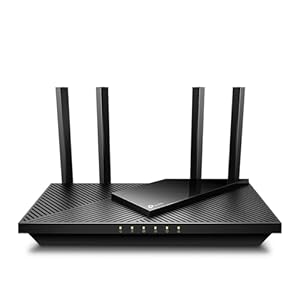
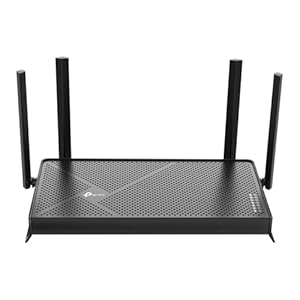
Router and modem limitations: If your router or modem doesn't support your plan speed, it creates a bottleneck. A Wi-Fi 5 router can't deliver 1 Gbps over wireless regardless of your plan. Upgrading to a Wi-Fi 6E or Wi-Fi 7 router may be necessary to realize faster plan speeds.
Wi-Fi interference: Walls, floors, appliances, and neighboring Wi-Fi networks all degrade wireless performance. The farther you are from your router, the slower your Wi-Fi speed. This is why we recommend testing with a wired connection to separate internet speed issues from Wi-Fi issues.
Provider throttling: Some providers may throttle speeds for specific types of traffic (like video streaming) during congested periods. Using a VPN can sometimes reveal whether throttling is occurring, though this also adds its own overhead.
When to Upgrade vs When You're Overpaying
Here are clear signals that you need a faster plan versus signs you're paying for more than you need:
Signs You Need to Upgrade
- Frequent buffering during streaming, especially with multiple simultaneous streams
- Video calls regularly freeze, pixelate, or drop quality
- Game lag and high ping times that worsen during evening hours
- Downloads take significantly longer than expected
- Web pages load slowly even on modern devices with good Wi-Fi signal
- Multiple family members complain about slow internet simultaneously
Signs You're Overpaying
- Speed tests consistently show you using less than 50% of your plan speed
- You live alone or with one other person and pay for 500+ Mbps
- You don't stream 4K, work from home, or game online
- Your provider raised your price after a promotional period and you haven't called to negotiate
- A comparable plan from a competitor costs significantly less (check our cheapest providers guide)
Before You Upgrade
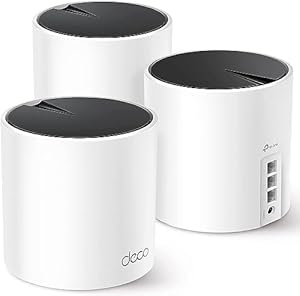
Before paying for a faster plan, verify the issue is actually your internet speed and not your equipment. Replace an old modem (anything over 3-4 years old may be limiting your speed). Upgrade your router if it doesn't support Wi-Fi 6 or newer. Consider a mesh Wi-Fi system if dead zones are the issue. Sometimes a $150 router upgrade solves problems that a $30/month plan upgrade wouldn't fix.
Speed Recommendations Quick Reference
Here's a quick-reference table summarizing our recommendations. Use this as a starting point, then adjust based on your household's specific usage patterns:
| Household Size | Light Use | Moderate Use | Heavy Use |
|---|---|---|---|
| 1 person | 25-50 Mbps | 50-100 Mbps | 100-200 Mbps |
| 2 people | 50-100 Mbps | 100-200 Mbps | 200-400 Mbps |
| 3-4 people | 100-200 Mbps | 200-400 Mbps | 400-1,000 Mbps |
| 5+ people | 200-300 Mbps | 400-600 Mbps | 1,000+ Mbps |
Light Use: Email, browsing, social media, occasional HD streaming.
Moderate Use: Multiple HD/4K streams, video calls, smart home devices.
Heavy Use: Remote work + gaming + 4K streaming + large downloads simultaneously.
Find the Right Speed at the Right Price
Call these top providers to compare plans and find the speed tier that matches your household's needs:
- Spectrum: 1-844-481-5997 — No data caps on any plan
- Verizon Fios: 1-855-387-1456 — Symmetrical fiber speeds
- Xfinity: 1-844-963-0138 — Wide range of speed tiers
Frequently Asked Questions
Is 100 Mbps fast enough for a family of 4?
For light use (browsing, social media, occasional HD streaming), 100 Mbps can work for a family of 4. However, if multiple family members stream 4K, game, or work from home simultaneously, you'll likely need 200-400 Mbps for a consistently smooth experience.
What speed do I need for 4K streaming?
A single 4K stream requires 25-50 Mbps for reliable, buffer-free playback. If you have two TVs streaming 4K simultaneously while someone browses on their phone, budget for at least 75-100 Mbps total.
Does internet speed affect gaming performance?
Speed has minimal impact on gaming performance — most games use only 1-5 Mbps. Latency (ping time) is what matters for gaming responsiveness. However, a faster connection provides headroom so that other household activity doesn't interfere with your gaming experience.
What's the difference between download and upload speed?
Download speed determines how quickly content loads (streaming, web pages, file downloads). Upload speed determines how quickly you can send data (video calls, uploading files, posting content). Most activities are download-heavy, but video calls and remote work increasingly require good upload speeds.
How much speed do I need for Zoom?
Zoom recommends 3-4 Mbps download and upload for HD video calls. For group calls with gallery view, plan for 6-8 Mbps each direction. We recommend at least 25 Mbps download and 10 Mbps upload for a household where someone is frequently on video calls alongside other internet activity.
Is 25 Mbps enough for working from home?
25 Mbps is the bare minimum for remote work if you're the only user on the network. For reliable video conferencing, VPN connections, and cloud application access, we recommend 50-100 Mbps, especially if anyone else in the household uses the internet during your work hours.
Why is my internet slower than advertised?
Advertised speeds are theoretical maximums. Actual speeds are affected by network congestion (especially on cable during evening hours), Wi-Fi interference, old modem/router equipment, and distance from the router. Test with a wired Ethernet connection to eliminate Wi-Fi as a factor.
Should I get the fastest plan available?
Usually no. Most households don't need gigabit speeds and are better served by a mid-tier plan that costs $20-40/month less. Only upgrade to the fastest plan if you regularly experience slowdowns, have 5+ heavy users, or need maximum upload speed for professional content creation.
Disclosure: InternetProviders.ai may earn commissions when you call or sign up through links on this page. This does not influence our speed recommendations, which are based on independent testing and technical requirements. All speed requirements are based on 2026 platform standards and may change as technology evolves. See our full editorial policy.
Sources & Methodology
This article uses data from FCC Broadband Data Collection reports, U.S. Census Bureau demographics, and verified provider pricing and plan information. Pricing, speeds, and availability are verified against provider broadband nutrition labels and may vary by location. For a detailed explanation of our data collection and scoring process, see our methodology page.
Data Sources
- FCC Broadband Data Collection
- U.S. Census Bureau American Community Survey
- USAC Universal Service Fund
- NTIA Internet Use Survey
Last verified: March 2026. InternetProviders.ai is an independent resource. We may earn commissions from partner links — this does not affect our editorial recommendations. See our methodology for details.