

Starlink logo
Starlink
vs
Viasat logo
Viasat

Starlink or Viasat? Here's how they compare

By Pablo Mendoza, Lead Analyst|Updated July 2026

Starlink and Viasat are two of the most searched internet providers in the United States. Below, we compare their plans, pricing, speeds, coverage, and customer satisfaction to help you choose the best option for your home internet needs.

Ready to order?

Order online in a few minutes, or call to confirm pricing and availability at your address first.

Affiliate disclosure: We may earn a commission when you order through links on this page. Pricing, speeds, and availability vary by address and are subject to change; verify current terms with the provider before ordering.

Check availability at your address

See which of these providers — and others — actually serve your exact address, with real speeds and pricing from FCC broadband data.

Starlink vs Viasat: Key Findings

  • Viasat is faster (150 Mbps vs 400+ Mbps)
  • Starlink is more affordable ($55/mo vs $70/mo)
  • Technology: Starlink uses Satellite, Viasat uses Satellite
  • Contracts: Starlink — no contract; Viasat — contract required
  • Data caps: Starlink — Unlimited (Residential); Viasat — Varies by plan

Starlink vs Viasat: Side-by-Side

Starlink vs Viasat comparison table
FeatureStarlinkViasat
Starting Price$55/moPrice verified August 2026$70/moPrice verified August 2026
Max Download Speed400+ Mbps150 Mbps
Data CapUnlimited (Residential)Varies by plan
Contract RequiredNoYes
TechnologySatelliteSatellite

Starlink, operated by SpaceX, is a low-Earth orbit satellite internet service available across all 50 U.S. states, designed primarily for rural and underserved areas. Viasat is a geostationary satellite internet provider serving all 50 U.S. states, offering speeds up to 150 Mbps with plans designed for rural and underserved communities.

Starlink vs Viasat: Side-by-Side Comparison
FeatureStarlinkViasat
Max Speed400+ Mbps150 Mbps
Starting Price$55/moPrice verified August 2026$70/moPrice verified August 2026
TechnologyLow-Earth Orbit SatelliteGeostationary Satellite
ContractsNoYes
Data CapsNoYes

Starlink vs Viasat: Provider Details

Starlink and Viasat provider details side-by-side
DetailStarlinkViasat
Primary TechnologyLow-Earth Orbit SatelliteGeostationary Satellite
Top Speed (Down/Up)400+ Mbps down / 40 Mbps up150 Mbps down / 3 Mbps up
Starting Price$55/mo$70/mo
CoverageNational — 50 statesNational — 50 states
ContractNo contractContract required
Data CapsUnlimited (Residential)Varies by plan
HeadquartersHawthorne, CaliforniaCarlsbad, California
Notable FeaturesAvailable virtually anywhere • Self-install kit • Low latency for satelliteHigh-capacity satellite network • Unlimited data options • Available in rural areas

Starlink Service & Install

Customer service: Support via Starlink app and online portal only — no phone support; typical response within 24 hours; community forums available

Installation: Complete self-install kit ($349) shipped to your door. Mount dish with clear sky view (roof, pole, or ground). Starlink app guides setup and alignment (20-30 minutes). Professional installation now available in select areas; third-party installers also available.

Viasat Service & Install

Customer service: Mon-Fri 8AM-12AM ET, Sat-Sun 9AM-10PM ET; online support and chat 24/7; My Viasat app for account management

Installation: Professional installation required ($199-$299). Technician installs satellite dish and indoor modem (2-3 hours). Free installation available during promotions. Appointments within 3-5 business days.

Plans Compared: Starlink vs Viasat

Verified monthly pricing and typical download speeds for each provider's residential plans, sourced from FCC broadband label filings where available and otherwise from the provider's published plan pricing. Promotional and address-specific pricing may vary.

Starlink plans

Starlink internet plans and pricing
PlanSpeedPrice
Residential 100100 Mbps$55/mo
Residential 200200 Mbps$85/mo
Residential Max400 Mbps$130/mo
See all Starlink plans & pricing

Viasat plans

Viasat internet plans and pricing
PlanSpeedPrice
Unleashed 2525 Mbps$70/mo
Unleashed 7575 Mbps$100/mo
Unleashed 150150 Mbps$150/mo
See all Viasat plans & pricing

Starlink vs Viasat: Starlink is the better satellite internet for most people — its low-earth-orbit network delivers far lower latency (25–60 ms vs 600+ ms) and higher, more usable speeds. Viasat’s edge is a lower starting price, an unlimited-data plan with no hard cap, and professional installation. Choose Starlink for speed and latency; choose Viasat if a lower entry price or a hands-off install matters more.

Introduction: low-earth orbit versus geostationary

Starlink and Viasat both beam internet to a dish on your home, but they do it from wildly different altitudes, and that is the whole story. Viasat runs a small number of powerful geostationary satellites parked about 22,000 miles above the equator. Starlink runs thousands of small satellites in low-earth orbit, roughly 340 miles up. The shorter distance is why Starlink feels like ordinary broadband for video calls and gaming, while Viasat carries the high latency that has always defined traditional satellite.

Viasat is not standing still, though. Its newer Viasat-3 satellites added meaningful capacity, and its current Unleashed plan finally offers unlimited high-speed data with no contract — a genuine improvement. This comparison breaks down speed, latency, price, data, equipment, and installation with current 2026 figures, re-verified in July 2026. Satellite pricing and available speeds vary a lot by location, so confirm the specific offer at your address before you buy.

Quick comparison table

FeatureStarlinkViasat
OrbitLow-earth orbit (~340 mi)Geostationary (~22,000 mi)
Max downloadUp to 400+ Mbps (Max plan)Up to 150 Mbps
Typical latency25–60 ms590–800 ms
Starting price$55/mo (100 Mbps)~$39.99/mo intro (Essentials)
Data policyUnlimited standard, no hard capEssentials: 150 GB priority; Unleashed: unlimited
ContractNoneUnleashed: none; Essentials: 12 months
EquipmentBuy kit (~$349–$499) or rent $10/mo~$15/mo lease or ~$250 buy
InstallationSelf-install (~1 hour)Professional (typically free)
Best forSpeed, low latency, no contractLower entry price, hands-off install

Pricing verified July 2026. Viasat intro rates rise about $30 after three months; speeds and pricing vary by location and CAF II eligibility. Starlink pricing changed June 18, 2026. Verify current rates at your address.

Is Starlink better than Viasat?

For most users, yes. Starlink delivers dramatically lower latency (25–60 ms vs Viasat’s 590–800 ms) and higher real-world speeds, which makes video calls, remote work, and online gaming genuinely usable rather than frustrating. Viasat is competitive on upfront price, offers an unlimited-data plan, and includes professional installation — but on core performance, Starlink’s low-earth-orbit design wins clearly.

Technology: why orbit decides everything

Viasat’s geostationary satellites sit far enough away to cover a huge area from a fixed point, which keeps the network simple and coverage broad. The cost is distance: every packet travels tens of thousands of miles round trip, adding 590–800 ms of latency regardless of how fast the plan is. That delay is what makes a Viasat connection stutter on video calls and rules out most real-time gaming.

Starlink’s satellites orbit far lower, so the signal round trip is a fraction of the distance and latency drops to 25–60 ms — close to fixed wireless and only modestly behind cable. The trade-off is that Starlink needs a constellation of thousands of moving satellites and a dish that tracks them, which is why its hardware costs more and why very busy cells can occasionally slow down at peak times. For the day-to-day experience, though, that lower orbit is a decisive advantage.

Speed comparison

Viasat’s plans advertise up to 150 Mbps, and thanks to Viasat-3 capacity many users now see real-world speeds in the 25–100 Mbps range during off-peak hours — a solid step up from older Viasat generations. Uploads remain slow, generally 3–6 Mbps.

Starlink’s residential tiers deliver up to 100, 200, or 400+ Mbps with uploads around 20–50 Mbps, and most users land in the 50–250 Mbps range. Even Starlink’s entry plan is competitive with Viasat’s ceiling, and its higher tiers pull well ahead. For a busy household streaming and working at the same time, Starlink’s extra headroom — and much faster uploads — is a real difference.

Latency: the critical difference

If you take one thing from this comparison, make it latency. Viasat’s 590–800 ms means a noticeable lag between clicking and seeing a response — painful for video calls, cloud apps, and anything interactive. Starlink’s 25–60 ms is low enough that most people cannot tell they are on satellite during a Zoom or a Netflix session, and casual online gaming works. No amount of Viasat speed closes this gap, because it is a function of orbit, not bandwidth. This is the main reason Starlink dominates when performance is the priority.

Weather performance and reliability

All satellite internet is more weather-sensitive than a buried cable, but Starlink and Viasat degrade differently because of their orbits — and the honest summary is that both can struggle in heavy weather, just in different ways. Viasat’s geostationary signal travels a far longer path through the atmosphere, which makes it more prone to “rain fade,” where heavy precipitation absorbs or scatters the signal. In intense thunderstorms, Viasat users can see outages lasting anywhere from several minutes to the better part of an hour; light to moderate rain more often causes a speed dip than a full drop. Viasat’s dish has no heater, so snow accumulation has to be cleared manually or with a third-party solution.

Starlink’s low-earth-orbit signal covers a much shorter distance, so it tends to ride out weather better, though it is not immune — expect brief interruptions (often just seconds) during the heaviest downpours and occasional longer hits in severe wet-snow storms. The dish is built for the elements: it carries an IP67 weatherproof rating, includes a self-heating mode that melts snow at rates up to roughly 1.5 inches per hour (drawing an extra ~75 watts when active), and is rated to keep operating in winds of 60+ mph. In day-to-day terms, a Starlink user in a rainy or snowy climate will generally see fewer and shorter weather outages than a Viasat user at the same address.

Neither service promises the near-perfect uptime of fiber, so if you run something truly outage-sensitive — medical monitoring, a security system, or a business that cannot go dark — plan for a cellular or wired backup alongside whichever satellite service you choose.

Pricing and plans

Viasat simplified its lineup to two residential plans. Essentials starts around $39.99/mo for the first three months, then about $69.99/mo, includes 150 GB of priority data, and requires a 12-month term. Unleashed — Viasat’s flagship — starts near $69.99/mo intro and settles around $99.99/mo, includes unlimited high-speed data, and carries no contract, though it is only available in qualifying areas. Equipment leases for about $15/mo or buys for roughly $250, and professional installation is typically free.

Starlink’s residential plans are $55/mo (100 Mbps), $85/mo (200 Mbps), and $130/mo (Max, up to 400+ Mbps), each up about $5–10 since the June 18, 2026 price change. You either buy the Standard kit — recently around $349–$499, with frequent promotions and regional variation — or rent it for $10/mo, and you install it yourself. Viasat wins on the lowest intro price; Starlink’s regular pricing buys more speed and far better latency.

Data policies

This is closer than it used to be, and it is worth the detail. Viasat’s Essentials plan gives you 150 GB of priority data, after which speeds can slow during congestion — but service is never cut off. Its Unleashed plan offers unlimited high-speed data with no hard cap, which is a strong answer to Starlink and a clear advantage over HughesNet’s tighter buckets. Starlink’s residential plans also include unlimited standard data with no hard cap, with possible deprioritization only for very heavy users during peak evening hours. On data alone, Starlink’s Max plan and Viasat Unleashed are roughly comparable; Viasat Essentials is the more limited of the bunch.

Equipment and installation

Viasat installs for you: a technician mounts and aligns the dish, which many rural customers appreciate, and equipment is leased or purchased. Starlink is a self-install — you place the dish for a clear sky view, plug in the router, and it aligns automatically, usually within an hour. If you would rather not climb a ladder or fuss with placement, Viasat’s included professional install is a genuine convenience. If you like being up and running the same day without scheduling a visit, Starlink’s self-install is faster. Either way, check line of sight to the sky first — obstructions hurt both, but especially Starlink.

Coverage, waitlists, and the road ahead

Both cover essentially the whole country. Viasat can activate at almost any address with a clear southern sky view and no waitlist, and its available speeds and pricing vary by how crowded your beam is. Starlink also reaches nearly every U.S. address, with occasional short waitlists in a few high-demand cells that keep shrinking as SpaceX launches more satellites. Looking ahead, Starlink’s 2026 V3 rollout should add roughly ten times the capacity, while Viasat continues to lean on its Viasat-3 fleet. To see the full category side by side, visit our satellite provider hub, or compare HughesNet vs Starlink if HughesNet is also on your list.

Real-world user experience

On paper the gap is clear, but it is worth describing what each feels like to live with. Viasat users typically report that everyday browsing, email, and standard streaming work fine, but that the high latency makes video calls awkward and cloud apps sluggish, and that speeds can sag in the evening as the local beam fills up. The unlimited Unleashed plan removed a lot of the old data anxiety, which is a genuine quality-of-life improvement over metered satellite. Starlink users describe an experience much closer to normal broadband — snappy page loads, usable video calls, and casual gaming that actually works — with the main complaint being peak-hour slowdowns and the occasional weather-related dip. For a household where at least one person works from home or takes video calls, that difference is decisive.

Which is better for RVs and travel?

Both companies court travelers, but differently. Starlink’s Roam plans and portable Mini dish make it a favorite for RVers and remote work sites, working anywhere in its coverage area with month-to-month pause and unpause. Viasat is built around fixed-address home service and is less suited to frequent moves, though it remains a solid stationary option for a rural property. If portability matters, Starlink is the clear pick; if you want the lowest-cost fixed connection at a rural home and can live with higher latency, Viasat is worth a look. Either way, confirm a clear view of the sky at your location before ordering.

Bottom line: which should you choose?

Choose Starlink if:

  • You want the lowest latency available from satellite (25–60 ms)
  • You need higher, more consistent speeds and faster uploads
  • Video calls, remote work, or online gaming are part of your routine
  • You prefer no contract and a same-day self-install

Choose Viasat if:

  • You want the lowest starting price and a professionally installed dish
  • Viasat Unleashed (unlimited data) is available in your area
  • Your usage is lighter and low latency is not essential
  • Starlink shows a waitlist at your address and you need service now

Final verdict: Starlink is the better satellite internet for the vast majority of homes — the latency and speed gap is large, and no-contract unlimited data seals it. Viasat is the smart pick when a lower entry price, an included install, or the availability of its unlimited Unleashed plan matters more to you than raw performance. If you are also weighing wired options, see Spectrum vs Starlink or read our full Starlink review.

Frequently Asked Questions

Is Starlink better than Viasat?

For most users, yes. Starlink offers far lower latency (25–60 ms vs 590–800 ms), higher speeds (up to 400+ Mbps vs up to 150 Mbps), faster uploads, and no contract. Viasat competes on a lower entry price, an unlimited-data Unleashed plan, and included professional installation.

Is Starlink faster than Viasat?

Yes. Starlink’s residential plans reach up to 400+ Mbps and most users see 50–250 Mbps, while Viasat tops out around 150 Mbps with real-world speeds often 25–100 Mbps. Starlink also has much faster uploads and far lower latency.

Which is cheaper, Starlink or Viasat?

Viasat is cheaper to start, with Essentials from about $39.99/mo (intro) and lower upfront equipment costs. Starlink starts at $55/mo plus a hardware kit around $349–$499 or a $10/mo rental. After intro rates end, the two move closer, but Viasat keeps the lower entry price.

Does Viasat or Starlink have unlimited data?

Both offer unlimited options. Starlink’s residential plans include unlimited standard data with no hard cap. Viasat’s Unleashed plan also offers unlimited high-speed data where available, while its Essentials plan includes 150 GB of priority data before speeds may slow during congestion.

Can you game online on Starlink or Viasat?

Starlink supports casual and many online games thanks to its 25–60 ms latency. Viasat’s 590–800 ms latency makes most real-time multiplayer games unplayable, though turn-based games still work. For gaming, Starlink is the clear choice.

Does Viasat still require a contract?

It depends on the plan. Viasat’s Unleashed plan has no contract, while its Essentials plan requires a 12-month term with a cancellation fee for the remaining months. Starlink never requires a contract on any plan.

Advertising Disclosure: InternetProviders.ai is an independent review and comparison service supported by advertising. We may receive compensation when you click on provider links or phone numbers listed on this page. This compensation can influence where providers appear on our site but does not affect our editorial opinions, reviews, or comparison analysis. Provider offers and availability are subject to change without notice.

About the author: Written by George Olfson and the InternetProviders.ai editorial team. We compare provider pricing, coverage, and real-world performance across hundreds of U.S. internet providers, with particular attention to satellite and rural connectivity.

Methodology: We evaluate providers on speed, latency, data policy, price after promotions end, contract terms, equipment, and coverage. Figures are verified against provider websites and FCC broadband data. Pricing verified July 2026; Starlink figures reflect the June 18, 2026 residential price change. Last updated: July 22, 2026.

Sources

Data referenced from Viasat, Starlink, SatelliteInternet.com, and the FCC Broadband Map. Pricing and availability are subject to change.

Market context

Viasat’s shift to unlimited Unleashed plans and its Viasat-3 capacity upgrades are direct responses to the competitive pressure Starlink created in the satellite market. For rural households — many of them targets of the federal BEAD program — the practical decision now pits Starlink’s low-latency, higher-speed service against Viasat’s lower entry price and included installation. SpaceX’s 2026 V3 satellite rollout, adding roughly ten times the network capacity, is expected to widen Starlink’s performance advantage further.

Check availability at your address

See which of these providers — and others — actually serve your exact address, with real speeds and pricing from FCC broadband data.

Need Equipment?

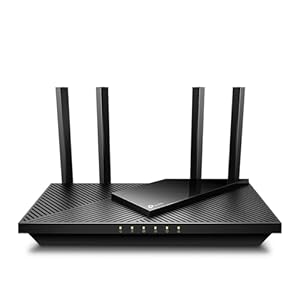
TP-Link AX1800 WiFi 6 Router
#1 Best Seller
TP-Link AX1800 WiFi 6 RouterEditor’s pick

Budget pick for homes under 1,500 sq ft

TP-Link Deco X55 Mesh System (3-Pack)
Best Seller
TP-Link Deco X55 Mesh System (3-Pack)Editor’s pick

Whole-home WiFi coverage up to 6,500 sq ft

As an Amazon Associate, InternetProviders.ai earns from qualifying purchases. Prices and availability change frequently and are shown on Amazon.

Check Starlink Availability

See plans and pricing at your address

Check Viasat Availability

See plans and pricing at your address

Sources & Methodology

This Starlink vs Viasat comparison uses pricing, speed, and coverage data from FCC Broadband Data Collection filings, provider-published broadband nutrition labels, and Ookla speed test measurements. Plans and pricing are verified against each provider's current public offerings. Pricing, speeds, and availability are verified against provider broadband nutrition labels and may vary by location. For a detailed explanation of our data collection and scoring process, see our methodology page.

How We Score Providers

Our analysts rate every provider on a composite 1–5 scale using five weighted criteria, applied consistently across all reviews and comparisons:

  • Price (30%) — advertised plan pricing verified monthly against each provider's broadband nutrition labels.
  • Speed (25%) — advertised tiers cross-checked with third-party real-world speed test data.
  • Reliability (20%) — technology type, uptime signals, and FCC complaint data.
  • Coverage (15%) — FCC Broadband Data Collection availability records.
  • Customer Service (10%) — published satisfaction indices and verified support channels.

Last verified: July 2026. InternetProviders.ai is an independent resource. We may earn commissions from partner links — this does not affect our editorial recommendations. See our methodology for details.