Complete guide to HughesNet's satellite internet plans in March 2026 — Gen5 and Fusion tiers, data caps, speeds, equipment costs, contract terms, hidden fees, and how each plan compares to Starlink and Viasat alternatives.
Quick Summary
HughesNet offers four satellite internet plans ranging from $50/month (15 GB) to $150/month (100–200 GB). The two lower tiers use Gen5 technology (25 Mbps), while the two higher tiers use Fusion technology (up to 100 Mbps). All plans include a 24-month contract, hard data caps, and equipment lease fees of $15/month. HughesNet remains the cheapest satellite internet option, but Starlink ($120/mo) offers dramatically better performance with unlimited data.
Key Findings
- HughesNet is the cheapest satellite internet at $50/mo — but the 15 GB data cap on that plan limits usage to basic email and light browsing only.
- Fusion plans (up to 100 Mbps) cut latency by 30% — using a hybrid satellite+terrestrial network that reduces latency from 600–800ms to 400–700ms, a noticeable improvement for web browsing.
- All plans have hard data caps with $3/GB overage tokens — exceeding your cap throttles speeds to 1–3 Mbps until your billing cycle resets, making careful data monitoring essential.
- The 24-month contract has a $400 early termination fee — the highest among satellite providers. The fee decreases by $15/month, so canceling at month 12 costs approximately $220.
- True monthly cost is $15–$30 higher than advertised — equipment lease ($15/mo) and taxes/fees add significantly to the advertised price.
- At $150/mo, HughesNet's best plan is overpriced vs. Starlink ($120/mo) — Starlink offers 2.5x the speed, 15x lower latency, and unlimited data for $30/mo less.
Check which providers serve your address: Enter your ZIP code to see all internet options at your location. You may have wired alternatives that are faster and cheaper than satellite.
All HughesNet Plans (March 2026)
Gen5 Plans
| Plan | Price | Data | Download | Upload | Latency | Best For |
|---|---|---|---|---|---|---|
| Select | $50/mo | 15 GB | 25 Mbps | 3 Mbps | 600–800ms | Email-only users |
| Elite | $75/mo | 50 GB | 25 Mbps | 3 Mbps | 600–800ms | Light browsing + occasional streaming |
Fusion Plans
| Plan | Price | Data | Download | Upload | Latency | Best For |
|---|---|---|---|---|---|---|
| Fusion 50 | $100/mo | 50 GB | Up to 100 Mbps | 5 Mbps | 400–700ms | Moderate browsing + streaming |
| Fusion 100 | $150/mo | 100–200 GB | Up to 100 Mbps | 5 Mbps | 400–700ms | Families with regular streaming |
Understanding Data Caps
Every HughesNet plan includes a hard data cap. This is HughesNet's biggest limitation — and the primary reason many customers switch to Starlink or fixed wireless alternatives. Here is what each cap supports in real-world usage:
| Data Cap | HD Streaming | SD Streaming | Video Calls | Web Pages | Lasts For (typical household) |
|---|---|---|---|---|---|
| 15 GB | ~15 hours | ~50 hours | ~25 hours | ~15,000 | 3–5 days of normal use |
| 50 GB | ~50 hours | ~167 hours | ~83 hours | ~50,000 | 10–15 days of normal use |
| 100 GB | ~100 hours | ~333 hours | ~167 hours | ~100,000 | 20–25 days of moderate use |
| 200 GB | ~200 hours | ~667 hours | ~333 hours | ~200,000 | Full month for light-moderate use |
After your cap: Speeds throttle to 1–3 Mbps until your billing cycle resets. At these speeds, even basic web browsing becomes frustrating. You can buy Data Tokens to restore full speed:
- 3 GB: $9 (~$3/GB)
- 5 GB: $15 (~$3/GB)
- 10 GB: $30 (~$3/GB)
- 25 GB: $75 (~$3/GB)
At $3/GB, data tokens are expensive. A single 4K movie (7–10 GB) would cost $21–$30 in overage tokens. This is why monitoring your data usage through the HughesNet app or online portal is critical.
Bonus Zone: All plans include unlimited unmetered data from 2–8 AM local time. Schedule large downloads, system updates, and cloud backups during this window to preserve your daytime data allowance. Set your devices to auto-update overnight to take advantage of this free data period.
Equipment Costs
| Item | Lease Cost | Purchase Cost | Notes |
|---|---|---|---|
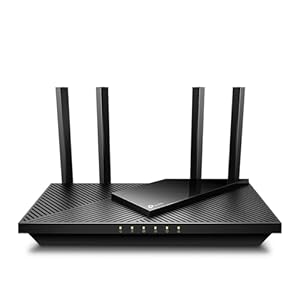
| Modem/Router (HT2000W) | $15/mo | $450 | Wi-Fi 5 dual-band, 4 Ethernet ports |
| Satellite Dish (0.98m) | Included with lease | Included with purchase | Mounted on roof or pole |
| Professional Installation | $0 (with 24-mo contract) | $199 (no contract) | Includes dish alignment and setup |
Most customers choose the lease option ($15/month) to avoid the $450 upfront cost. Over 24 months, the lease totals $360 — slightly less than purchasing outright. However, if you cancel before 24 months, leased equipment must be returned or you face a $300 unreturned equipment fee.
Complete Cost Breakdown: Year 1 & Year 2
| Cost | Select | Elite | Fusion 50 | Fusion 100 |
|---|---|---|---|---|
| Monthly plan x12 | $600 | $900 | $1,200 | $1,800 |
| Equipment lease x12 | $180 | $180 | $180 | $180 |
| Installation | $0 | $0 | $0 | $0 |
| Estimated taxes/fees | $60 | $60 | $60 | $60 |
| Year 1 Total | $840 | $1,140 | $1,440 | $2,040 |
| Effective Monthly | $70 | $95 | $120 | $170 |
| 2-Year Total | $1,680 | $2,280 | $2,880 | $4,080 |
When factoring in equipment lease and taxes, the true effective monthly cost is $15–$20 higher than the advertised plan price. The Fusion 100 plan at $170/mo effective cost is significantly more expensive than Starlink ($120/mo with no data cap), making it hard to recommend for anyone with Starlink availability.
Contract Terms & Early Termination
- Contract length: 24 months on all standard plans
- Early termination fee: $400, decreasing by $15/month remaining. Examples: cancel at month 6 = $310; month 12 = $220; month 18 = $130.
- Month-to-month option: Available at $10–$15/month more than contract pricing
- Price lock: Monthly service rate is locked for the full contract term — one of HughesNet's better features
- Equipment return: Leased equipment must be returned within 45 days of cancellation or face a $300 fee
HughesNet vs. Competitors: Detailed Comparison
| Provider | Cheapest Plan | Max Speed | Data | Latency | Contract | Best Feature |
|---|---|---|---|---|---|---|
| HughesNet | $50/mo | 100 Mbps | 15–200 GB caps | 600ms+ | 24 months | Lowest satellite price |
| Starlink | $120/mo | 250 Mbps | Unlimited | 20–50ms | None | Speed + latency |
| Viasat | $70/mo | 150 Mbps | 40–500 GB | 600ms+ | 24 months | Higher data caps |
| Dish Internet | $120/mo | 250 Mbps | Unlimited | 20–50ms | None | LEO + unlimited |
| T-Mobile 5G | $50/mo | 245 Mbps | Unlimited | 25–50ms | None | Price + no cap |
Market Position: Why HughesNet Still Exists
HughesNet holds approximately 20% of the satellite internet market based on subscriber count, down from 45% in 2022 as Starlink has gained share rapidly. The satellite internet market HHI has shifted from approximately 5,000 (highly concentrated, HughesNet-Viasat duopoly) to approximately 3,200 with Starlink's entry.
HughesNet remains viable for one key reason: price. At $50/month, the Select plan is the cheapest satellite internet option available. For budget-conscious rural households that need basic connectivity (email, light browsing, online banking), HughesNet is $70/month cheaper than Starlink. However, the 15 GB data cap severely limits what that $50 buys.
HughesNet's parent company, EchoStar, is developing the Jupiter 3 satellite (launched 2023) which adds capacity to the GEO network. However, GEO technology's inherent 600ms+ latency means HughesNet will never match LEO satellite performance for real-time applications.
Which HughesNet Plan Should You Choose?
- Select ($50/mo, 15 GB): Only for email and very light browsing. A household with any streaming habits will exhaust 15 GB in 3–5 days. Not recommended for most users.
- Elite ($75/mo, 50 GB): Light streaming (1–2 hours/day of SD content) and browsing. The most popular Gen5 plan. Manageable for 1–2 person households with careful data monitoring.
- Fusion 50 ($100/mo, 50 GB): Same data as Elite but faster speeds (up to 100 Mbps) and reduced latency. Worth the $25/month upgrade if Fusion is available at your address and you value faster page loads.
- Fusion 100 ($150/mo, 100–200 GB): HughesNet's best plan. Suitable for moderate streaming and web usage. But at $150/mo ($170/mo effective), seriously consider Starlink ($120/mo) for unlimited data, 2.5x faster speeds, and 15x lower latency.
Tips for Managing HughesNet Data
- Monitor usage daily: Check the HughesNet app or my.hughesnet.com portal to track remaining data. Set alerts at 50% and 80% thresholds.
- Schedule updates overnight: Set Windows, macOS, phone, and app updates to run during the 2–8 AM Bonus Zone when data is unlimited.
- Lower streaming quality: Set Netflix to SD quality (1 GB/hour vs 3 GB/hour for HD) to stretch your data cap 3x further.
- Disable auto-play: Turn off auto-play on YouTube, Netflix, and social media apps to prevent unintentional data consumption.
- Use the built-in data saver: HughesNet's Video Data Saver compresses video streams to use less data, though quality decreases noticeably.
- Download before streaming: If possible, download content during Bonus Zone hours for offline viewing during the day.
Frequently Asked Questions
What is the cheapest HughesNet plan?
The Select plan at $50/month with 15 GB of data and 25 Mbps download speed. Equipment lease adds $15/month, bringing the effective cost to $65/month. A 24-month contract is required. This plan is only suitable for very light email and browsing usage.
Does HughesNet have unlimited data?
No. All HughesNet plans have hard data caps (15–200 GB). After your cap, speeds throttle to 1–3 Mbps until your billing cycle resets. The Bonus Zone (2–8 AM) provides unlimited data for overnight usage. For unlimited satellite data, consider Starlink at $120/month.
Is HughesNet Fusion worth the extra cost?
Fusion offers speeds up to 100 Mbps (vs. 25 Mbps for Gen5) and somewhat lower latency (400–700ms vs. 600–800ms). If you need the best satellite performance HughesNet offers, Fusion is worth it. However, at $100–$150/month, you are approaching Starlink pricing ($120/mo) which delivers dramatically better speeds, latency, and unlimited data.
What is the HughesNet early termination fee?
The early termination fee starts at $400 and decreases by $15 for each month of your contract you have completed. Canceling after 6 months costs approximately $310. After 12 months, approximately $220. After 18 months, approximately $130.
Can I use HughesNet for work from home?
Basic remote work (email, web-based tools) works on HughesNet. Video conferencing is unreliable due to 600ms+ latency — calls have noticeable delays and may drop. VPN connections work but feel sluggish. For reliable work-from-home, Starlink or T-Mobile 5G Home Internet is a better fit.
Is HughesNet good for streaming Netflix?
HughesNet can stream Netflix, but data caps are the limiting factor. In SD quality (1 GB/hour), the 50 GB Elite plan supports about 50 hours of streaming per month. In HD (3 GB/hour), that drops to ~16 hours. 4K streaming is not practical on HughesNet. The 600ms+ latency also causes buffering when starting playback or skipping ahead.
What happens when I hit my HughesNet data cap?
When you exceed your data cap, HughesNet throttles your speed to 1–3 Mbps for the remainder of your billing cycle. At these speeds, even basic web browsing becomes slow, and streaming is not possible. You can purchase Data Tokens at $3/GB to restore full speed, or wait until the 2–8 AM Bonus Zone for unlimited unmetered access.
Related Resources
- HughesNet Internet Review 2026
- HughesNet vs. Starlink 2026
- HughesNet Gen5 vs. Fusion
- HughesNet vs. Viasat
- Dish Internet Review
- Dish Network Internet Speeds
- HughesNet Provider Page
- Best Satellite Internet Providers 2026
- Best Internet for Rural Areas
- Internet Speeds & Costs by State 2026
- Our Methodology